

The global sports industry is evolving rapidly, and Sports infrastructure in 2026 is no longer just about building courts or tracks-it’s about performance, safety, sustainability, and technology. From schools and universities to professional training centers and commercial sports complexes, facility owners are now investing in future-ready sports environments.
In this blog, we explore the top sports infrastructure trends in 2026 that are redefining how sports facilities are designed, built, and maintained.
1. Sustainable & Eco-Friendly Sports Infrastructure 🌱
Sustainable has moved from being optional to essential. Sports facilities in 2026 are increasingly designed with eco-friendly materials and low-carbon construction methods.
Key Developments:
- Recyclable sports flooring materials
- Low-VOC adhesives and coatings
- Water-efficient drainage systems
- Solar-powered sports complexes
Eco-friendly flooring options such as PU athletic trackers, EPDM surfaces, and modular sports tiles are now preferred due to durability and minimal environmental impact.
2. 🛡️Athlete-Centric Design for Safety & Performance 🏃♂️
Modern sports infrastructure places athletes at the center of design decisions. The focus is on injury prevention, comfort, and performance optimization.
Key Features:
- Shock-absorbent sports flooring
- Anti-slip and seamless surfaces
- Enhanced ball rebound consistency
- Ergonomic court layouts
Proper flooring systems reduce joint stress, muscle fatigue, and impact injuries-especially important for high-intensity training.
3. Multi-Purpose & Convertible Sports Facilities 🔄
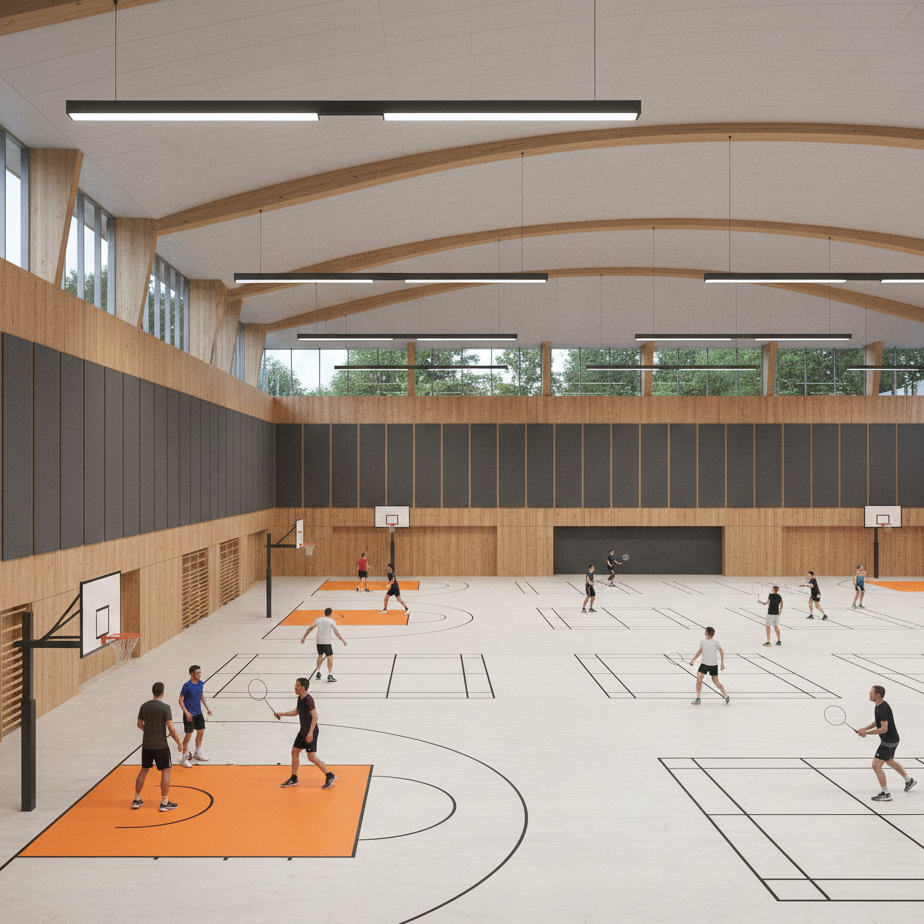
In 2026, space efficiency is crucial. Facilities are being designed to support multiple sports on a single surface.
Popular Applications:
- Indoor halls convertible for basketball, badminton & Volleyball
- Outdoor courts supporting futsal, tennis & pickleball
- Modular flooring systems for quick reconfiguration
This trend is especially beneficial for schools, colleges and community sports centers with limited space.
4. Smart Sports Infrastructure & Technology Integration 🤖📊
Technology is transforming sports facilities into smart performance environments.
Emerging Smart Features:
- Sensor-based athlete performance tracking
- Smart lighting systems with energy control
- AI-based maintenance monitoring
- Digital access and booking systems
Smart infrastructure not only improves training outcomes but also reduces long-term operational costs.
5. Growth of Specialized Sports Facilities 🎾🏓
Niche sports are gaining popularity, driving demand for sport-specific infrastructure.
Fast-Growing Facilities:
- Padel Courts
- Pickleball Courts
- Squash Courts
- Athletics training academies
Each sport requires custom flooring systems, wall finishes, and layout precision, making expertise and material quality more important than ever.
6. Compliance with International Standards 🌍
Buyers in 2026 are more aware of global sports standards such as:
- EN (European Norms)
- ASTM standards
- Sports federation guidelines
Facilities that follow recognized standards ensure better athlete safety, professional gameplay, and long-term durability.
Comparison Table: Traditional vs Modern Sports Infrastructure
| Feature | Traditional Infrastructure | 2026 Modern Infrastructure |
| Flooring | Concrete / Basic surfaces | PU, PVC, EPDM, Modular tiles |
| Sustainability | Low | High 🌱 |
| Injury Prevention | Minimal | Advanced shock absorption |
| Multi-Sport Use | Limited | Highly flexible |
| Maintenance | High cost | Optimized & smart |
| Athlete Experience | Average | Performance-focused |
7. Faster Installation & Low-Maintenance Solutions ⚙️
Modern sports flooring systems emphasize:
- Faster installation timelines
- Minimal downtime
- Easy maintenance
- Long lifecycle
This trend is driving demand for pre-engineered and modular sports flooring systems, especially in commercial projects.

8. Increased Investment in School & Grassroots Sports 🎓⚽
Government, private institutions, and CSR initiative are heavily investing in school-level sports infrastructure.
Key focus area include:
- Safe flooring for children
- Multi-sport courts
- Budget-optimized solutions
- Long-term durability
This ensures better sports participation and talent development from an early age.
9. Custom Design & Branding Opportunities 🎨
Sports facilities in 2026 are also about visual identity:
- Custom court colors
- Logo branding on floors
- Unique layouts
Custom branding enhances professional appeal and creates a strong facility identity.
10. Rise of End-to-End Sports Infrastructure Solution🏗️
Clients now prefer single-point solution providers who can handle:
- Design consultation
- Material selection
- Installation
- After-sales support
This approach reduces coordination issues and ensures consistent quality across the project.
FAQs
Q1. Why is sports infrastructure changing so rapidly?
Due to higher safety standards, athlete awareness, sustainability need, and technology advancements.
Q2. What is the most popular sports flooring in 2026?
PU, PVC, EPDM, and modular sports flooring systems are leading choices.
Q3. Are eco-friendly sports floors durable?
Yes, modern eco-friendly floors are designed for long-term performance and minimal maintenance.
Q4. How does sports flooring prevent injuries?
Shock absorption and anti-slip surfaces reduce joint stress and impact injuries.
Q5. Are multi-sport courts cost-effective?
Yes, they maximize space utilization and reduce construction costs.
Q6. What sports facilities are growing fastest?
Padel, pickleball, squash, and athletics training facilities.
Q7. Is smart technology necessary in sports facilities?
It improves performance tracking, energy efficiency, and maintenance planning.
Q8. How important are international standards?
They ensure safety, professional gameplay, and global compatibility.
Q9. Can old courts be upgraded to modern standards?
Yes, existing courts can be resurfaced or upgraded with modern flooring systems.
Q10. What flooring is best for schools?
Shock-absorbent, low-maintenance, and safe flooring systems.
Q11. How long does sports flooring installation take?
Modern systems allow faster installation compared to traditional methods.
Q12. Are modular floors suitable for outdoor use?
Yes, many modular systems are weather-resistant and UV-stable.
Q13. What maintenance is required?
Regular cleaning and periodic inspections are usually sufficient.
Q14. Is customization available?
Yes, colors, markings, and logos can be customized.
Q15. Why choose an end-to-end sports infrastructure provider?
It ensures better coordination, quality control, and long-term support.
Proudly powered by MSG Sports INfratek India LLP