
Badminton is a high-speed, high-impact sport that demands precision, agility, and rapid directional movement. While players focus on technique and training, the badminton court flooring plays a critical role in performance, safety, and long-term joint health.
Choosing the wrong flooring can lead to injuries, fatigue, inconsistent footwork, and poor playing experience. This is why Professional badminton courts rely on specialized sports flooring systems designed specifically for the sport’s unique movement patterns.
In this blog, we explore the best sports flooring for badminton courts, focusing on performance, safety, durability, and international standards.
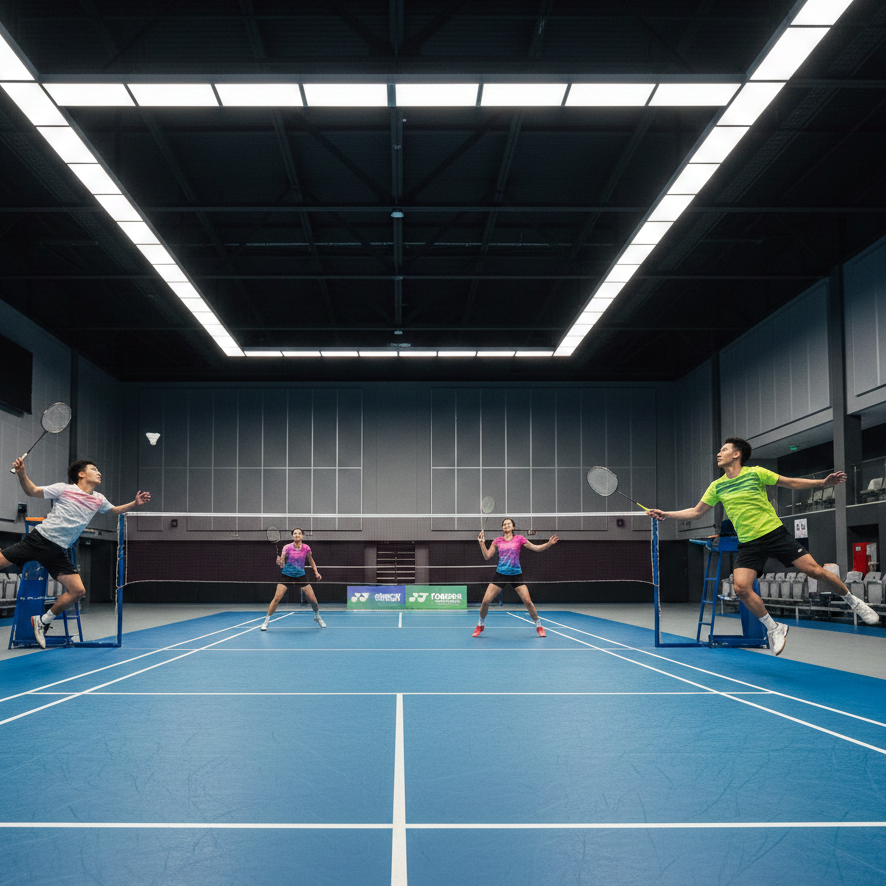
1. Why Badminton Flooring Matters More Than you Think 🦵
Badminton involves:
- Sudden lunges
- Quick lateral movements
- Frequent jumps and landings
- Continuous footwork
These actions place significant stress on ankles, Knees, and lower back. Regular or improper flooring cannot absorb this impact effectively, increasing injury risks.
Proper badminton sports flooring helps:
- Reduce joint stress.
- Improve foot grip and stability.
- Enhance player confidence.
- Support long training sessions without fatigue.
2. Key Performance Requirement for Badminton Court Flooring🎯
Not all sports flooring is suitable for badminton. The surface must meet specific technical requirement.
Essential features include:
- Shock absorption to protect joints
- Anti-slip surface for controlled movement
- Uniform surface response for consistent footwork
- Energy return to support agility and speed
- Matte finish to avoid glare under lighting
These feature collectively improve reaction time, balance, and overall gameplay quality.
3. Safety and Injury Prevention in Badminton Courts🚑
Injury prevention is one of the most important reasons to invest in professional badminton flooring.
Common injuries caused by poor flooring:
- Ankle sprains
- Knee ligament strain
- shin splints
- Lower back pain
High-quality badminton flooring systems are engineered to:
- Absorb impact from jumps
- Reduce slipping during fast rallies
- Provide cushioning without instability
This makes them ideal for schools, academies, clubs and tournament venues.
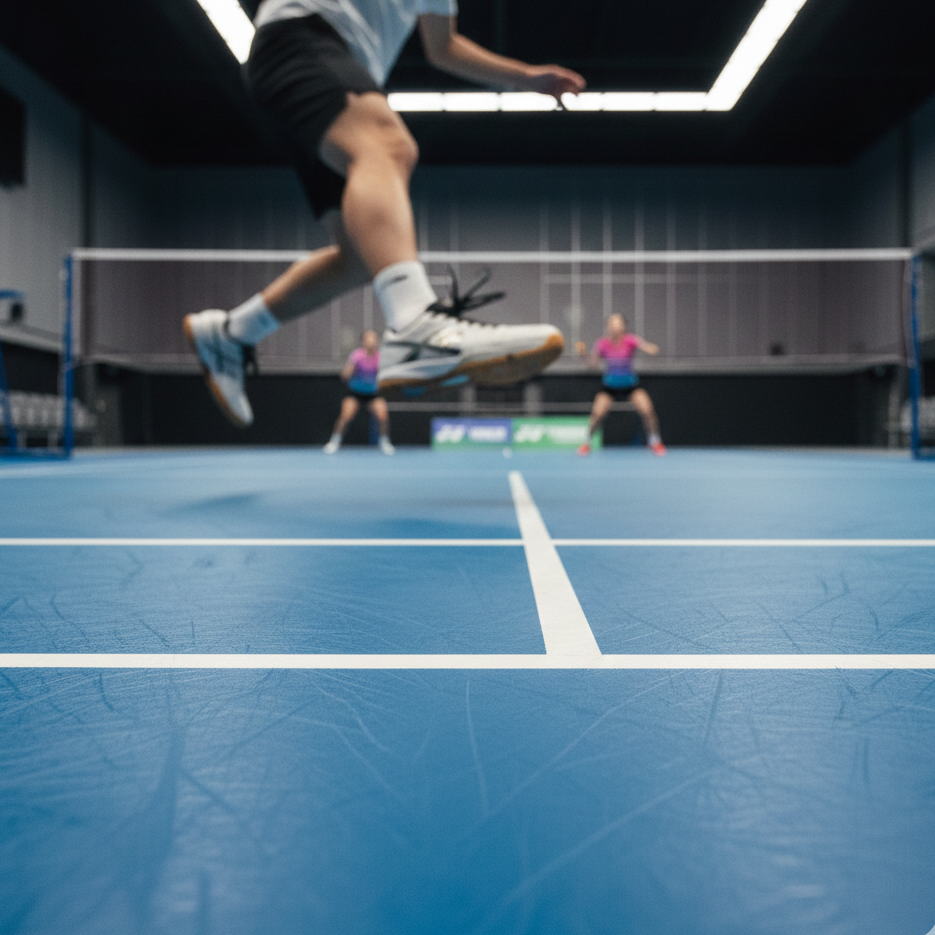
4. Recommended Flooring Type for Badminton Courts🏆
Among various options, PVC sports flooring is widely regarded as the best solution for badminton courts.
Why PVC Sports flooring is preferred:
- Excellent shock absorption
- Controlled grip for quick footwork
- Comfortable under long play durations
- Easy to maintain
- Durable for high-usage environments
PVC flooring systems are commonly used in professional badminton academies, schools, universities, and indoor stadiums.
🔍 Comparison Table: Badminton Sports Flooring Options
| Flooring Type | Shock Absorption | Player Safety | Performance | Maintenance | Suitability |
| PVC Sports Flooring | ⭐⭐⭐⭐⭐ | ⭐⭐⭐⭐⭐ | ⭐⭐⭐⭐⭐ | Easy | ✅Best Choice |
| Wooden Flooring | ⭐⭐⭐ | ⭐⭐⭐ | ⭐⭐⭐⭐ | High | Limited |
| Rubber Flooring | ⭐⭐⭐⭐ | ⭐⭐⭐⭐ | ⭐⭐ | Easy | Moderate |
| Concrete/Tiles | ⭐ | ⭐ | ⭐ | Easy | ❌Not Suitable |
| Synthetic Mats | ⭐⭐⭐ | ⭐⭐⭐ | ⭐⭐⭐ | Moderate | Temporary Use |
This comparison clearly shows why PVC Sports flooring is the most balanced and reliable choice for badminton courts.
5. Badminton Court Flooring Standards & Compliance 📏
Professional badminton courts must comply with international standards to ensure safety and performance consistency.
Key standards include:
- BWF (Badminton World Federation) guidelines
- Slip resistance and shock absorption benchmarks
- Uniform surface thickness and finish
- Proper line marking and court dimensions
Facilities that follow these standards are better suited for tournaments, coaching programs, and professional training.
6. Indoor Badminton Courts vs Multipurpose Halls 🏟️
Many institutions use badminton courts within multipurpose halls.
In such cases, flooring should:
- Support badminton-specific movement
- Adapt to other indoor sports
- Maintain consistent grip and cushioning
Modern sports flooring systems are designed to balance multi-sport usage without compromising badminton performance.
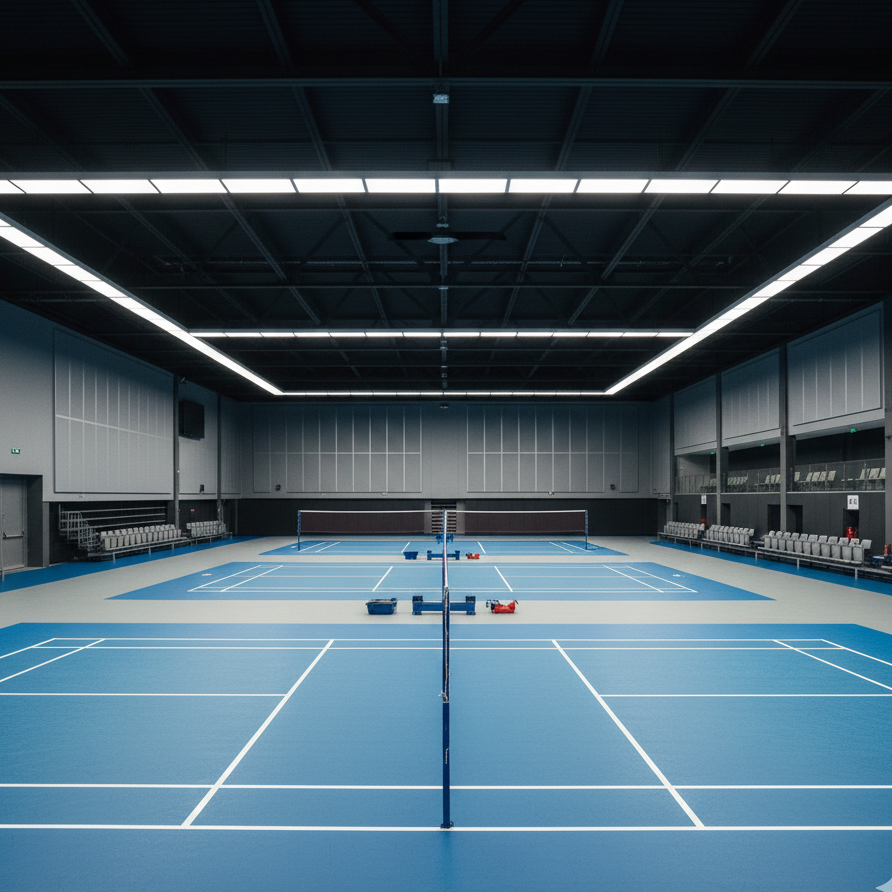
7. Long-Term Benefits of Quality Badminton Flooring 📈
Investing in the right badminton flooring offers long-term advantages:
- Fewer injury complaints
- Improved player satisfaction
- Lower maintenance costs
- Longer flooring lifespan
- Better facility reputation
Over time, quality flooring delivers better return on investment compared to low-cost alternatives.
8. Choosing the Right Badminton Flooring Partner 🤝
Beyond materials, expertise is design and installation determines flooring performance.
Professional sports flooring providers focus on:
- Correct sub-base preparation
- Sport-specific material selection
- Precision installation
- Long-term support and maintenance
This ensures flooring systems that perform consistently and protect players for years.
❓Frequently Asked Questions (FAQs)
Q1. What is the best flooring for indoor badminton courts?
PVC sports flooring is considered the best due to safety, comfort, and performance.
Q2. Is wooden flooring good for badminton?
It can be used but requires high maintenance and offers less shock absorption than PVC.
Q3. Can badminton be played on concrete floors?
Not recommended. Concrete increases injury risk significantly.
Q4. How thick should badminton sports flooring be?
Typically between 4.5mm to 7mm, depending on usage level.
Q5. Does badminton flooring reduce knee injuries?
Yes. Shock-absorbing flooring helps protect joints.
Q6. Is PVC badminton flooring suitable for schools?
Absolutely, It is safe, durable, and cost-effective.
Q7. How long does badminton sports flooring last?
With proper care, it can last 8-12 years or more.
Q8. Is badminton flooring slippery?
No. Professional flooring provides controlled grip.
Q9. Can badminton flooring be used for other sports?
Yes, especially in multipurpose indoor halls.
Q10. Does lighting affect badminton flooring choice?
Yes. Matte-finish flooring reduces glare.
Q11. Is professional installation necessary?
Yes. Incorrect installation reduces performance and lifespan.
Q12. Are international standards mandatory?
They are essential for tournaments and professional training.
Q13. Does flooring impact shuttle movement?
Indirectly, yes-stable footing improves shot accuracy.
Q14. Can old badminton flooring be upgraded?
Yes, depending on subfloor condition.
Q15. When should badminton flooring be replaced?
When grip reduces, injuries increase, or surface wears out.
🏁 Final Thoughts
Badminton is a fast, technical sport where flooring quality directly influences safety, performance, and player confidence. Choosing the right sports flooring is not just a facility decision- it is an investment in athlete health and long-term success.
By selecting professionally designed and properly installed badminton sports flooring, institutions create safer courts, better playing experiences, and stronger reputations.

Proudly powered by MSG Sports