
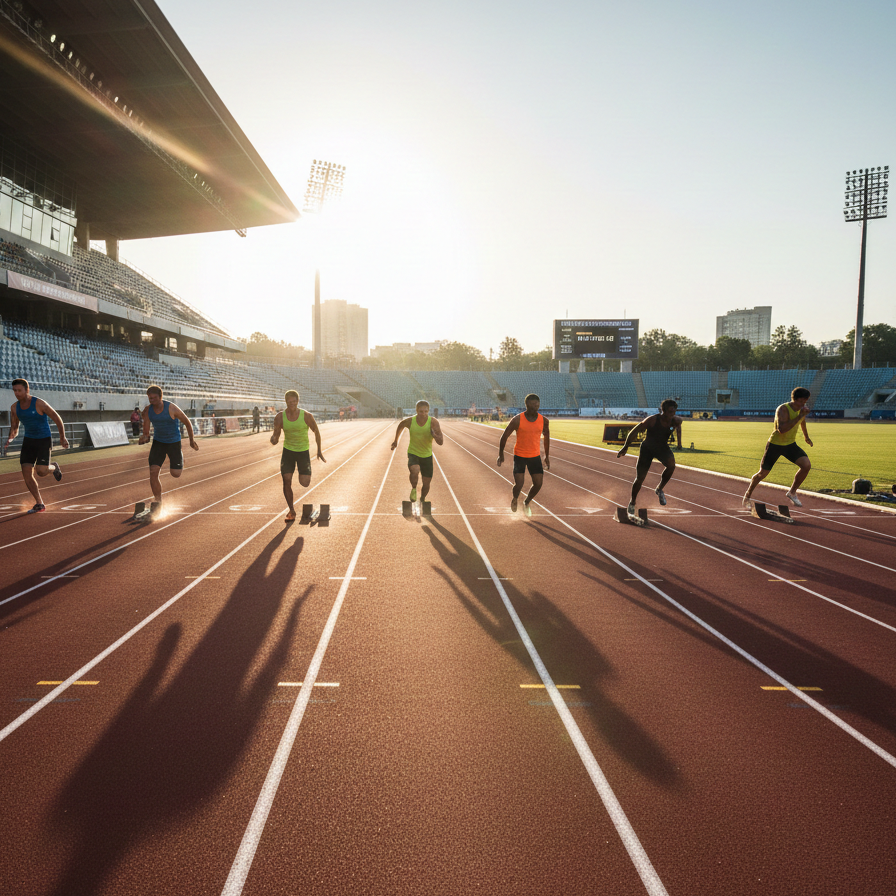
Athletic tracks are not just lanes painted on the ground – they are high-performance sports surfaces designed to enhance speed, reduce fatigue, and most importantly, protect athletes from injuries. Whether it’s school playground, professional stadium, or training academy, the quality of track surface directly affects performance and safety.
In this blog, we’ll explore how different athletic track surfaces impact athletes, what makes a good track system, and why choosing the right surface is a long-term investment in both performance and health.
🧠 How Track Surfaces Affect Athlete Performance
Modern athletic track systems are engineered to support athletes in multiple ways:
✅ Energy Return
High-quality track surfaces absorb impact and then return energy back to the athlete, improving running efficiency and speed.
✅ Grip & Traction
Proper traction prevents slipping during sprint starts, curves, and rainy conditions.
✅Consistent Bounce
Uniform surface texture ensures predictable foot contact, helping athletes maintain rhythm and stride.
✅ Reduced Fatigue
Shock-absorbing layers reduces stress on muscles, allowing athletes to train longer and recover faster.
⚠️ Injury Risks from Poor Track Surfaces
Inferior or worn-out surfaces can significantly increase injury risks such as:
- Shin splints
- Stress fractures
- Knee ligament strain
- Achilles tendon injuries
- Slipping accidents
Hard concrete or uneven surfaces transfer full impact to joints, increasing long-term wear and tear-especially for young athletes whose bodies are still developing.
That’s why professional sports bodies recommend synthetic shock-absorbing track systems instead of bare asphalt or cement.
🏗️ What Makes a High-Quality Athletic Track Surface?
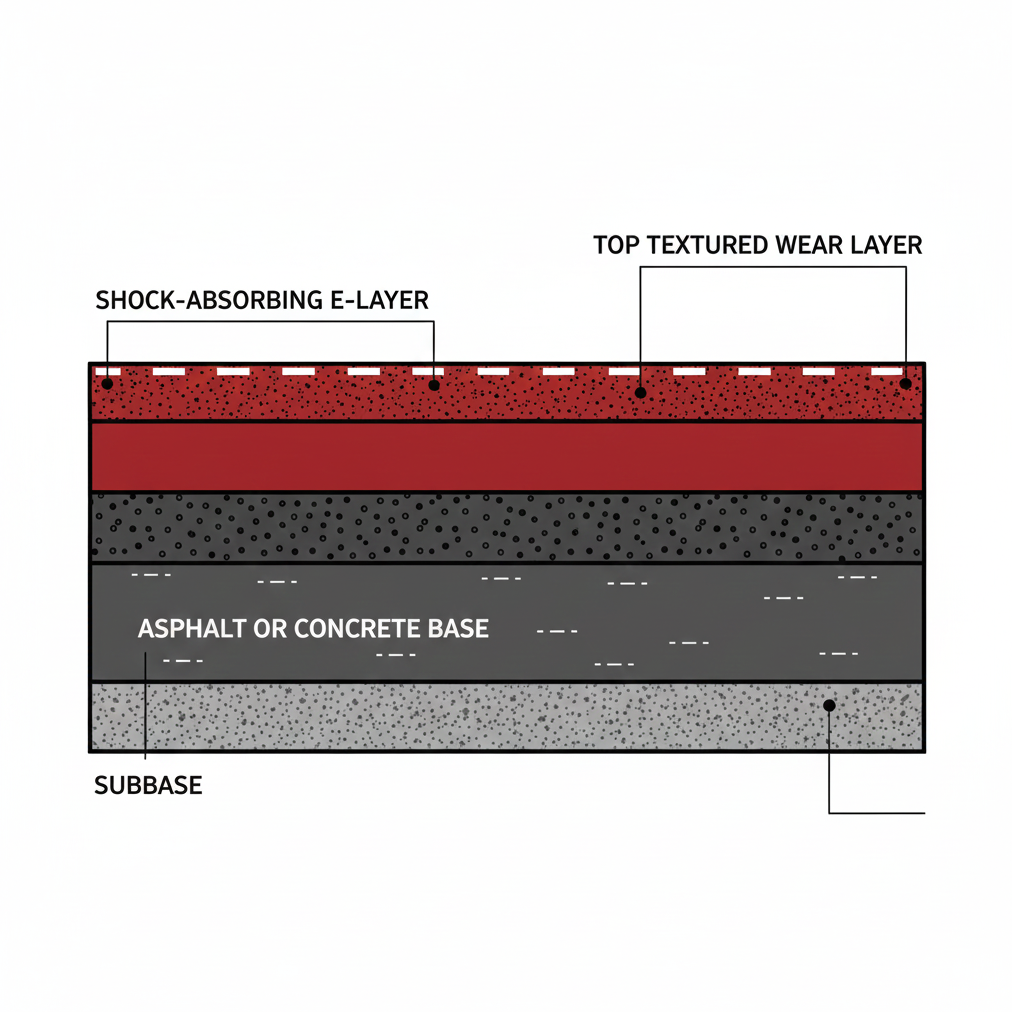
A professional athletic track is built with multiple engineered layers, not just a top coating.
🧩 Typical Track Construction Layers:
- Base Preparation – Proper leveling and drainage
- Elastic Shock Pad Layer – Absorbs impact
- PU or Rubber Surface Layer – Provides grip and speed
- Line Markings – UV-resistant and durable
Each layer contributes to performance, durability, and safety.
🏁 Popular Athletic Track Surface Types
Here’s a simple comparison of common athletic track options:
| Surface Type | Shock Absorption 🦵 | Speed Performance ⚡ | Durability 🛠️ | Maintenance 🔧 | Best For 🏫 |
| 🟥 PU Track (Polyurethane) | ⭐⭐⭐⭐⭐ | ⭐⭐⭐⭐⭐ | ⭐⭐⭐⭐ | ⭐⭐⭐ | Schools, Stadiums, Academies |
| 🟧 EPDM Rubber Track | ⭐⭐⭐⭐ | ⭐⭐⭐⭐ | ⭐⭐⭐⭐ | ⭐⭐⭐ | Playgrounds, Jogging Tracks |
| ⚫ Asphalt Track | ⭐ | ⭐⭐ | ⭐⭐⭐ | ⭐⭐ | Temporary training areas |
| 🧱 Concrete Surface | ❌ Very Low | ❌ Low | ⭐⭐⭐⭐ | ⭐ | Not recommended |
👉 PU track systems remain the global standard for professional and school-level competitions due to their balance of safety, speeds, and durability.
🏫 Why Schools & Sports Academies Must Prioritize Track Quality
Young athletes are more vulnerable to repetitive stress injuries. Installing proper athletic tracks helps:
- Build safe training habits
- Encourage daily physical activity
- Reduce school accident liability
- Improve sports results in competitions
Well-built tracks also become a long-term asset for institutions, attracting events, tournaments, and admissions.
🌱 Modern Trends: Sustainable & Weather-Resistant Tracks
Today’s track systems are designed to handle:
- Extreme heat
- Heavy rainfall
- UV exposure
- High daily foot traffic
Many modern surfaces also use eco-friendly materials and low-VOC coatings, supporting sustainability goals for educational institutions and municipalities.
🏗️ Professional Installation Makes All the Difference
Even the best materials won’t perform well if installation is poor. Precision in:
- Base leveling
- Drainage planning
- Layer thickness
- Surface finishing
… is what ensures long track life and consistent performance.
That’s why experienced sports infrastructure companies focus on custom site assessment, certified materials, and expert installation teams, delivering tracks that meet both safety and competition standards.
📈 Long-Term Value vs Short-Term Cost
While high-quality athletic track systems may seem like a higher upfront investment, they offer:
- Lower medical incidents
- Fewer repairs
- Longer usable life
- Higher athlete satisfaction
In the long run, quality surfaces actually reduce total ownership cost.
❓Frequently Asked Question (FAQs)
Q1. What is the best surface for athletic running tracks?
PU (polyurethane) track surfaces are considered the best for performance, durability, and injury prevention.
Q2. Are rubber tracks better than concrete?
Yes. Rubber and PU tracks absorb shock, while concrete transfers impact directly to joints.
Q3. How long does a PU athletic track last?
With proper installation and maintenance, a PU track can last 8-12 years or more.
Q4. Is athletic track surface important for children?
Absolutely. Children are more prone to stress injuries, making shock-absorbing tracks essential for schools.
Q5. Can tracks be installed over existing surfaces?
In many cases, yes- after proper surface preparation and leveling.
Q6. Are athletic tracks slippery in rain?
High-quality tracks are designed with textured, anti-skid finishes for wet conditions.
Q7. What maintenance does a running track need?
Basic cleaning, debris removal, and occasional surface inspections are usually sufficient.
Q8. Do athletic tracks improve running speed?
Yes, energy-return properties help athletes maintain speed with less effort.
Q9. Are tracks suitable for multi-sport use?
Yes. Many tracks are used for walking, jogging, and general sports training.
Q10. How long does installation take?
Typically between 2-4 weeks, depending on site size and weather conditions.
Q11. Can tracks handle heavy daily usage?
Professional-grade tracks are built for high footfall, including schools and stadiums.
Q12. Is eco-friendly track material available?
Yes. Many systems now use low-VOC and recyclable components.
Q13. What certifications should a track system meet?
International standards like World Athletics guidelines are commonly followed for competition tracks.
Q14. Can damaged tracks be repaired?
Yes, localized repairs and resurfacing are possible in most cases.
Q15. Why should institution work with specialized sports flooring companies?
Because expertise in design, materials and installation ensures safety, durability, and compliance with sports standards.
🏁 Final Thoughts
Athletic track surface play a critical role in shaping athlete performance, safety, and confidence. Whether you’re developing a school playground, sports academy, or professional training facility, choosing the right surface is not just about appearance – it’s about protecting athletes and helping them perform at their best.
Investing in scientifically designed track systems and professional installation today leads to healthier athletes, fewer injuries, and stronger sports culture tomorrow.

Proudly powered by MSG Sports Infratek India LLP