
Acrylic Sports Flooring
Artificial Turf
Badminton
Basketball
EPDM
Padel Court
Pickleball
PP Tiles
PU Athletic Track
PVC
Padel is rapidly emerging as one of the most exciting racket sports worldwide. In recent years, the sport has started gaining strong popularity in India, especially in metro cities, sports clubs, luxury residential communities, and premium fitness centers. With its growing demand, many sports infrastructure developers and facility owners are investing in Padel court construction to provide modern sporting amenities. 🏟️
Padel courts requires specialized design, materials, and construction standards to ensure proper gameplay, safety, and durability. This comprehensive guide explains everything you need to know about padel court construction in India, including court dimensions, materials, installation process, costs, lighting, and maintenance.
Introduction to padel Courts🎾
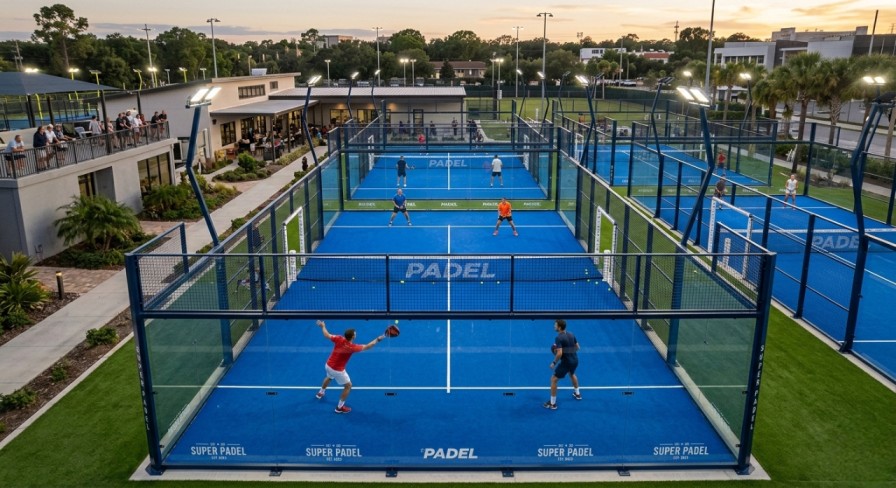
Padel is a racket sports that combines elements of tennis and squash. It is typically played in doubles on a smaller enclosed court surrounded by glass walls and metal mesh fencing. Unlike traditional tennis courts, the walls are an active part of gameplay.
Padel courts are usually installed in:
- Sports clubs and academies
- Luxury residential projects
- Hotels and resorts
- Fitness centers and gyms
- University and school campuses
- Corporate sports facilities
Because of the increasing demand for recreational sports infrastructure, padel courts are becoming a valuable addition to modern sports complexes.
Standard Padel Court Dimensions📏
To ensure professional gameplay, padel courts must follow international dimension standards.
| Component | Standard Measurement |
| Court Length | 20 meters |
| Court Width | 10 meters |
| Net Height (Center) | 0.88 meters |
| Net Height (Sides) | 0.92 meters |
| Back Glass Wall Height | 3 meters |
| Side Wall Height | 3 to 4 meters |
| Fence Height | Up to 4 meters |
These standardized measurements ensure the court delivers consistent ball rebound and fair gameplay conditions.

Key Components of a Professional Padel Court 🧩
Padel courts are composed of several structural elements that work together to create the ideal playing environment.
1.Artificial Turf Surface🌱
Most padel courts use synthetic artificial turf surfaces because they provides excellent grip and ball control.
Benefits of artificial turf include:
- Improved player comfort
- Consistent ball bounce
- Long durability
- Reduced injury risk
| Surface Type | Advantages | Limitations |
| Artificial Turf | Best for padel gameplay, durable | Higher installation cost |
| Acrylic Surface | Smooth finish | Less cushioning |
| Concrete Surface | Low cost | Hard surface, higher injury risk |
Artificial turf remains the most preferred choice for professional padel courts.

2. Tempered Glass Walls🪟
One of the most unique features of a padel court is the glass wall system. These walls allow the ball to rebound during gameplay and also provide visibility for spectators.
Typical specifications include:
- Tempered safety glass panels
- Thickness between 10-12 mm
- Impact-resistant design
| Feature | Tempered Glass Walls | Solid Walls |
| Ball Rebound Quality | Excellent | Moderate |
| Spectator Visibility | High | Low |
| Aesthetic Appeal | Modern | Basic |
| Tournament Suitability | Ideal | Limited |
Glass walls also give padel courts their modern and premium look.

3. Steel Mesh Fencing🔩
Steel mesh fencing surrounds the upper sections of the court and ensures the ball remains within the playing area.
Key characteristics includes:
- Galvanized steel structure
- Powder-coated finish
- High durability against weather conditions
Steel mesh fencing is especially important for outdoor padel courts.
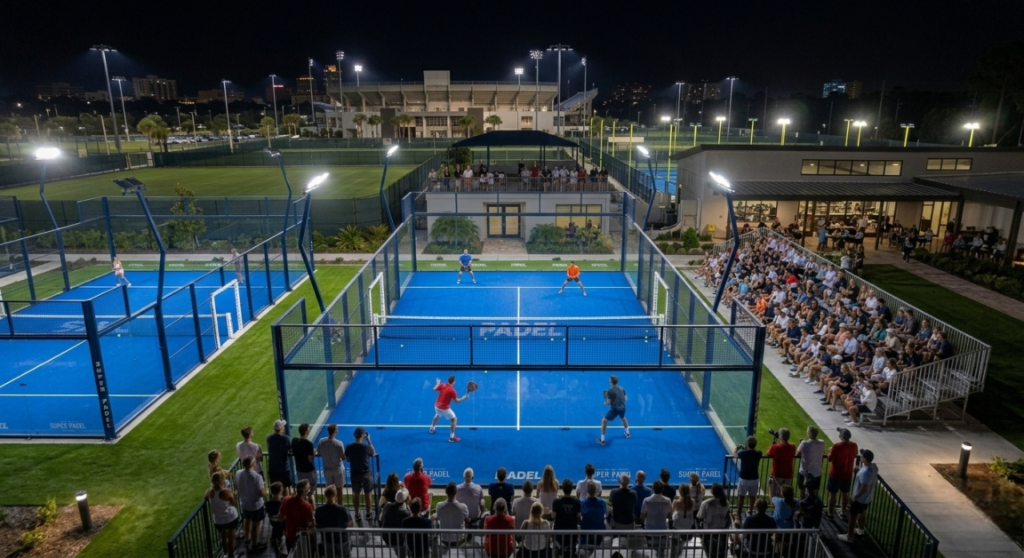
4. Court Lighting System💡
Padel courts require well-planned lighting to ensure visibility during evening or indoor gameplay.
Recommended lighting features include:
- LED sports lighting
- Minimum illumination level of 300-500 lux
- Glare-free light distribution
Proper lighting enhances player visibility and improves the overall playing experience.
5. Structural Framework 🏗️
Padel courts are supported by a strong steel structural framework that holds glass walls and fencing in place.
Important aspects includes:
- Galvanized steel columns
- Anti-corrosion coating
- High structural stability
This framework ensures the court remains stable and safe for many years.
Step-by-Step Padel Court Construction Process
Building a padel court involves several stages of planning and installation.
Step 1- Site Selection and Planning
The construction process begins with choosing a suitable site and preparing the court layout.
Key considerations:
- Ground stability
- Drainage system
- Accessibility for players and spectators
Step 2- Foundation Construction
A strong concrete base is required for structural stability.
Foundation work includes:
- Concrete slab installation
- Surface leveling
- Drainage system setup
Step 3 – Steel Structure Installation
The galvanized steel framework is installed to support the glass walls and fencing.
Step 4 – Glass wall and Mesh Installation
Tempered glass panels and steel mesh fencing are carefully installed around the court.
Step 5 – Artificial Turf Installation
Artificial turf with sand infill is installed on the playing surface to provide proper ball bounce and grip.
Step 6 – Lighting and Final Finishing
The final stage includes:
- LED lighting installation
- Net installation
- Court markings and finishing touches

Indoor Vs Outdoor Padel Courts 🏟️
Padel courts can be installed either indoors or outdoors depending on the project requirements.
| Feature | Indoor Padel Court | Outdoor Padel Court |
| Weather Protection | Fully protected | Weather exposed |
| Lighting Control | Easier | Natural + artificial |
| Construction Cost | Higher | Lower |
| Maintenance | Lower | Higher |
Indoor courts provide consistent playing conditions, while outdoor courts are more common due to lower construction costs.
Estimated Cost of Padel Court Construction in India💰
The cost of building a padel court can vary depending on materials, location, and customization.
| Component | Estimated Cost Range |
| Civil Construction | ₹8 – ₹12 lakh |
| Steel Structure | ₹6 – ₹10 lakh |
| Glass Panels | ₹5 – ₹8 lakh |
| Artificial Turf | ₹3 – ₹6 lakh |
| Lighting System | ₹2 – ₹4 lakh |
| Total Estimated Cost | ₹25 – ₹45 lakh |
The total cost depends on factors such as imported materials, premium lighting systems, and project scale.
Maintenance Tips for Padel Courts 🧹
Proper maintenance ensures the court remains safe and playable for many years.
Recommended maintenance practices include:
- Regular cleaning of artificial turf
- Checking glass wall alignment
- Inspecting steel structure for corrosion
- Maintaining proper lighting
Routine maintenance helps extend the court’s lifespan to 10-15 years.
Benefits of Installing a Padel Court⭐
Installing a padel court offers several advantages for sports facilities.
Key benefits include:
- Growing popularity of the sport
- High return on investment for sports clubs
- Attractive amenity for residential projects
- Suitable for players of all age groups
Because padel is easy to learn, it attracts both beginners and professional players.
Frequently Asked Questions (FAQs)
1. What is the standard size of a padel court?
A standard padel court measures 20 meters in length and 10 meters in width.
2. What surface is used in padel courts?
Most padel courts use artificial turf surfaces with sand infill.
3. How much does it cost to built a padel court in India?
The average cost ranges between ₹25 lakh and ₹45 lakh.
4. Why are glass walls used in padel courts?
Glass walls allow the ball to rebound and improve spectator visibility.
5. Can padel courts be built outdoors?
Yes, many padel courts are built outdoors using weather-resistant materials.
6. How long does padel courts construction take?
Construction typically takes 4 to 8 weeks.
7. What type of lighting is required?
Padel courts require LED sports lighting with 300-500 lux illumination.
8. Are padel courts suitable for residential projects?
Yes, they are becoming popular amenities in luxury housing communities.
9. Is artificial turf safe for players?
Yes, artificial turf provides cushioning and reduces injury risk.
10. How many players can play on a padel court?
Padel is usually played in doubles with four players.
11. What is the lifespan of a padel court?
With proper maintenance, a padel court can last 10-15 years.
12. Do padel courts require special fencing?
Yes, steel mesh fencing is used to keep the ball inside the court.
13. Are indoor padel courts better than outdoor courts?
Indoor courts provide better weather protection but cost more.
14. Can padel courts be installed in sports clubs?
Yes, many clubs are adding padel courts due to increasing demand.
15. Is padel popular in India?
Padel is rapidly growing in India, especially in major cities.
16. What materials are used for padel court construction?
Common materials include steel structures, tempered glass, artificial turf, and LED lighting systems.
17. How often should padel courts be maintained?
Basic maintenance should be done weekly, with detailed inspections every few months.
18. Can padel courts be used for tournaments?
Yes, professionally constructed courts can host national and international tournaments.
Conclusion 🏆
Padel court construction requires careful planning, high-quality materials, and professional installation to ensure a safe and enjoyable playing environment. With the sport gaining rapid popularity in India, installing padel courts in sports clubs, residential complexes, and recreational facilities can provide both entertainment and long-term business opportunities.
By following proper design standards, construction techniques, and maintenance practices, a well-build padel court can deliver exceptional performance and durability for many years.

Proudly powered by MSG Sports Infratek India LLP