

Basketball is a fast-paced, high-impact sport that demands explosive speed, quick directional changes, powerful jumps, and precise ball control. While training, footwear, and fitness get most of the attention, one critical factor often goes unnoticed- the basketball court flooring.
The surface beneath the player’s feet directly influences speed, traction, joint health, ball bounce, fatigue, and injury prevention. Choosing the right basketball flooring is not just about aesthetics; it is a science of biomechanics, material engineering, and safety design.
In this in-depth guide, we explore how basketball flooring works, why it matters, and how different surfaces impact player performance and safety. 🏀
🧠 Why basketball flooring Is a Science (Not just construction)
Basketball involves continuous loading and unloading of the body. Each sprint, stop, pivot, and jump creates forces up to 5-7 times a player’s body weight on the joints. The flooring must:
✔ Absorb shock
✔ Provide controlled grip
✔ Return energy efficiently
✔ Maintain consistent ball bounce
✔ Stay durable under heavy usage
This balance is achieved through advanced material layers, engineered sub-bases, and surface coatings.
🦵How Flooring Affects Player Biomechanics
1️⃣ Shock Absorption & Joint Protection
When Players land after a jump shot or rebound, the floor absorbs part of the impact. poor shock absorption increases stress on:
- Ankles
- Knees
- Hips
- Lower back
High-quality sports floors use elastic layers, rubber pads, or sprung systems to reduce impact forces and prevent chronic injuries like shin splints and tendonitis.
2️⃣ Traction & Movement Control 👟
Traction determines how well players can accelerate, stop, and pivot safely.
- Too slippery: Risk of slips and falls
- Too sticky: Increased risk of ligament strain during sudden turns
The ideal basketball floor offers controlled grip, allowing micro-sliding without loss of balance.
3️⃣ Energy Return & Fatigue Reduction ⚡
Some surface store and return a portion of the energy generated during movement. This improves:
- Sprint efficiency
- Jump height consistency
- Reduced muscle fatigue during long games
4️⃣ Ball Bounce Consistency 🏀
Uniform surface density ensures predictable dribbling and passing. Uneven floors can disrupt game flow and increase errors.
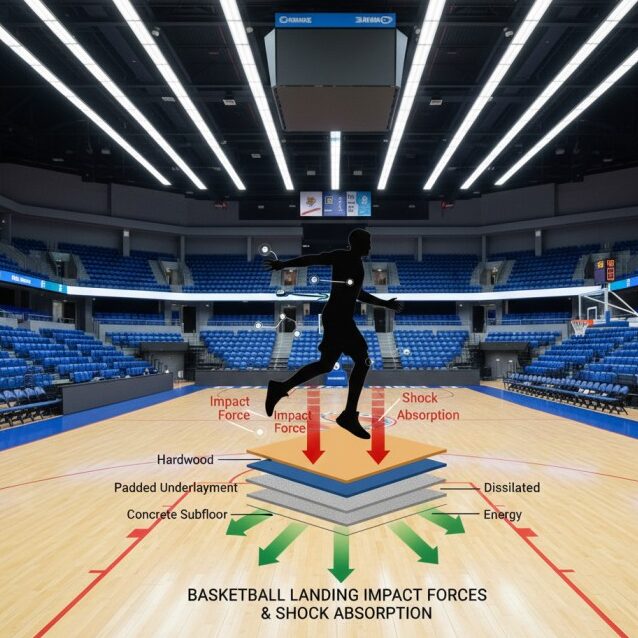
🏗️ Key Layers of a Professional Basketball Flooring System
A modern basketball floor is not a single slab – it’s a multi-layer system:
1. Subfloor Base– Concrete or asphalt foundation
2. Shock Absorption Layer– Rubber pads or foam systems
3. Load Distribution Layer– Plywood or engineered panels
4. Surface Layer– Wood, PVC, or synthetic material
5. Top Coating– Anti-slip polyurethane finish
Each layer contributes to comfort, durability, and safety.
🧱 Types of Basketball Court Flooring
🪵 1. Hardwood (Maple Wood Flooring)
Best for: Professional arenas, competitive clubs
Advantages:
- Excellent ball bounce
- Natural energy return
- Premium appearance
- Long lifespan
Limitations:
- Higher cost
- Requires polishing and refinishing
- Sensitive to moisture
🧩 2. PVC/ Vinyl Sports Flooring
Best for: Schools, academies, multi-purpose halls
Advantages:
- Good shock absorption
- Easy maintenance
- Moisture resistant
- Cost-effective
Limitations:
- Slightly less ball response than wood
- May wear faster under extreme load
🧱 3. Modular PP Interlocking Tiles
Best for: Outdoor courts, temporary installations
Advantages:
- Weather resistant
- Quick installation
- Drainage capability
- Portable
Limitations:
- Harder surface
- Lower professional play feel
🧪 4. Synthetic Multi-Layer Sports Flooring
Best for: High-traffic indoor facilities
Advantages:
- Balanced cushioning
- Consistent performance
- Customizable thickness
Limitations:
- Requires professional installation
📊 Basketball Flooring Comparison Table
| Feature | Hardwood | PVC Vinyl | PP Tiles | Synthetic Multi-Layer |
| Shock Absorption | ⭐⭐⭐⭐⭐ | ⭐⭐⭐⭐ | ⭐⭐ | ⭐⭐⭐⭐ |
| Ball Bounce | ⭐⭐⭐⭐⭐ | ⭐⭐⭐⭐ | ⭐⭐ | ⭐⭐⭐⭐ |
| Maintenance | Medium | Low | Very Low | Low |
| Durability | High | Medium-High | High | High |
| Installation Cost | High | Medium | Low | Medium |
| Indoor / Outdoor | Indoor | Indoor | Outdoor | Indoor |
| Professional Play | Excellent | Good | Fair | Very Good |
🛡️ Safety Benefits of High-Quality Basketball Flooring
🏥 Injury Reduction
- Minimizes ankle sprains
- Reduces knee stress
- Prevents slips and falls
😌 Comfort &Fatigue Control
- Players recover faster
- Less muscle soreness
- Improved endurance
⚡Performance Stability
- Reliable traction
- Predictable ball bounce
- Consistent playing experience
🌍 Sustainability & Modern Innovations
Modern sports flooring Integrates:
🌱 Recyclable materials
💡 Low-VOC coatings
🔇Noise reduction layers
📊 Smart sensor integration
🌡️ Temperature resistance
Sustainability is becoming a major decision factor for sports infrastructure projects.
🏁 Final Thoughts
Basketball flooring is the silent performer behind every great match. The right surface protects athletes, improves gameplay, and enhances the overall sports experience. Whether designing a professional arena or a community court, investing in scientifically engineered flooring ensures long-term performance, safety, and satisfaction. 🏀✨
❓Frequently Asked Questions (FAQs)
Q1. What is the best flooring for professional basketball courts?
Ans:- Hardwood maple flooring offers the best ball bounce and shock absorption.
Q2. Is PVC flooring suitable for basketball?
Ans:- Yes, especially for schools and training facilities.
Q3. Can basketball be played on concrete?
Ans: – Not recommended due to high injury risk.
Q4. Which flooring is best for outdoor basketball courts?
Ans: – PP interlocking tiles
Q5. How thick should basketball flooring be?
Ans: – Typically 6mm – 12 mm depending on system design.
Q6. How long does hardwood flooring last?
Ans: – 20 -30 years with proper maintenance.
Q7. Does flooring affect jump height?
Ans:- Yes, energy return influences performance.
Q8. Is shock absorption important?
Ans:- Extremely important for joint protection.
Q9. Can PVC flooring be used for multi-sports?
Ans:- Yes, very versatile.
Q10. How often should courts be resurfaced?
Ans:- Every 5-10 years depending on wear.
Q11. What maintenance is required for hardwood?
Ans:- Regular cleaning and periodic refinishing.
Q12. Are synthetic floors eco-friendly?
Ans:- Many modern systems use recyclable materials.
Q13. Does humidity affect basketball floors?
Ans:- Yes, especially wooden surfaces.
Q14. Can modular tiles handle heavy play?
Ans:- Yes, but they are better for recreational use.
Q15. What certifications should sports flooring meet?
Ans:- FIBA, EN standards, or equivalent.
Q16. Is anti-slip coating necessary?
Ans:- Yes for safety and performance consistency.
Q17. Can flooring reduce athlete fatigue?
Ans:- Yes, cushioned systems reduce impact stress.
Q18. How long does installation take?
Ans:- From a few days to several weeks depending on type.

Proudly powered by MSG Sports Infratek India LLP