
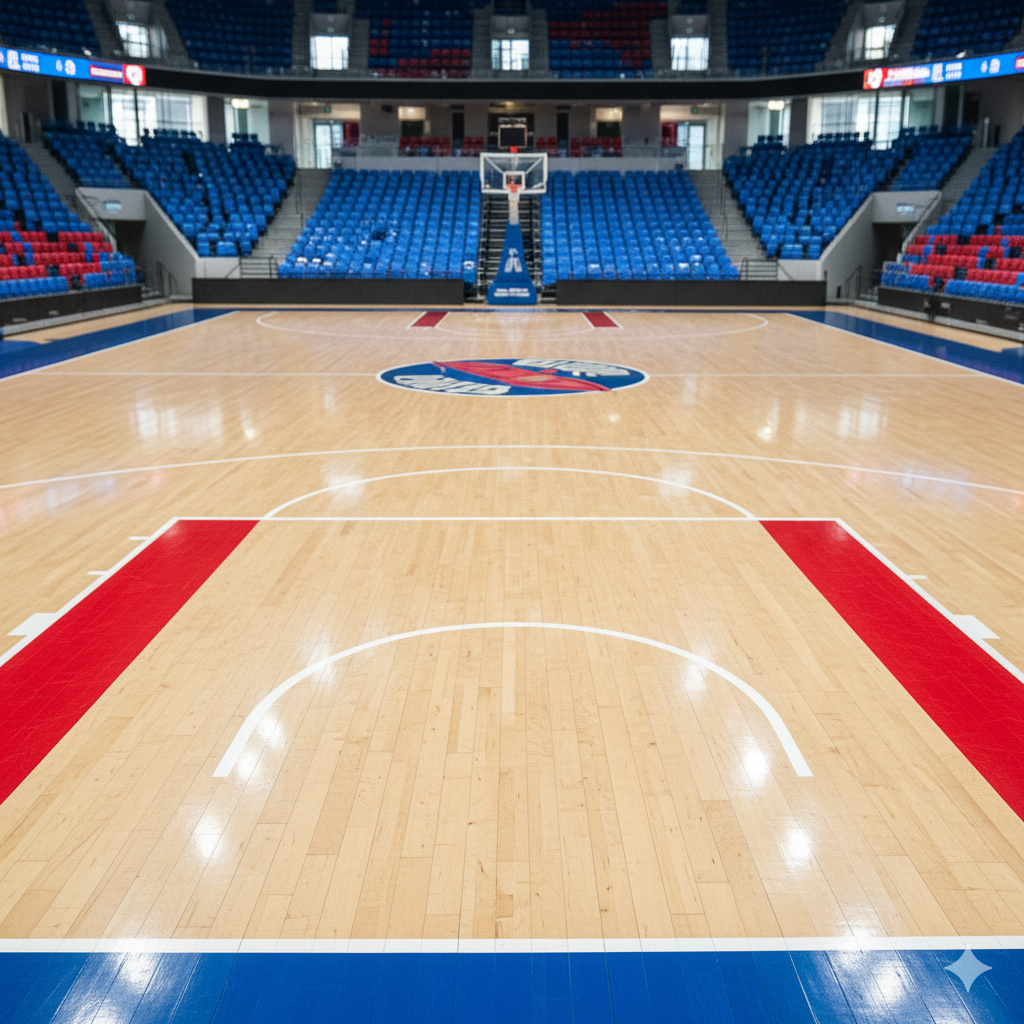
Indoor sports flooring plays a critical role in athlete performance, injury prevention, facility longevity, and compliance with international sports standards. Among all indoor flooring systems, Maple Wooden Sports Flooring remains the global benchmark for professional basketball courts, volleyball arenas, badminton halls, and multi-purpose indoor stadiums. 🌍
Used in Olympic arenas, professional leagues, universities, and training academies, maple wood flooring offers unmatched ball response, shock absorption, aesthetic, and durability when installed correctly.
Maple sports flooring is a hardwood indoor sports surface system made primarily from hard maple (Acer saccharum) – a dense, fine-grain wood species known for its strength, elasticity, and consistent texture.
Unlike residential wood floors, sports maple flooring is engineered as a complete system, including:
- Solid or engineered maple planks
- Shock absorption subfloor layers
- Moisture barriers
- Ventilation channels
- Sports-grade coating and line markings
This integrated system ensures player safety, controlled energy return, and long-term structural stability.
🏆Why Maple Is the Global Standard for Indoor Courts
Maple has been the preferred sports flooring material for decades due to its balanced mechanical properties.
⭐ Key Advantages
🏀 Excellent Ball Bounce Consistency
Uniform grain structure provides predictable rebound for basketball and other ball sports.
🦵 Shock Absorption & Energy Return
Reduce stress on joints, knees, ankles, and spine while maintaining athletic responsiveness.
🛡️ High Durability & Wear Resistance
Withstands heavy foot traffic, rolling equipment, and repeated impacts.
🎨 Professional Aesthetics
Bright natural tone enhances lighting, visibility, and broadcast quality.
🔧 Repairable & Refinishable
Surface can be sanded and recoated multiple times, extending lifespan.
🌿 Natural & Sustainable Material
When sourced responsible, maple is renewable and environmentally responsible.
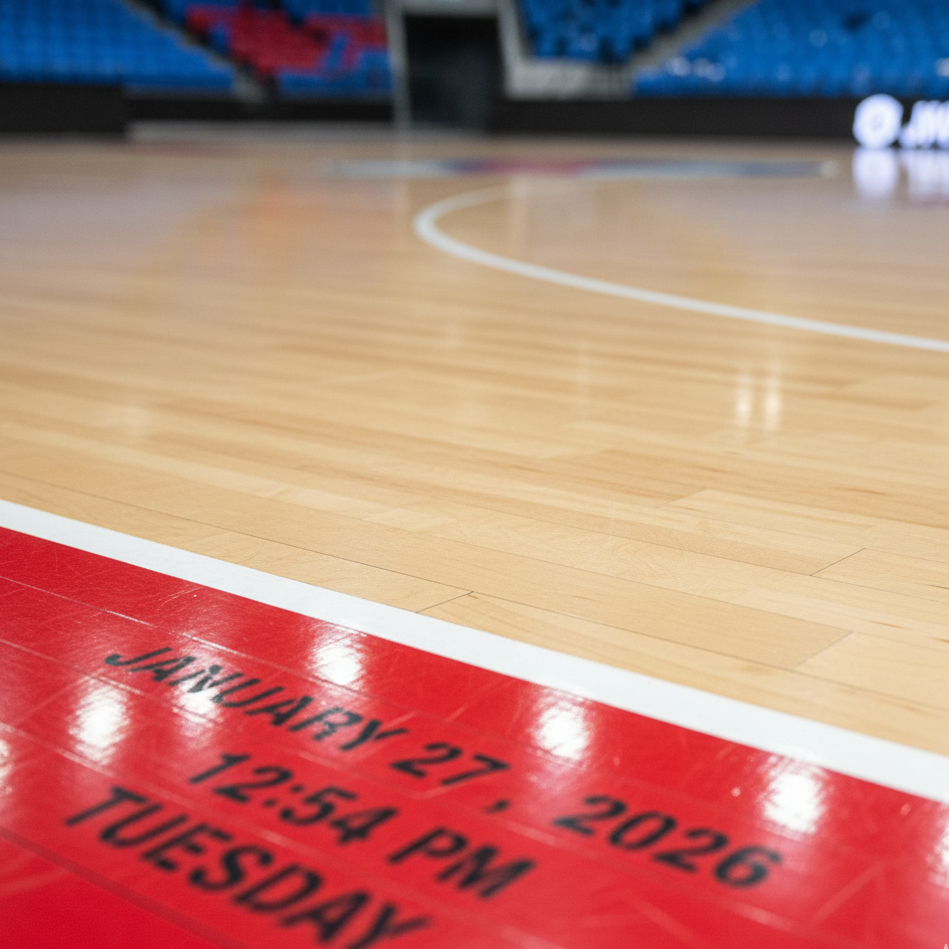
🏀Suitable Sports for Maple Wooden Flooring
Maple wooden flooring is primarily designed for indoor sports requiring high precision and controlled movement.
🎯 Ideal Applications
- 🏀 Basketball Courts
- 🏐 Volleyball Courts
- 🏸 Badminton Courts
- 🤾 Handball Courts
- 🎾 Indoor Training Courts
- 🏫 School Gymnasiums
- 🏟️ Stadiums & Arenas
- 🏋️ Multi-purpose Sports Halls
⚠️ Not recommended for outdoor or wet environments.
🧪 Performance Characteristics Explained
🟢 Shock Absorption
Reduces impacts forces transmitted to athletes during jumping and running.
🟢 Vertical Deformation
Allows slight surface flexibility for comfort without performance loss.
🟢Ball Rebound
Meets professional sports rebound tolerance requirements.
🟢Surface Friction
Optimized slip resistance for controlled movement.
🟢 Load Resistance
Handles heavy spectator seating, equipment carts, and bleachers.
🛡️Safety Standards & Compliance
High-quality maple sports flooring systems typically comply with:
✔️ EN 14904 (European Indoor Sports Flooring Standard)
✔️ DIN 18032 (German Sports Hall Standard)
✔️ FIBA Basketball Equipment Standards
✔️ BWF Indoor Court Guidelines
✔️ Fire resistance regulations (local building codes)
✔️ VOC emission limits for indoor air quality
Always request test certificates and product documentation from suppliers.
🏗️ Installation Systems for Maple Sports Flooring
🔹1. Fixed System
Planks permanently anchored to subfloor.
✔ High stability
✔ Long lifespan
❌ Less portability
🔹 2. Floating System
Floor rests on shock pads without anchoring.
✔ Better shock absorption
✔ Faster installation
✔ Suitable for retrofits
🔹3. Portable System
Removable panels for temporary venues.
✔ Event flexibility
❌ Higher cost
📊 Comparison table – Maple vs Other Indoor Sports Flooring
| Feature | Maple Wood | PU Flooring | PVC Vinyl | Rubber Tiles |
| Ball Bounce | ⭐⭐⭐⭐⭐ | ⭐⭐⭐⭐ | ⭐⭐⭐ | ⭐⭐ |
| Shock Absorption | ⭐⭐⭐⭐ | ⭐⭐⭐⭐⭐ | ⭐⭐⭐⭐ | ⭐⭐⭐ |
| Aesthetic Appeal | ⭐⭐⭐⭐⭐ | ⭐⭐⭐ | ⭐⭐⭐ | ⭐⭐ |
| Lifespan | 25-40 years | 10-15 years | 8-12 years | 10-15 years |
| Repairability | Excellent | Moderate | Low | Moderate |
| Indoor Air Quality | Natural | Synthetic | Synthetic | Synthetic |
| Maintenance Cost | Medium | Low | Low | Low |
| Installation Cost | High | Medium | Medium | Medium |
💰 Cost Considerations
Cost depends on:
- Subfloor preparation
- System type (fixed/floating/portable)
- Wood thickness and grade
- Coating systems
- Logistics and labor
💵 Typical Investment Range
Premium maple systems cost more initially but deliver lower lifetime cost due to long lifespan and refinishing capability.
🧹Maintenance & Care Guidelines
🧼 Daily
✔ Dust mopping
✔ Remove grit and moisture
🧽 Weekly
✔ Damp mop with approved cleaner
🔄 Periodic
✔ Re-coating every 2-3 years
✔ Sanding every 8-12 years
🚫 Avoid
❌ Excess Water
❌ Harsh chemicals
❌ Rubber marks buildup
❌ Heavy dragging
Proper maintenance can extend lifespan beyond 30 years.⏳
🌿 Sustainability & Environmental Benefits
♻️ Renewable hardwood source
🌱 Low VOC coatings
🪵 Long lifecycle reduces replacement waste
🌍 Supports green building certifications
Always select certified suppliers for responsible sourcing.
⚠️ Limitations to Consider
❗Higher initial investment
❗Moisture sensitive
❗Indoor-only usage
❗Requires skilled installation
These factors must be evaluated during project planning.
🏁 Final Recommendation
If you seek professional-grade performance, premium aesthetics, athlete safety, and long-term durability, maple wooden sports flooring remains the gold standard for indoor courts in 2026.🥇
It is ideal for:
✔ Stadiums
✔ Academies
✔ Universities
✔ Premium sports facilities
❓Frequently Asked Questions (FAQs)
1. Why is maple used for sports floors?
Ans:- Because of its density, elasticity, and consistent grain.
2. How long does maple sports flooring last?
Ans:- 25-40 years with proper care.
3. Can maple flooring be repaired?
Ans:- Yes, it can sanded and refinished multiple times.
4. Is maple flooring slippery?
Ans:- No, when coated properly it provide controlled grip.
5. Is it suitable for badminton courts?
Ans:- Yes, for professional indoor badminton halls.
6. Does it absorb shock well?
Ans:- Yes, especially with floating systems.
7. Is maple eco-friendly?
Ans:- Yes, when responsibly sourced.
8. Can it handle heavy equipment?
Ans:- Yes, with proper load distribution.
9. How often should recoating be done?
Ans:- Every 2-3 years depending on usage.
10. Does humidity affect maple floors?
Ans:- Yes, humidity control is essential.
11. Can it be installed over concrete?
Ans:- Yes, with vapor barriers and subfloor systems.
12. What is the ideal indoor humidity?
Ans:- 40-60% relative humidity.
13. Is maple flooring fire-resistant?
Ans:- Coating systems meet building fir codes.
14. Can multiple sports lines be painted?
Ans:- Yes, with sports-grade paints.
15. Is it suitable for schools?
Ans:- Yes, many schools use maple courts.
16. How long does installation take?
Ans:- Typically 2-4 weeks.
17. Can portable courts use maple?
Ans:- Yes, portable systems exist.
18. Does it improve athlete performance?
Ans:- Yes, due to consistent response.
19. Is maintenance expensive?
Ans:- Moderate compared to synthetic floors.
20. Does maples flooring increases property value?
Ans:- Yes, premium facilities attract higher value.

Proudly powered by MSG Sports Infraket India LLP