
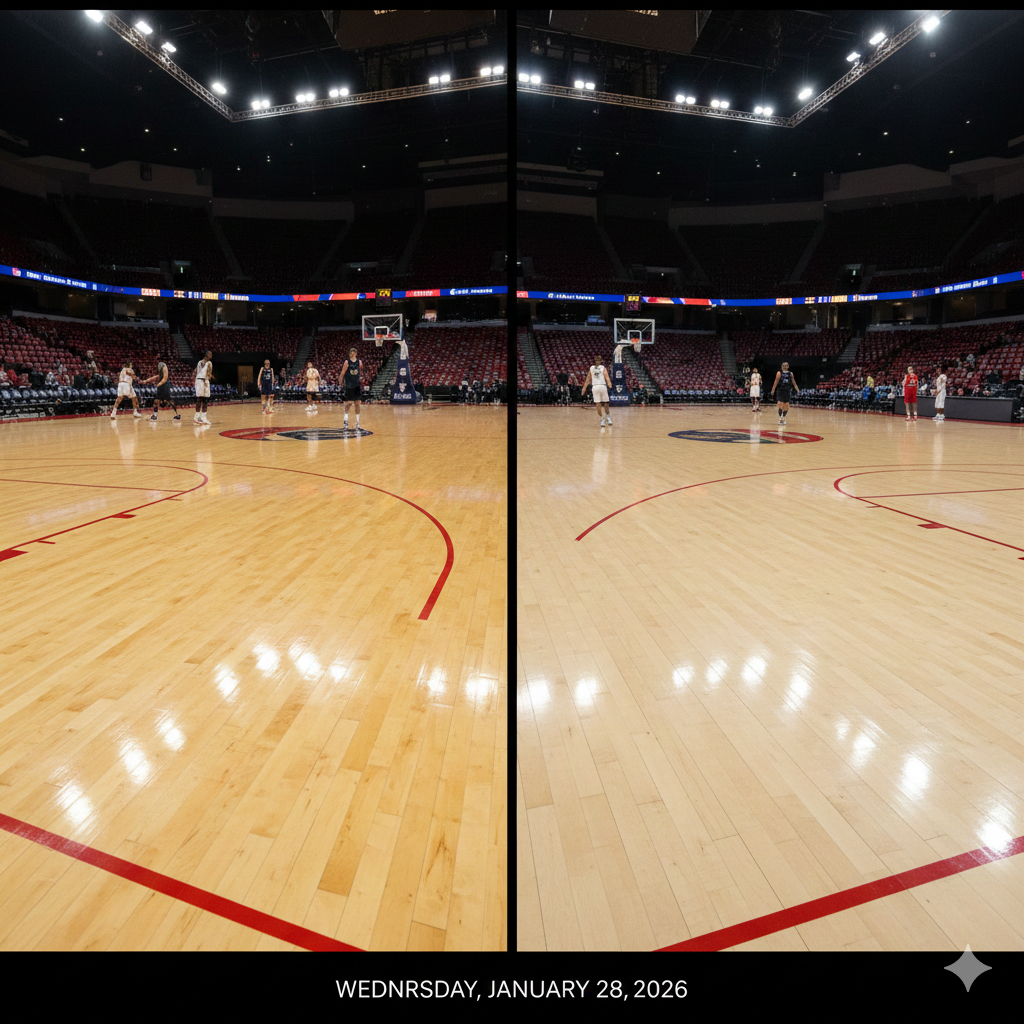
Selecting the right flooring system is one of the most critical decisions for indoor sports facilities. It impacts athlete performance, safety, user experience, long-term budget, and overall facility value.
Two top contenders in the industry are:
🔹Solid Maple Wooden Sports Flooring
🔹Engineered Wooden Sports Flooring
Both are widely used in indoor courts – but they differ in structure, performance, installation, lifespan, and cost. This guide helps you choose the right system for your project.
🧱 What Is Solid Maple Wooden Flooring?
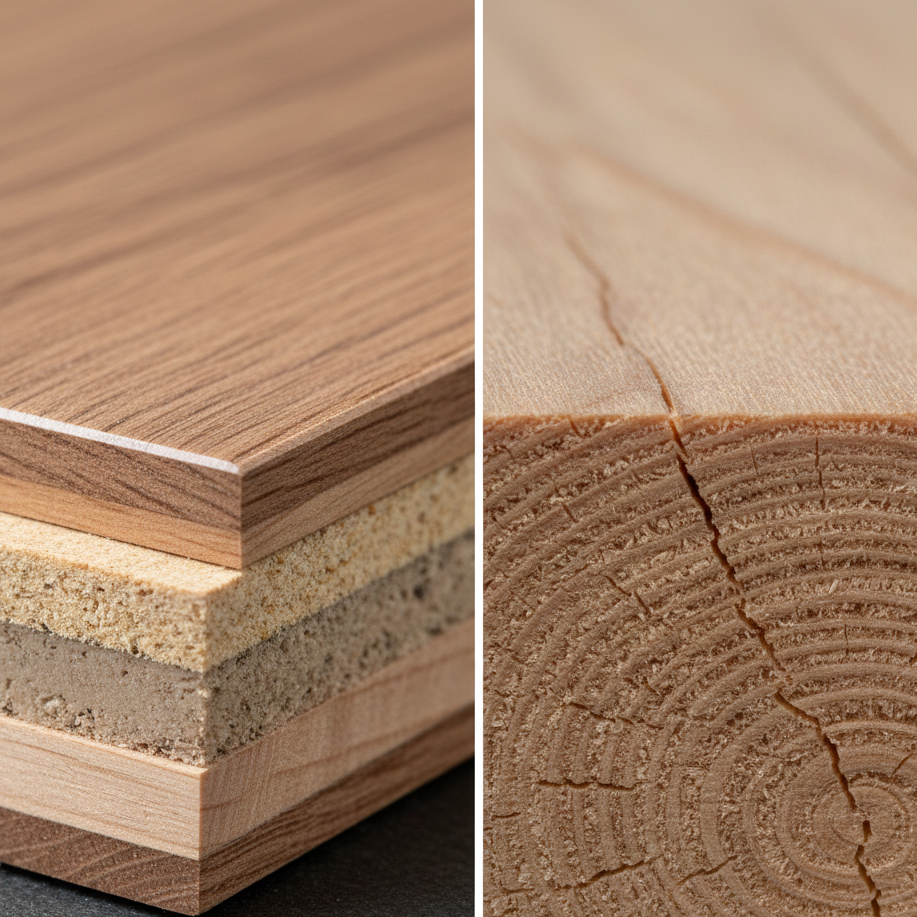
Solid maple sports flooring consists of long, continuous hardwood planks milled from a single piece of maple wood – typically 18-25 mm thick or more.
This is the traditional gold standard, known for its performance, durability, and historic use in professional basketball arenas and stadiums.
Key characteristics:
✔ 100% hardwood
✔ High density and consistent grain
✔ Refinishable several times
✔ Long lifespan
Ideal for venues like:
🏀 Professional basketball courts
🏐 Volleyball arenas
🏫 Schools & universities
🪵 What Is Engineered Wooden Sports Flooring?
Engineered sports flooring is constructed from multiple wood layers bonded together with grain directions alternating for strength. The top layer is real hardwood (often maple), while underlying layers may be plywood, HDF or other structural layers.
Benefits of this design:
✔ Dimensional stability
✔ Reduced moisture sensitivity
✔ Faster installation
✔ Improved shock absorption (in some designs)
Engineered systems area gaining popularity for modern multi-use indoor facilities.
🏆 Key Differences: What Sets Them Apart
Let’s look at the major factors that matter most to facility designers.
📊Solid vs Engineered Wooden Flooring – Comparison Table
| Feature | Solid Maple Flooring | Engineered Wooden Flooring |
| Hardwood Content | 100% solid maple | Real maple top layer over structural core |
| Stability with Moisture | Moderate | Higher stability |
| Shock Absorption | ⭐⭐⭐⭐ | ⭐⭐⭐⭐-⭐⭐⭐⭐⭐(depending on subfloor) |
| Ball Bounce Consistency | ⭐⭐⭐⭐⭐ | ⭐⭐⭐⭐-⭐⭐⭐⭐⭐ |
| Lifespan | ⭐⭐⭐⭐⭐(25-40 yrs) | ⭐⭐⭐⭐ (15-30 yrs) |
| Repair / Refinish Ability | Excellent (multiple cycles) | Good (limited cycles) |
| Installation Complexity | Traditional | Easier (modular options) |
| Cost | High | Medium – High |
| Performance | Premium | High |
| Indoor Air Quality | Natural material | Natural top layer (core may vary) |
| Environment Sustainability | High | High (if certified materials used) |
📌 Performance Comparison
🔹Ball Bounce & Surface Response
- Solid maple: Superior consistency due to uniform density.
- Engineered: Nearly identical performance; depends on subfloor and core quality.
🔹 Shock Absorption & Athlete Safety
Both systems perform well, but engineered floors paired with shock pad subfloors can offer slightly better impact control- beneficial for multi-use facilities.
🔹 Moisture & Humidity Resistance
- Engineered: Better dimensional stability and resistance to warping due to cross-layer construction.
- Solid maple: More sensitive to humidity changes; needs controlled indoor climate.
🔹Lifetime Value
- Solid maple: Longer raw lifespan and more re-coating cycles.
- Engineered: Long life, though top layer refinishing is limited compared to solid wood.
🏗️ Installation: What to Expect
🔹Subfloor Requirements
Both flooring systems require:
✔ Flat, level concrete base
✔ Proper moisture barrier
✔ Shock absorbing system(recommended)
🔹Installation Time
- Engineered flooring: Faster installation due to dimensional stability and modular design.
- Solid maple: Slightly longer due to acclimatization and precise laying.
🔹Skill & Tools
Professional installation is critical for both systems- to ensure:
✔ Proper expansion gaps
✔ Correct fasteners or floating mounts
✔ Accurate line marking
💰Cost Considerations
📍Solid Maple Flooring
- Higher upfront cost
- More labor-intensive
- Higher lifecycle value due to midnight sanding / refinishing
📍Engineered Wood Flooring
- Slightly lower initial cost
- Modular systems can reduce downtime
- Maintenance costs depend on use patterns
In many projects, engineered flooring becomes more cost-effective due to installation speed and reduced environmental sensitivity.
🧹 Maintenance Guidelines for Both Flooring Types
🧼 Daily
✔ Dust mop
✔ Remove grit and moisture
🧽 Regular
✔ Damp mop with wood-safe cleaner
✔ Avoid harsh detergents
🔄 Periodic
✔ Recoat the surface
✔ Inspect expansion joints and gaps
❌ Avoid
❌ Excessive water
❌ Dragging heavy wheels
❌ Sharp metal edges
Proper maintenance extends lifespan significantly.
🌱 Environmental & Health Benefits
Both flooring systems can be:
✔ FSC/PEFC certified
✔ Low-VOC finished
✔ Recyclable at end of life
Choosing responsibly sourced wood supports sustainable construction.
🛡️ Safety & Standards
Quality wooden sports flooring should comply with:
✔ EN 14904
✔ DIN 18032
✔ FIBA & BWF court requirements
✔ Local fire & indoor air safety codes
Always verify third-party certificates
❓Frequently Asked Questions (FAQs)
1.Which flooring type has better ball rebound?
Ans:- Solid maple generally has slightly better consistency, but quality engineered flooring is excellent too.
2. Is engineered wood flooring weaker than solid maple?
Ans:- Not necessarily – engineered systems are designed for high performance.
3. Can engineered flooring be refinished?
Ans:- Yes, but fewer times than solid maple (depends on wear layer thickness).
4. Which system is better in high humidity?
Ans:- Engineered flooring handles humidity fluctuations better.
5. What is the expected lifespan of engineered wood?
Ans:- Typically 15-30 years depending on use and maintenance.
6. Which costs more initially?
Ans:- Solid maple is usually more expensive upfront.
7. Does engineered flooring affect indoor air quality?
Ans:- No, when low-VOC finishes and certified materials are used.
8. Can maple floors be installed over radiant heating?
Ans:- Yes, both can meet professional sports standards with correct installation.
9. Is engineered wood good for schools?
Ans:- Yes, particularly for multi-purpose halls.
10. Can maple floors be installed over radiant heating?
Ans:- Yes, with proper specifications.
11. Does solid maple need more maintenance?
Ans:- Not significantly; maintenance is similar for both.
12. Are engineered floors better for multi-use courts?
Ans:- Often yes, due to moisture stability and retrofit flexibility.
13. What finish is recommended?
Ans:- Sports-grade polyurethane or UV finishes.
14. Is installation difficult?
Ans:- Professional installation is critical for both.
15. Can damaged boards be replaced?
Ans:- Yes, both systems allow localized repair.
16. Is engineered wood lighter than solid maple?
Ans:- Yes, often lighter and easier to handle during installation.
17. Are both eco-friendly?
Ans:- Yes, if made from certified materials.
18. Do warranties differ?
Ans:- Yes- verify manufacture warranty terms.
🏁 Final Recommendation
Both solid maple and engineered wood sports flooring deliver excellent performance, safety, visual appeal, and long-term value.
✅ Choose Solid Maple if you want maximum lifespan, refinishing capability, and premium performance for high-level sports venues.
✅ Choose Engineered Wood if you want moisture stability, faster installation, retrofit flexibility, and balanced cost-performance for multi-use facilities.
your final choice should be based on:
🎯 Usage intensity
🎯 Climate conditions
🎯 Lifecycle budget
🎯 Facility type

Proudly powered by MSG Sports Infratek India LLP