
🏁 Introduction
Every great game begins from the ground up — literally.
A well-designed sports floor doesn’t just support athletes; it enhances performance, safety, and the overall playing experience. But like any infrastructure, sports floors have a lifecycle – from installation and maintenance to renovation and eventual replacement.
Understanding this lifecycle helps schools, clubs and facility owners make smarter investments, extend the lifespan of their floors, and maintain high play quality over time.
At MSG Sports infra, we’ve seen firsthand how the right installation and maintenance strategy can make a sport floor last twice as long – saving clients both money and downtime.
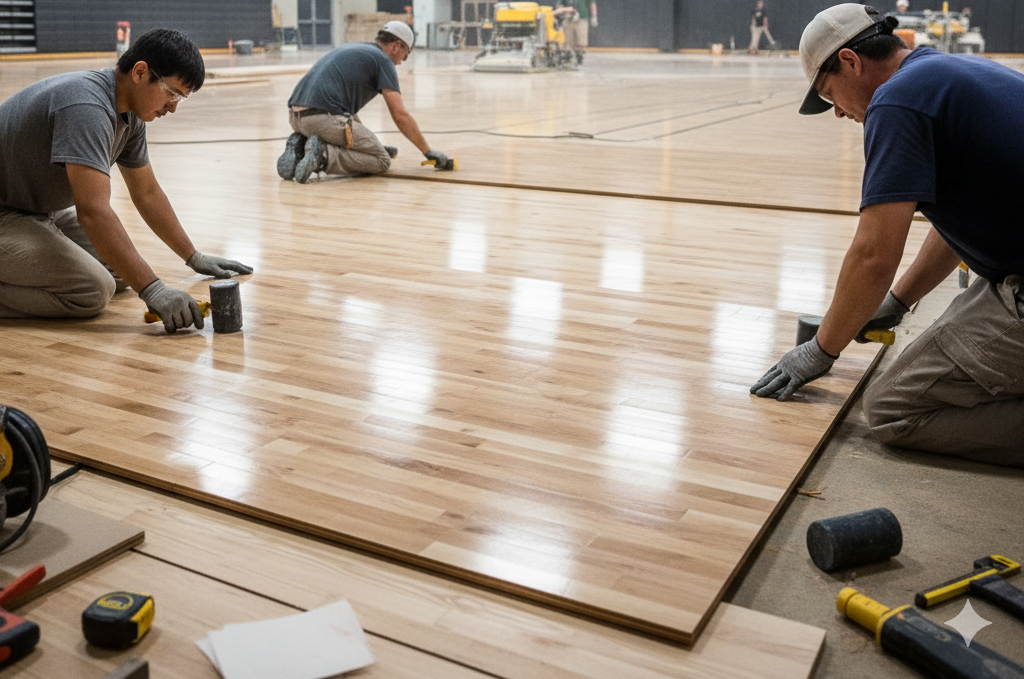
⚒️ Step 1: Planning & Installation — The Foundation of Durability
The first stage in a sports floor’s life determines everything that follows.
Key Phases During Installation — The Foundation of Durability
- Subfloor Preparation:
- Ensuring the surface is level, clean, and moisture – controlled.
- Poor preparation is the number one reason floors fail prematurely.
2. Material Selection:
- Choosing between PP tiles, PVC vinyl, hardwood or synthetic surfaces depending on sport type, indoor/ outdoor use, and budget.
3. Precision Installation:
- Proper expansion gaps, adhesive use, and underlay systems ensure flexibility and shock absorption.
4. Curing & Finishing:
- For wooden or synthetic floors, curing time is essential to allow adhesives and coatings to stabilize.
MSG Sports infra uses advanced leveling systems and moisture – barrier underlays to ensure your sports floor starts strong and stays durable.
🧽 Step 2: Regular Maintenance — The Secret to Longevity
Once installed, consistent maintenance keeps the surface safe and responsive.
Routine Maintenance Tips:
- Daily cleaning: Use soft mops or vacuums to remove dust and grit.
- Avoid harsh chemicals: Use manufacturer – approved cleaning solutions only.
- Check lines markings: Repaint worn lines to maintain visibility and aesthetics.
- Inspect joints and expansion gaps: Prevent moisture or dirt from seeping in.
Annual Deep Maintenance:
- Wooden Floors: Light sanding and resealing to restore traction and shine.
- PP Tiles / PVC Floors: pressure wash or deep clean joints to remove buildup.
Even with best materials, neglecting regular maintenance can shorten a floor’s lifespan by 30 – 40%.
🧰 Step 3: Refurbishment & Repair — Extending the Play Life
Every 5 – 10 years (depending on use and material), your sports floor will start showing wear: scuff marks, reduced grip, or uneven area.
Common Refurbishment Actions:
- Sanding and resealing wooden floors.
- Replacing damaged PP or PVC tiles.
- Replacing court lines and logos.
- Re-coating protective layers for UV and slip resistance.
With timely refurbishments, facilities can easily extend their floor’s service life by another 5 -7 years.
MSG Sport Infra offers complete refurbishment packages that rejuvenate sports surfaces – ideal for schools and clubs wanting a “new look” without full replacement.
🔄 Step 4: Replacement — When It’s Time to Start Fresh
Even the best floors reach the end of their lifecycle. When constant repairs start outweighing the benefits, it’s time to replace.
Signs you Need Replacement:
- Persistent unevenness or cracks.
- Loss of elasticity or shock absorption.
- Peeling or bubbling in PVC / synthetic floors.
- Irreparable water damage.
The average replacement timeline varies by surface type:
| Flooring Type | Average Lifespan |
| Hardwood (Indoor) | 15 – 20 years |
| PP Tiles (Outdoor) | 8 -12 years |
| PVC / Vinyl (Indoor) | 7 – 10 years |
| Acrylic / Synthetic (Outdoor) | 5 – 8 years |
Upgrading to modern surfaces with better shock absorption, weather resistance, and modular design can significantly improve play experience.
MSG Sports Infra helps clients transition seamlessly – removing old surfaces and installing next – gen floors with minimal downtime.
💡 Bonus: Lifecycle Cost Optimization
It’s not just about installation cost — it’s about total cost of ownership.
Choosing quality materials and maintaining them properly can reduce lifetime expenses by up to 40%.
Think of it as a long – term investment rather than a one – time purchase.
🧩 Conclusion
A Sports floor isn’t a static piece of infrastructure — it’s a living surface that grows, wears, and evolves with every match. By understanding its lifecycle and caring for it properly, facility owners can deliver consistent performance for years while optimizing costs.
At MSG Sports Infra, our focus has always been on building floors that perform, last, and inspire. Whether it’s installation, refurbishment, or replacement – we help India’s sports facilities stay game – ready all year round.
❓ Frequently Asked Questions (FAQs)
Q1. What is the typical lifespan of a sports floor?
Depending on the material, it ranges from 7 to 20 years. Wooden floors last longest, while synthetic and outdoor surface have shorter lifespans due to wear and weather.
Q2. How often should sports floors be cleaned?
Daily sweeping and weekly mopping are ideal. Avoid excessive water on wooden floors. For outdoor PP tiles, periodic washing helps remove dust buildup.
Q3. Can damaged tiles or wood panels be replaced individually?
Yes. Modular flooring systems like PP tiles or engineered wood allow sectional repairs, saving both time and money.
Q4. How do I prevent slippery sports floors?
Regular cleaning and anti-slip coating help. For indoor floors, maintaining humidity between 40-60% prevents condensation – related slipperiness.
Q5. Is professional maintenance necessary every year?
For high – use facilities, yes. A professional inspection every 12 months helps detect hidden damage and prevents condensation – related slipperiness.
Q6. What factors shorten a floor’s lifespan?
- Poor installation or subfloor leveling
- High humidity and moisture exposure
- Use of incorrect cleaning agents
- Ignoring small damages that worsen over time
Q7. When should I consider floor replacement instead of repair?
When damage affects performance or safety, or when maintenance costs exceed 40% of replacement cost.
Q8. Can new floors be installed over existing ones?
In some cases, yes – especially with modular PP or vinyl systems. However, the base must be level and stable. Always consult a professional installer.
Q9. What’s the average downtime for replacing a sports floor?
Typically 2 – 4 weeks, depending on area size, material curing time, and weather conditions (for outdoor courts).
Q10. What are the latest innovations in sports flooring?
Modern options include shock – cushioned modular tiles, UV- stabilized outdoor flooring, and eco-friendly surfaces made from recycled polymers.
🏆 Final Takeaway
A quality sports floor is an investment that rewards consistency, safety, and style. By understanding its complete lifecycle, you can plan smarter upgrades and keep your athletes performing at their best.
MSG Sports Infra partners with institutions, academies, and sports clubs across India – offering full lifecycle support from installation to replacement. Because great performance begins from the ground up.

Proudly powered by MSG Sports Infratek