
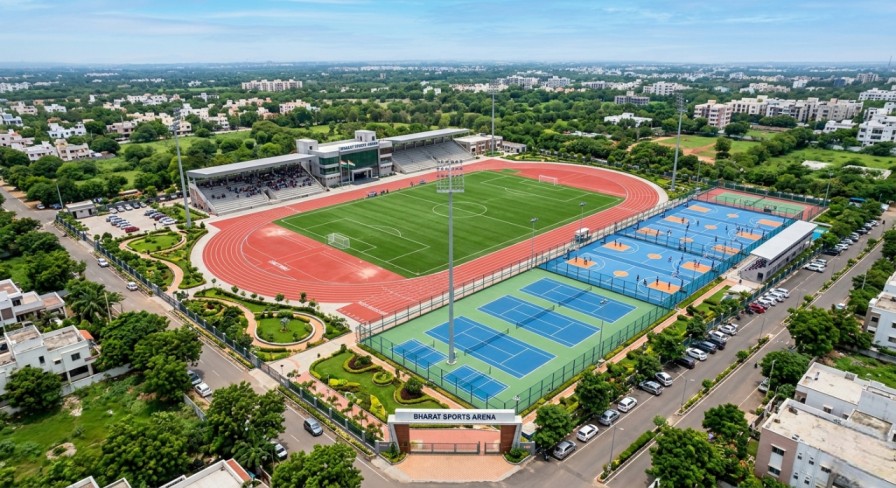
Designing a sports facility from the ground up is a complex but rewarding process. Whether it’s for a school, university, private academy, government body, or commercial sports complex, a structured and compliant approach ensures long-term performance, safety, and return on investment.
This step-by-step guide outlines the professional process involved in developing a sports facility from scratch- covering planning, design, compliance, materials, budgeting, and executions.
🧭 Step 1: Define Purpose & Project Scope
Before design begins, clearly identify:
- 🎯Type of sports (single sport or multi-sport).
- 👥Target users (students, professional athletes, community players).
- 🏫 Institutional, private, or government project.
- 💰 Budget range and funding source
- 📍 Location and land size
Why This Matters
The intended use directly influences:
- Surface selection.
- Safety standards.
- Dimensions and layout.
- Infrastructure requirements.
- Maintenance planning.
📐 Step 2: Site Assessment & Feasibility Study
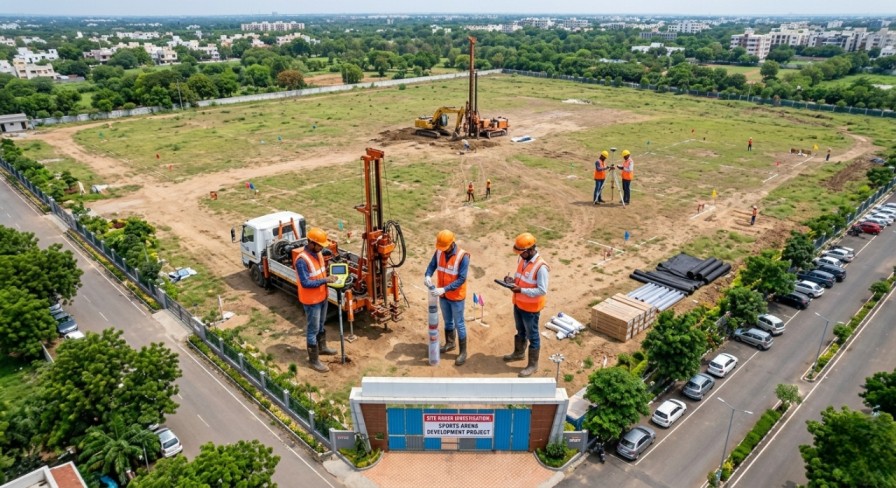
A professional feasibility study includes:
- Soil testing & load-bearing analysis.
- Topography evaluation.
- Drainage and water flow assessment.
- Accessibility & parking planning.
- Utility availability (electricity, water supply)
⚖️ Legal Note: Ensure land use zoning permissions and local municipal approvals are secured before development begins.
📊 Step 3: Choose the Right Sports Surfaces
Selecting the appropriate surface is critical for safety, durability, and compliance.
🔎 Sports Flooring Comparison Table
| Feature | Synthetic Acrylic | Artificial Turf | EPDM Rubber | PU Sports Flooring |
| Best For | Basketball, Tennis | Football, Hockey | Play Areas, Jogging | Indoor Multi-Sports |
| Weather Resistance | High | Very High | Moderate | Indoor Use |
| Maintenance | Low | Moderate | Low | Low |
| Shock Absorption | Moderate | High | High | Very High |
| Lifespan | 5-8 Years | 8-12 Years | 6-10 years | 8-12 Years |
| Cost Level | Moderate | High | Moderate | High |
📌 Surface selection must align with international and national standards such as those prescribed by relevant sports authorities.
🏗️ Step 4: Concept Design & Master Planning

This phase includes:
- Layout planning
- Court dimensions (as per official regulations)
- Spectator seating
- Lighting seating
- Drainage system design
- Player safety zones
- Emergency exits and accessibility features
🎓Facilities meant for tournaments must comply with federation guidelines.
💡 Step 5: Infrastructure & Utilities Planning
A professional sports facility requires:
- 💡 LED sports lighting systems
- 🚿 Locker rooms & sanitation
- 🏢 Administrative office space
- 🚗 Parking area
- 🌧️ Stormwater drainage
- 🔒 Perimeter fencing and security
Accessibility compliance (including provisions for persons with disabilities) should be integrated into planning.
🏗️Step 6: Construction & Surface Installation

Execution includes:
- Ground leveling and compaction.
- Base layer preparation.
- Surface installation.
- Line marking as per sport standards.
- Quality inspection & curing time.
⚠️ Always work with certified and experienced contractors to avoid structural and safety risks.
🛡️ Step 7: Safety, Compliance & Certification
Safety measures includes:
- Anti-slip coatings.
- Shock-absorbing underlayers.
- Fire safety systems (for indoor facilities).
- Proper lighting lux levels.
- Emergency evacuation planning.
Facilities hosting competitive events may require inspection and certification by authorized bodies.
🧾 Step 8: Budget Planning & Cost Breakdown
Major cost components:
- Land preparation.
- Civil construction.
- Sports surface material
- Lighting & electricals
- Fencing & accessories
- Labor and installation
- Contingency reserve (5-10%)
💼 Professional financial planning ensures long-term sustainability.
🔄 Step 9: Maintenance Planning

Routine maintenance should include:
- Surface cleaning schedule.
- Annual inspections.
- Crack repairs.
- Drainage checks.
- Repainting of line markings
A proactive maintenance strategy significantly increases lifespan.
📈 Step 10: Future Expansion & Scalability
Design with future growth in mind:
- Space for additional courts.
- Modular seating systems.
- Expandable lighting grids.
- Technology integration options.
Forward-thinking design improves long-term ROI.
❓Frequently Asked Questions (FAQs)
1.How much land is required to build a sports facility?
Ans:- Land size depends on the number and type of sports courts. A feasibility study determines exact requirements.
2. What is the average cost of building a sports facility in India?
Ans:- Cost vary based on surface type, infrastructure, and location. A detailed project estimate is required.
3. Which surface is best for outdoor sports?
Ans:- Artificial turf and acrylic surface are commonly preferred due to durability and weather resistance.
4. How long does construction take?
Ans:- Typically 3-8 months depending on project scale.
5. Do I need government approvals?
Ans:- Yes, zoning and municipal approvals are mandatory.
6. What certifications are required?
Ans:- Certifications depends on whether the facility is recreational or competitive.
7. How long do synthetic surfaces last?
Ans:- Generally between 5-12 years depending on maintenance.
8. Is artificial turf safe for athletes?
Ans:- Yes, when installed with proper shock absorption layers.
9. What maintenance is required?
Ans:- Regular cleaning, inspection, and minor repairs.
10. Can one facility host multiple sports?
Ans:- Yes, with proper layout and surface selection.
11. What lighting level is required?
Ans:- Lighting must meet sports-specific lux standards.
12. How important is drainage?
Ans:- Critical for outdoor facilities to prevent surface damage.
13. Can facilities be built in small spaces?
Ans:- Yes, through optimized layout planning.
14. Is indoor flooring different from outdoor?
Ans:- Yes, indoor surfaces prioritize cushioning and controlled environment durability.
15. What is the warranty period for sports flooring?
Ans:- Warranty varies by material and supplier.
16. How to ensure safety compliance?
Ans:- Follow recognized sports construction standards and safety regulations.
17. Does climate affect surface choice?
Ans:- Yes, temperature and rainfall impact material selection.
18. Should I hire a specialist company?
Ans:- Yes, Professional expertise ensures quality, safety, and compliance.
🏁 Conclusion
Designing a sports facility from scratch requires strategic planning, technical expertise, regulatory compliance, and long-term vision. From site evaluation to final certification, every stage must be handled professionally to ensure safety, durability, and optimal athletic performance.
Partnering with experienced sports infrastructure professional like MSG Sports Infratek India LLP ensures that your project is executed with precision, quality materials, and adherence to industry standards.