
Introduction
Choosing the right sports flooring is one of the most critical decisions when planning or upgrading your sports facility. The right floor doesn’t just enhance player performance—it also prevents injuries, ensures durability, and reduces maintenance costs over time.
Whether you’re designing a school gymnasium, a multi-sport club, or a professional stadium, understanding the different flooring options and what they offer can save you time and money while improving athlete experience.
🧩 1. Understand the Purpose of Your Facility
Before selecting a flooring system, clearly define how the space will be used.
Ask these questions:
- Is it for indoor or outdoor sports?
- Will it host multiple sports (basketball, volleyball, badminton) or a single specialized sport (tennis, futsal, athletics)?
- Do you expect high foot traffic or occasional events?
This clarity helps determine whether you need a multi-purpose floor or a sport-specific surface.
✅ Example:
- School halls – need durable, low-maintenance, multi-sport surfaces.
- Sports clubs – need performance-based floors with proper ball bounce and grip.
- Stadiums – often need specialized systems built to international standards.
🧱 2. Indoor Flooring Options
a) PU (Polyurethane) Sports Flooring
PU is one of the most popular choices for indoor sports like badminton, basketball, and volleyball.
Advantages:
- Seamless surface with excellent shock absorption.
- Highly durable and easy to clean.
- Suitable for professional play and school gyms.
Ideal for: Indoor multi-purpose halls, gymnasiums, and basketball courts.
b) Vinyl Flooring
Vinyl is a cost-effective and low-maintenance option.
Advantages:
- Cushioned surface for comfort.
- Good for low- to medium-impact sports.
- Available in rolls or tiles with easy replacement.
Ideal for: Dance studios, school gyms, and recreational halls.
c) Wooden Flooring
Traditional yet timeless, wooden flooring is still preferred for professional basketball and squash courts.
Advantages:
- Excellent ball rebound and athlete comfort.
- Premium look and feel.
- Requires periodic polishing and humidity control.
Ideal for: Indoor stadiums and tournament-level facilities.
☀️ 3. Outdoor Flooring Options
a) Acrylic Sports Flooring
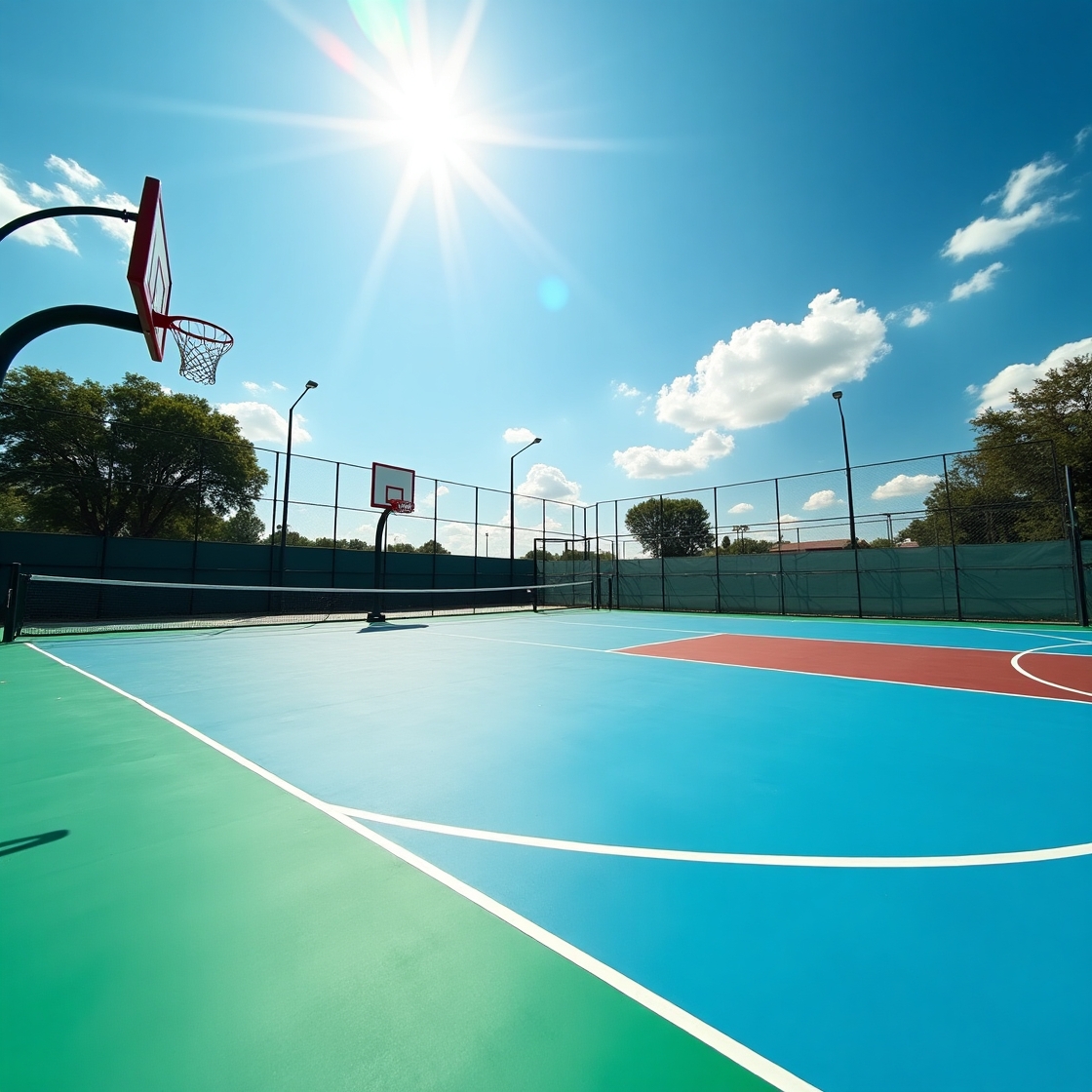
Acrylic coating systems are perfect for outdoor surfaces such as tennis courts, basketball courts, and running tracks.
Advantages:
- UV-resistant and weatherproof.
- Non-slip texture.
- Cost-effective and long-lasting.
Ideal for: Outdoor multi-sport courts, tennis, and basketball.
b) Synthetic Turf / Artificial Grass
Synthetic turf mimics natural grass and is excellent for football, cricket, and multi-sport fields.
Advantages:
- All-weather usability.
- Low maintenance compared to natural grass.
- Suitable for large outdoor facilities.
Ideal for: Schools, stadiums, and club grounds.
c) Modular PP Tiles
Polypropylene (PP) interlocking tiles are gaining popularity due to their easy installation and multi-sport flexibility.
Advantages:
- Fast installation (can be DIY).
- Replace damaged tiles individually.
- Great drainage for outdoor use.
Ideal for: Temporary or multi-purpose outdoor setups.
⚙️ 4. Key Factors to Consider Before Buying
| Factor | Why It Matters | Recommended For |
| Shock Absorption | Reduces injury risk | PU, Wooden |
| Ball Rebound | Consistency in play | Wooden, PU |
| Slip Resistance | Safety during fast movement | Acrylic, Modular Tiles |
| Weather Resistance | Outdoor durability | Acrylic, Turf, Modular |
| Maintenance Cost | Long-term expense | PU, Vinyl |
| Installation Time | Project deadlines | Modular, Acrylic |
📏 5. Compliance with International Standards
Always ensure your sports flooring meets international or national standards such as:
- EN 14904 (Indoor Sports Surfaces)
- ASTM F2772 (Shock Absorption and Deformation)
- ITF or FIBA-approved systems for professional courts
This guarantees your surface delivers consistent performance and safety.
💰 6. Budget and Lifecycle Cost
While cheaper flooring might save you initially, consider long-term maintenance and replacement costs. For example:
- PU and modular tiles may cost more upfront but last 10–15 years.
- Acrylic systems are budget-friendly but may need resurfacing every 5–7 years.
- Wooden floors require regular polishing but offer unmatched aesthetics.
🧹 7. Maintenance and After-Sales Support
Choose a supplier who offers complete installation and maintenance packages. Proper care—like regular cleaning, inspection, and timely recoating—extends the floor’s lifespan and performance.
🔍 8. Comparing Sports Flooring Types (At a Glance)
| Flooring Type | Indoor/Outdoor | Lifespan | Maintenance | Key Feature |
| PU Flooring | Indoor | 10 – 15 yrs | Low | Seamless, high performance |
| Vinyl Flooring | Indoor | 8 – 10 yrs | Low | Budget- friendly |
| Wooden Flooring | Indoor | 15+ yrs | Medium | Premium, classic |
| Acrylic Flooring | Outdoor | 5 – 7 yrs | Medium | Weatherproof |
| Synthetic Turf | Outdoor | 8 – 10 yrs | Low | Real – grass feel |
| Modular Tiles | Indoor/ Outdoor | 10 – 15 yrs | Very Low | Easy install, replaceable |
🎯 Conclusion
Selecting the right sports flooring depends on your facility type, budget, and performance expectations. Schools benefit most from durable, low-maintenance PU or vinyl surfaces, while clubs and stadiums often need specialized acrylic or turf systems that meet international standards.
Investing in quality flooring today ensures safer play, lower long-term costs, and happier athletes tomorrow.
❓ Frequently Asked Questions (FAQs)
1. Which is the best flooring for a multi-purpose sports hall?
PU or modular PP tiles are ideal—they’re durable, low-maintenance, and suitable for multiple indoor sports.
2. How long does sports flooring last?
Most systems last 8–15 years depending on usage and maintenance.
3. Can indoor flooring be used outdoors?
Not recommended. Outdoor systems need UV and weather resistance that indoor floors don’t provide.
4. What is the average installation time?
Modular tiles can be installed in 1–2 days, while PU or acrylic systems may take 5–10 days including curing time.
5. How can I maintain my sports flooring?
Regular sweeping, cleaning with mild detergent, and periodic inspection for surface damage are key. Avoid harsh chemicals or heavy water pressure.
Proudly powered by MSG Sports Infratek LLP