
Everything Schools, Academies & Sports Facility Owners Must Know
Artificial turf has rapidly become the preferred surface for sports grounds, schools, training academies, and recreational facilities across India. With increasing land constraints, weather challenges, and maintenance costs of natural grass, artificial turf offers a durable, all-season, and cost-effective alternative 🌱➡️🏟️.
This guide explains what artificial turf is, where it is used, how it is installed, and how to maintain it for long-term performance.
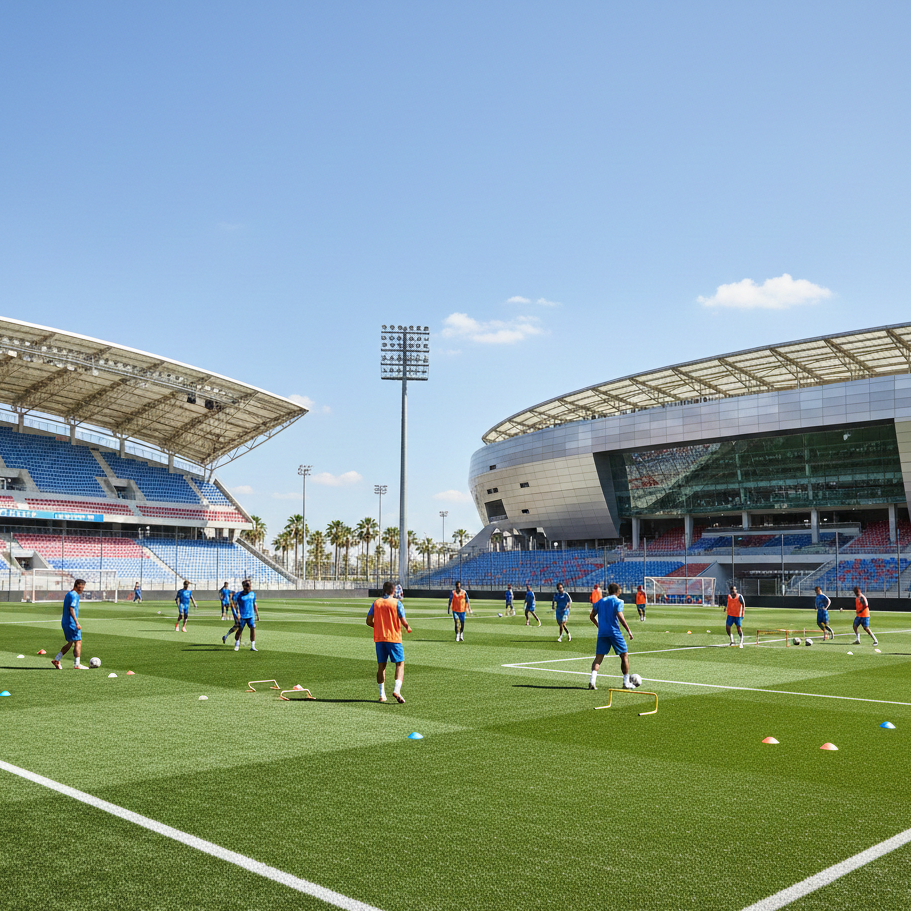
✅ What Is Artificial Turf?
Artificial turf is a synthetic surface made from polyethylene, polypropylene, or nylon fibers designed to replicate the look and feel of natural grass. It is installed over a prepared base system and often filled with infill materials such as silica sand or rubber granules for stability and cushioning.
Common Uses:
- Football & futsal fields
- Cricket practice wickets
- Multipurpose school grounds
- Rooftop play areas
- Landscaping in commercial spaces
🆚Artificial Turf vs Natural Grass
| Feature | Artificial Turf | Natural Grass |
| Water Requirement | ❌ None | ✅ High |
| Maintenance Cost | Low | High |
| Weather Resistance | Excellent | Poor during rain |
| Usability Hours | 8-12 hrs/day | Limited |
| Initial Cost | Higher | Lower |
| Long-term Cost | Lower | Higher |
| Playing Consistency | Very high | Variable |
👉 Over 8-10 years, artificial turf often proves more economical despite higher initial investment.
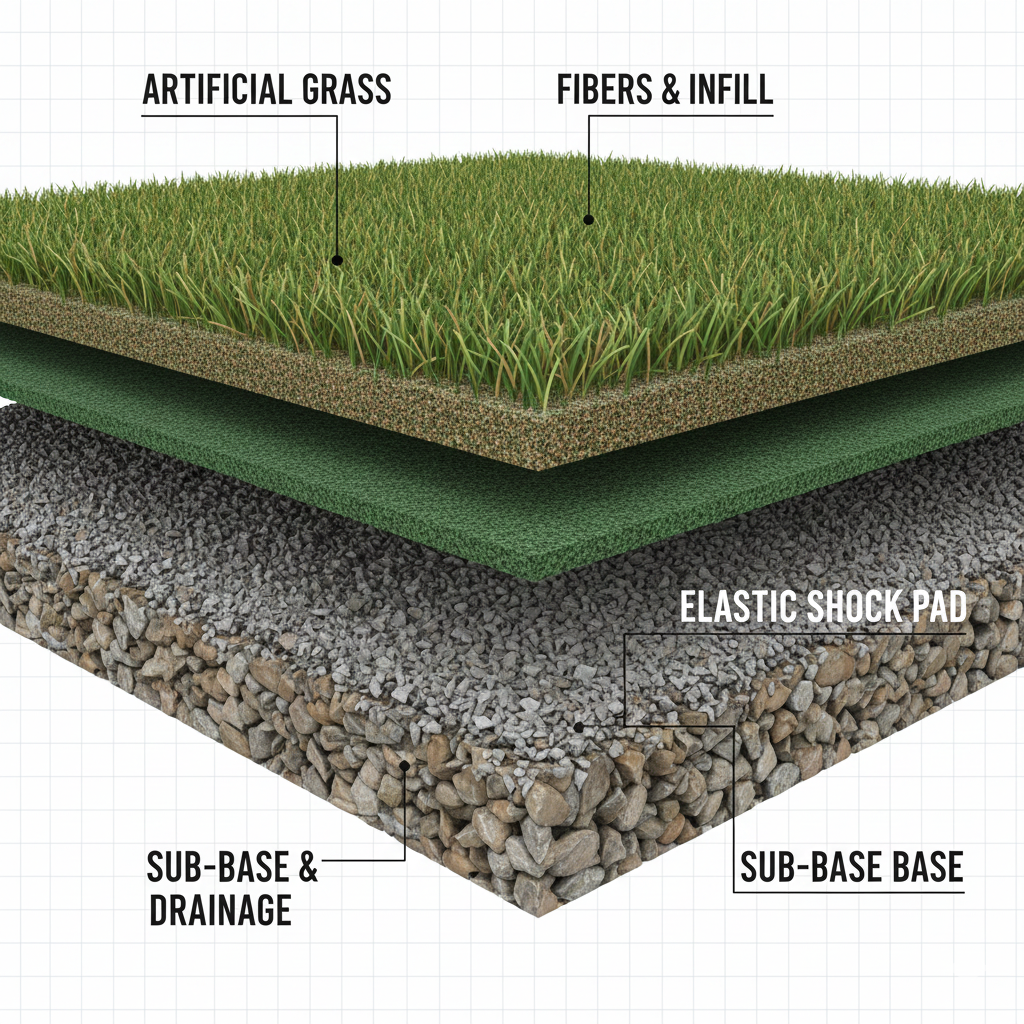
🧱 Layers of a Professional Artificial Turf System
A high-quality turf system is not just grass fibers on soil-it is a complete engineered structure:
1. Compacted Soil Sub-Base
2. Crushed Stone Base Layer (WMM)
3. Fine Stone Dust Leveling Layer
4. Shock Pad (Optional but Recommended for Sports)
5. Artificial Turf Carpet
6. Infill (Sand/Rubber)
This layered approach ensures:
- Proper drainage
- Shock absorption
- Surface stability
- Long lifespan
Professional installers like MSG Sports Infratek India LLP design these layers based on soil type, climate, and intended sports use, which is critical for performance and safety.
🛠️ Step-by-step Artificial Turf Installation Process
✅ Step 1: Site Inspection & Design
- Soil testing
- Drainage planning
- Usage analysis (sport type, footfall)
✅ Step 2: Excavation
- Removal of topsoil (100-250 mm)
- Slope creation for water runoff
✅ Step 3: Sub-Base Construction
- Crushed aggregate laid in layers
- Mechanical compaction for firmness
✅ Step 4: Fine Leveling
- Stone dust layer for smooth finish
- Laser leveling for professional grounds
✅ Step 5: Shock Pad Installation (Optional)
- Improves injury prevention
- Essential for training academies
✅ Step 6: Turf Carpet Laying
- Rolls joined using adhesive seam tape
- Direction of grass carefully aligned
✅ Step 7: Infill Application
- Sand or rubber brushed into fibers
- Provides weight and bounce response
✅ Step 8: Final Brushing & Inspection
- Fiber standing ensured
- Surface testing conducted
⚠️ Improper base construction is the number one cause of turf failure, so expert installation is essential.

🧪 Types of Artificial Turf (Sports-Specific)
| Sports | Recommended Pile Height | Infill Type | Notes |
| Football | 40-50 mm | Sand + Rubber | FIFA-style play |
| Cricket | 10 -15 mm (wicket) | Sand only | Ball bounce control |
| Futsal | 25 – 30 mm | Sand | Faster play |
| Landscaping | 20 – 30 mm | Sand | Visual appeal |
| Multipurpose Courts | 15 – 25 mm | Sand | Low maintenance |
Selection should always match sport, player age, and usage intensity.
🧼 Artificial Turf Maintenance Guide
While artificial turf is low-maintenance, it is not maintenance-free.
🗓️ Daily/ Weekly Maintenance
- Remove leaves & debris
- Check for litter or sharp objects
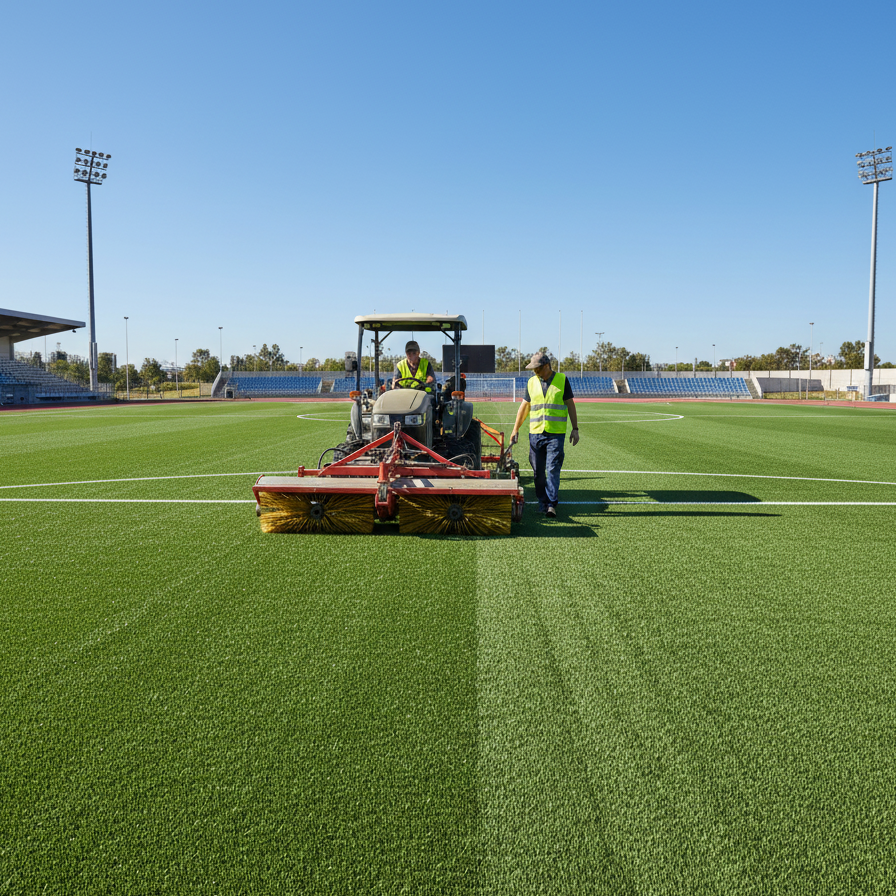
- Light brushing in high-traffic zones
🗓️ Monthly Maintenance
- Deep brushing to lift fibers
- Infill redistribution
- Drainage check after rain
🗓️ Annual Maintenance
- Professional inspection
- Seam and joint checking
- Surface performance testing
Regular maintenance:
- Extends turf life
- Prevents hardening
- Maintains ball behavior
⏳ Lifespan of Artificial Turf
| Usage Level | Expected Life |
| Low (Schools) | 10 – 12 years |
| Medium (Academies) | 8 – 10 years |
| High (Commercial Play) | 6 – 8 years |
Lifespan depends on:
- Quality of yarn
- Installation technique
- Maintenance discipline
Reputable infrastructure companies usually offer warranties ranging from 5 to 8 years when installation standards are met.
♻️ Is Artificial Turf Environmentally Safe?
Modern turf systems are significantly more eco-friendly than earlier versions:
✅ Environmental Benefits
- Saves millions of liters of water annually
- No fertilizers or pesticides
- Reduces soil erosion
⚠️ Considerations
- Recycling at end-of-life should be planned
- Proper drainage avoids heat buildup
Many premium manufacturers now provide recyclable backing materials and lead-free fibers, improving sustainability.
🏫 Why Schools & Academies Prefer Artificial Turf
- Year – round usability
- Minimal maintenance staff
- Safer, soften surfaces
- Supports multiple sports
- Higher student participation
For institutions, artificial turf becomes an investment in long-term sports development, not just a playing surface.
🤝 Choosing the Right Installation Partner
Artificial turf performance depends more on installation quality than product alone.
Look for providers who offer:
- Site-specific engineering
- Drainage design
- Certified materials
- Maintenance guidance
- After-installation support
Companies with dedicated sports infrastructure experience – such as MSG Sports Infratek India LLP – typically handle everything from planning to post-installation service, ensuring long-term reliability for schools, clubs, and stadium projects.
❓Frequently Asked Questions (FAQs)
Q1. Is artificial turf safe for children ?
Yes. When installed with proper base and optional shock pad, i reduces impact injuries and is widely used in schools.
Q2. Does artificial turf get too hot?
It can heat up under strong sunlight, but regular watering before play and newer heat-resistant fibers reduce this issue.
Q3. Can turf be installed on concrete?
Yes, but a shock-absorbing layer is strongly recommended to protect joints and reduce injuries.
Q4. Does artificial turf drain during heavy rain?
Yes. Professional systems include drainage slopes and porous base layers to allow fast water runoff.
Q5. Can studs be used on turf?
Yes, but turf-specific or rubber studs are recommended to avoid fiber damage.
Q6. How long does installation take?
Typically football ground: 15 – 25 days, depending on weather and site conditions.
Q7. Can damaged turf be repaired?
Yes. Seams, patches, and infill can be repaired locally without replacing the entire field.
Q8. Is artificial turf suitable for cricket?
Yes, especially for practice wickets and outfields with appropriate pile height selection.
Q9. Does turf require watering?
Only occasionally for cooling or dust control – not for growth or maintenance.
Q10. What is the biggest mistake people make during installation?
Poor base preparation and ignoring drainage design – leading to sinking and surface unevenness.
Q11. Can turf support multiple sports?
Absolutely. Multipurpose turf is commonly used for football, handball, and training drills.
Q12. Is artificial turf cost-effective?
Yes. Over 8-10 years, maintenance savings usually exceed installation cost differences compared to natural grass.
🏁 Final Thoughts
Artificial turf is not just a surface – it is a sports infrastructure system that requires proper planning, engineering, and long-term care.
When installed correctly and maintained regularly, artificial turf delivers:
- ✔ Consistent playing quality
- ✔ Lower lifetime costs
- ✔ Higher facility utilization
- ✔ Safer sports environments
For institutions and sports developers aiming for professional – grade facilities, working with experienced infrastructure specialists ensures that the field performs as expected for years to come ⚽🏏.
Proudly powered by MSG Sports Infratek India LLP