
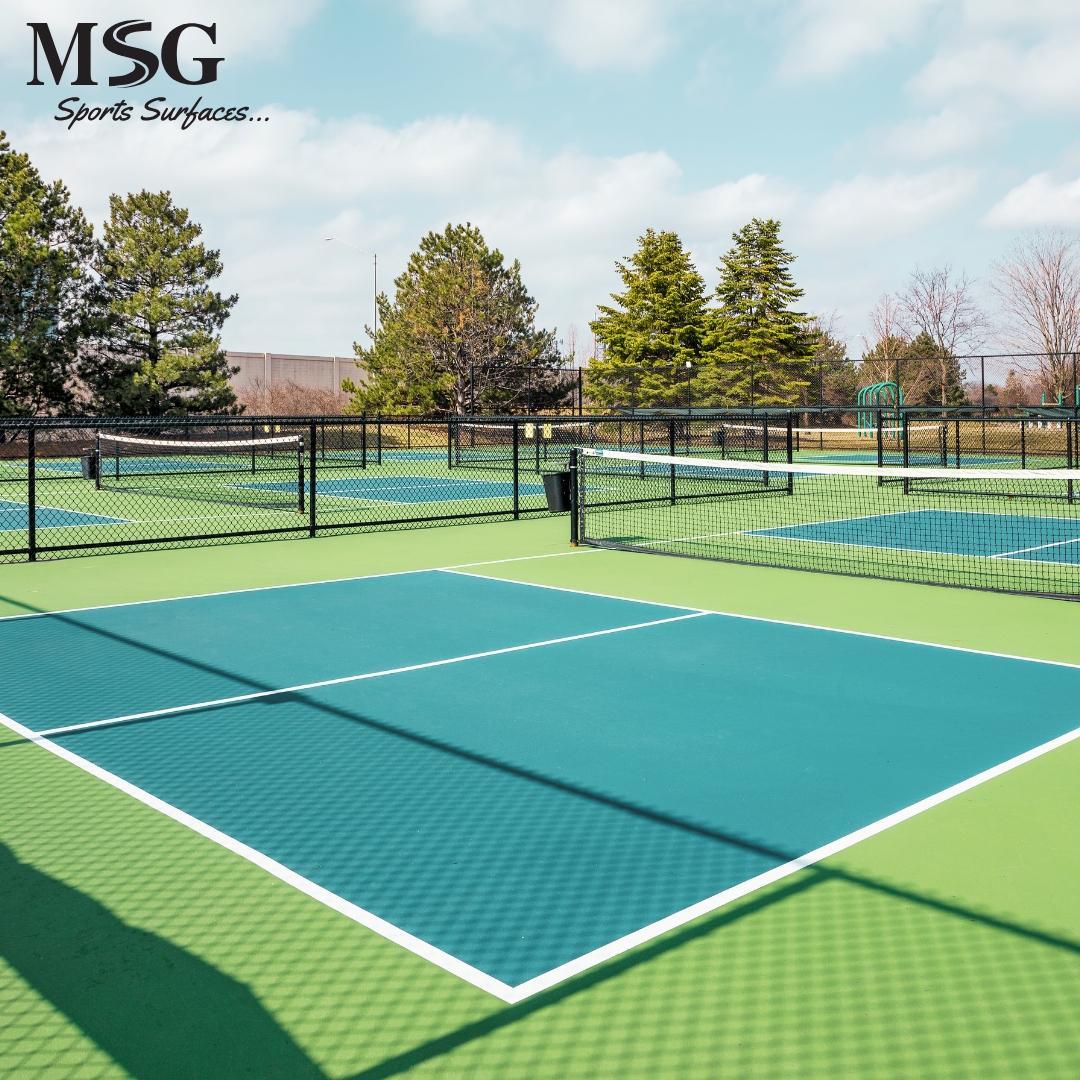
Pickleball has exploded in popularity, captivating players of all ages with its easy-to-learn rules and fast-paced rallies. As more communities and individuals look to build dedicated pickleball courts, understanding the construction standards for a professional setup becomes crucial. A well-built court not only enhances the playing experience but also ensures player safety and the longevity of your investment.
At MSG Sports Infratek India LLP, we specialize in creating top-tier sports infrastructure. Here’s what you need to know for a professional pickleball court setup:
The Foundation: Court Dimensions and Layout
The heart of any pickleball court lies in its precise dimensions. Adhering to official standards is paramount for fair and consistent play.
- Overall Court Size: A regulation pickleball court measures 20 feet wide by 44 feet long for both singles and doubles play. These dimensions include the lines.
- Non-Volley Zone (The Kitchen): This crucial area extends 7 feet from the net on each side. Players are not allowed to volley the ball while standing in this zone.
- Service Courts: Divided into right and left service areas, each measures 10 feet wide by 15 feet long, located between the non-volley zone and the baseline.
- Lines: All court lines, including baselines, sidelines, and service lines, must be 2 inches wide and painted in a contrasting color (e.g., white, yellow, or light blue) for clear visibility.
- Recommended Playing Area: While the court itself is 20×44 feet, the USA Pickleball Association (USAPA) recommends a minimum total playing surface of 30 feet wide by 60 feet long to allow for adequate player movement and safety, preventing players from running into obstacles. For tournament play, a larger area of 34 feet wide by 64 feet long is preferred.
- Orientation: For outdoor courts, a north-south orientation is recommended to minimize sun glare in players’ eyes.
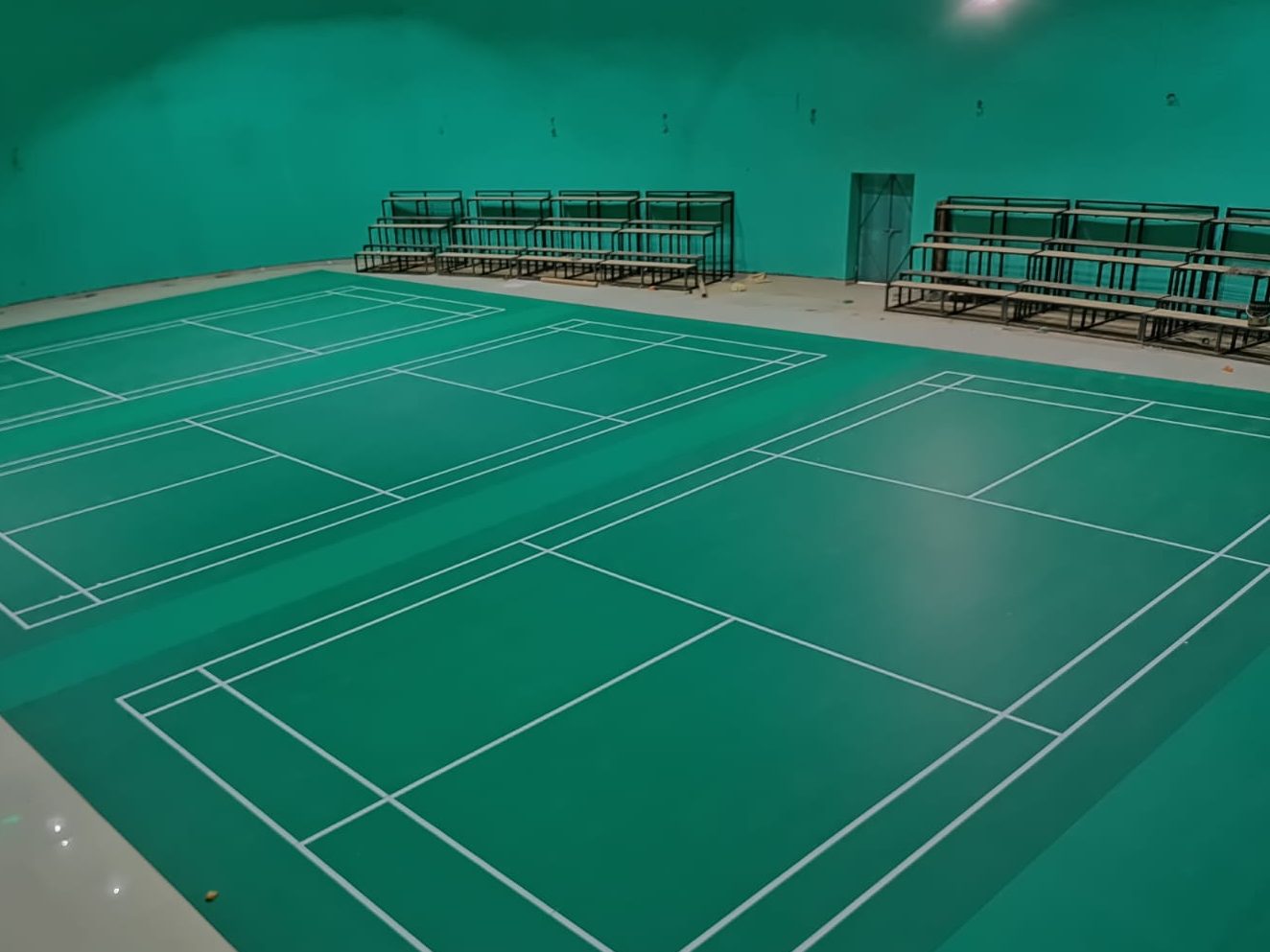
The Playing Surface: Durability, Safety, and Performance
The choice of court surface significantly impacts gameplay, player comfort, and maintenance.
- Concrete: Highly durable and long-lasting, concrete is a popular choice for outdoor courts. It provides a consistent ball bounce. To enhance grip and ball visibility, it typically requires an acrylic top coating. While hard on joints, its stability is unmatched.
- Synthetic Acrylic Flooring: This is one of the best outdoor options. It combines the durability of concrete or asphalt with a slight cushioning, reducing player fatigue and joint strain. It offers excellent grip, consistent ball bounce, and is weather-resistant. Many professional and high-end courts utilize cushioned acrylic systems.
- Indoor Surfaces: For indoor courts, wood or specialized synthetic flooring (like cushioned acrylic or rubberized surfaces) are common. Wood provides a fast, smooth playing surface, while synthetic options prioritize comfort and traction, reducing impact on joints.
Key Considerations for Surface:
- Climate: Choose materials suitable for your local weather conditions.
- Usage: High-traffic courts benefit from more durable surfaces.
- Player Demographics: For senior players or those with joint concerns, cushioned surfaces are ideal.
- Drainage: Essential for outdoor courts to prevent water pooling and surface damage.
The Net System: Official Height and Stability
The net is integral to pickleball play and must meet specific standards.
- Height: The net should be 36 inches (3 feet) high at the sidelines and 34 inches high in the center.
- Width: The net should be 22 feet wide, extending slightly beyond the 20-foot court width to be secured to posts.
- Material: Durable mesh that can withstand outdoor elements is recommended.
- Posts: Net posts should be sturdy, ideally made of steel or aluminum for longevity, and positioned 22 feet apart. A center strap is often used to maintain the 34-inch height in the middle.
Fencing and Safety Features: Containing Play and Ensuring Security
- Fencing Height: A minimum of 10-12 feet high fencing is recommended around the perimeter to contain balls, prevent disruptions, and ensure player safety.
- Material: Chain-link fencing is common due to its durability, airflow, and clear sightlines for spectators.
- Access Gates: Should be wide enough to allow for maintenance equipment and potentially wheelchair access.
- Run-off Area: Ensure sufficient space around the court (as mentioned in point 1) to prevent players from colliding with fences or other obstacles.
Why Choose a Professional Builder Like MSG Sports Infratek India LLP?
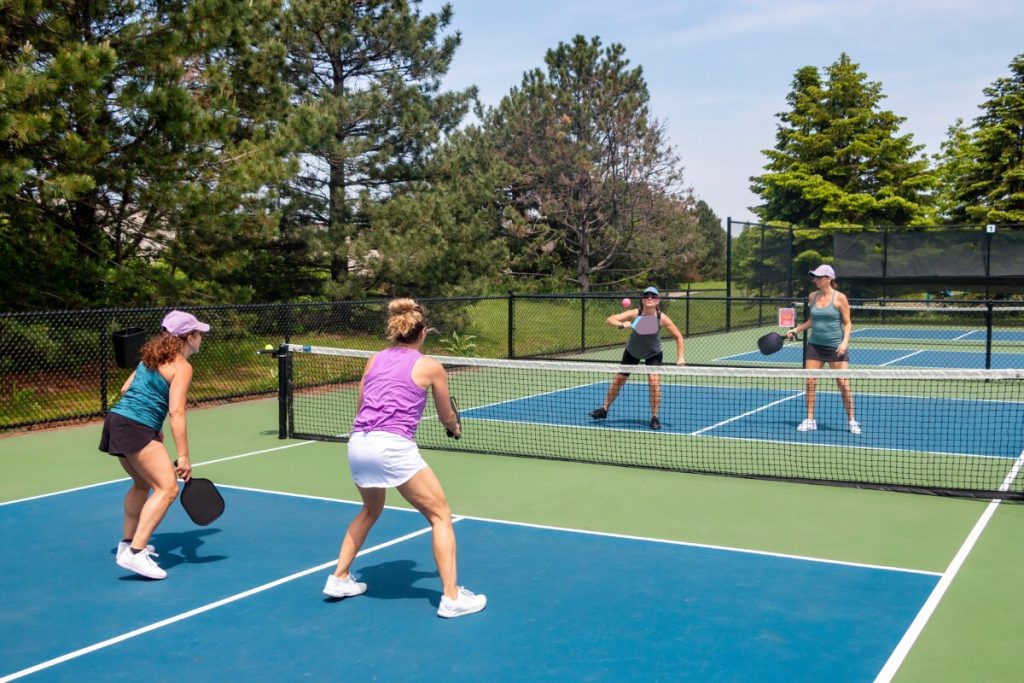
PICKLEBALL
Constructing a pickleball court that meets professional standards involves intricate details, specialized materials, and expert installation. Choosing an experienced sports infrastructure company ensures:
- Adherence to Official Standards: Guaranteeing your court is compliant with USAPA and international guidelines.
- Quality Materials: Access to the best and most durable surfaces, nets, and lighting systems.
- Expert Design and Planning: Optimizing court layout, drainage, and overall facility integration.
- Skilled Installation: Ensuring precision, longevity, and a flawless playing surface.
- Long-Term Support: Guidance on maintenance and future upgrades to protect your investment.
Building a pickleball court is an investment in health, community, and enjoyment. By understanding these construction standards and partnering with seasoned professionals, you can create a high-quality, durable, and professional pickleball facility that will serve players for years to come.
Ready to bring your professional pickleball court to life? Contact MSG Sports Infratek India LLP today for expert consultation and construction services.

Proudly powered by MSG Sport Infratek India LLP