

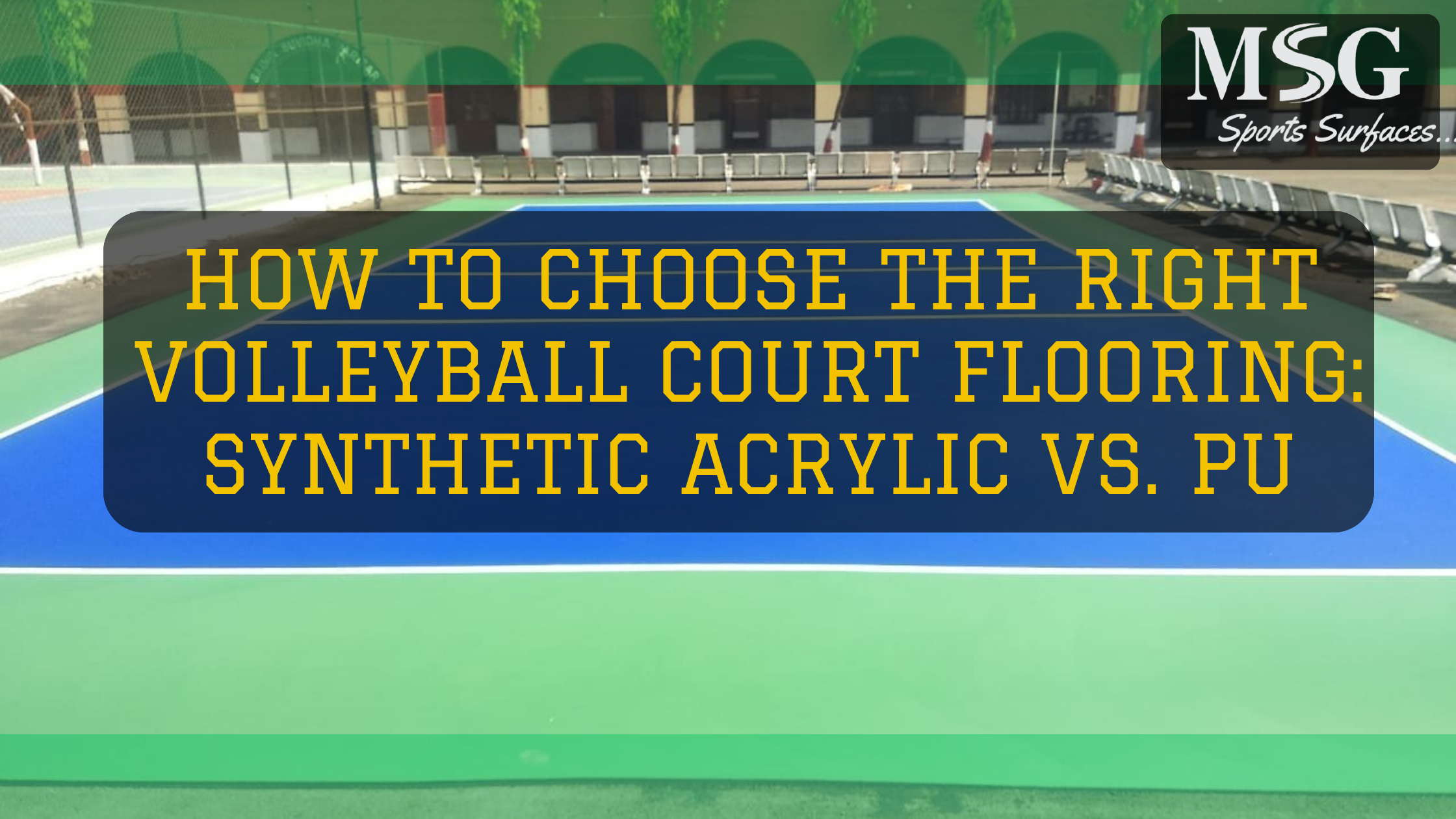
Introduction
Volleyball courts demand flooring that not only enhances performance but also ensures player safety. This guide delves into the intricate decision of selecting between Synthetic Acrylic and Polyurethane (PU) flooring options, each offering distinct benefits for creating the perfect volleyball court.
Section 1: Understanding Synthetic Acrylic Flooring
Synthetic acrylic flooring is a versatile choice for both indoor and outdoor courts, composed of resins and acrylic particles. It offers durability, UV resistance, and customizable color options. This surface delivers consistent ball response and player movement, crucial for the fast-paced nature of volleyball.
Section 2: The Advantages and Disadvantages of Synthetic Acrylic Flooring
The Pros
- Durability and Longevity: Withstanding heavy foot traffic and maintaining integrity over time.
- Consistency of Play: Providing a uniform texture for reliable ball behavior.
- Shock Absorption and Player Safety: Cushioning properties reduce strain on joints, minimizing fatigue.
The Cons
- Temperature Sensitivity: Extreme temperatures may affect surface resilience and playability.
- Maintenance Requirements: Regular cleaning and upkeep are vital to retaining desired playing characteristics.
- Initial Installation Costs: Investment can be substantial due to advanced materials and installation process.
Section 3: Insights into PU Flooring for Volleyball Courts
PU flooring, constructed with multiple layers including an elastic layer and wear-resistant top coat, offers resilience and adaptability for volleyball courts.
Advantages of PU Flooring
- Enhanced Shock Absorption: Balancing shock absorption and energy return for player safety and game precision.
Section 4: The Pros and Cons of PU Volleyball Court Flooring
The Benefits
- Seamless Surface: Delivering a continuous playing field to minimize tripping hazards.
- Climate and Temperature Resistance: Withstanding temperature variations without compromising playability.
The Drawbacks
- Installation Complexity: Requires professional installation due to intricate layering.
- Longevity and Wear: Surface lifespan influenced by maintenance and usage frequency.
Section 5: Factors to Consider When Choosing Between Synthetic Acrylic and PU
Performance Considerations
- Ball Bounce and Game Speed: Impact on ball behavior and game pace.
- Player Traction and Movement: Grip and movement ease for players during intense rallies.
Durability and Longevity
- Impact of Foot Traffic: Ability to withstand heavy usage without compromising quality.
- Resistance to Wear and Tear: Surface’s longevity under regular use.
Maintenance Requirements
- Cleaning Regimens: Level of care needed to retain optimal playing characteristics.
- Resurfacing and Restoration: Restoring the surface to prime condition.
Climate and Temperature Considerations
- Adapting to Climate Variations: Surface’s reaction to temperature changes, especially outdoors.
- Maintaining Optimal Surface Conditions: Impact of extreme temperatures on performance.
Section 7: Conclusion
Choosing the optimal flooring between Synthetic Acrylic and PU impacts not only gameplay but also safety and satisfaction in your volleyball facility. Make the right decision to elevate your volleyball court experience.
The Art of Choosing: Synthetic Acrylic vs. PU for Your Volleyball Court Selecting the ideal flooring type involves a careful balance between performance, maintenance, durability, and budget considerations. Synthetic Acrylic and PU surfaces each have unique attributes that can significantly impact the quality of play and player safety.
The Path to an Enhanced Volleyball Court Experience In the quest for the perfect volleyball court, understanding the technical nuances of Synthetic Acrylic and PU flooring is key. By aligning your priorities with the advantages and limitations of each option, you’ll pave the way for a remarkable volleyball experience that enhances gameplay and delights players and enthusiasts alike.
With this comprehensive guide, you’re equipped to navigate the complex decision of choosing between Synthetic Acrylic and PU flooring for your volleyball court. Remember, the surface you opt for can significantly influence the overall quality of play, player comfort, and your facility’s long-term maintenance needs. Evaluate your facility’s specific requirements, consult with experts, and consider the factors that matter most to ensure that you make an informed and beneficial decision for your volleyball court.