
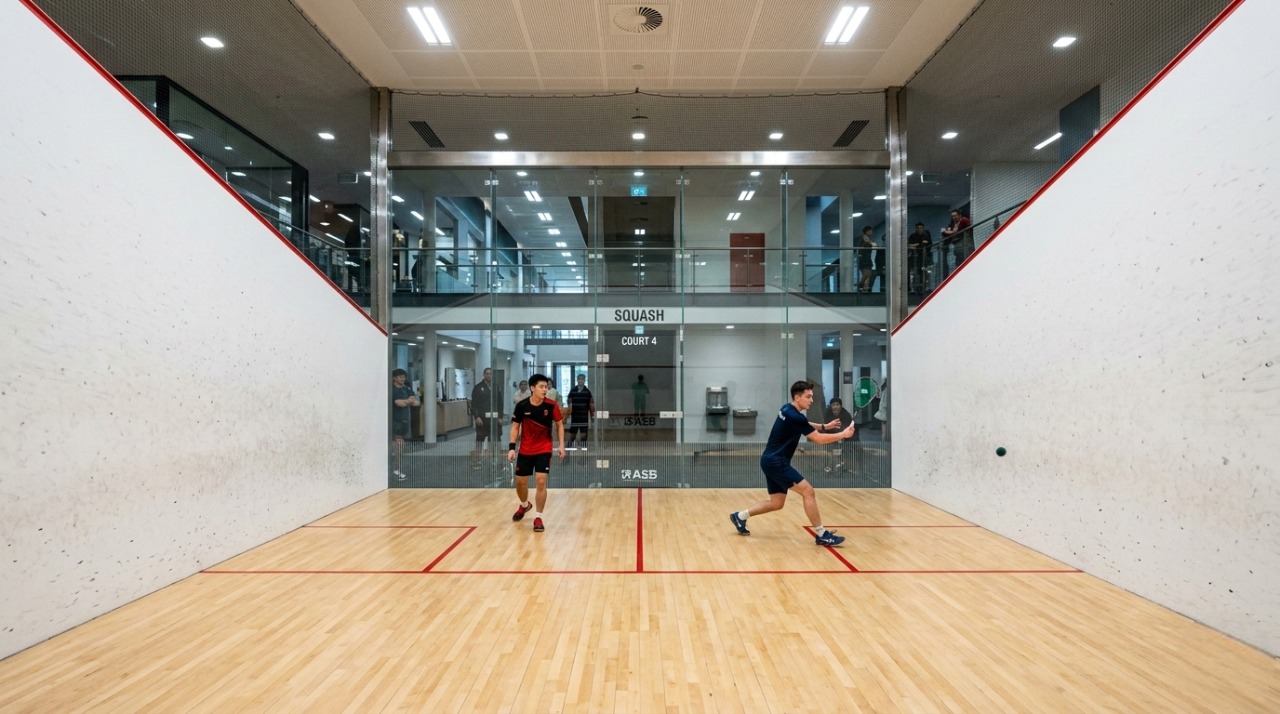
Squash is one of the fastest-growing indoor sports in the world, and its popularity is steadily increasing in India as well. Schools, sports academies, fitness clubs, luxury residential projects, and corporate wellness centers are increasingly including squash courts in their sports infrastructure.
For organizations planning to develop a professional sports facility, understanding the process of squash court construction is essential. This guide provides a detailed overview of squash court design, dimensions, materials, flooring, cost considerations, lighting requirements, and maintenance practices in India. 🏟️
Introduction to Squash Court Construction 🏸
A squash court is a four-walled indoor sports facility designed specifically for the game of squash. It requires precise dimensions, specialized flooring, strong wall systems, and professional lighting to ensure optimal gameplay and safety.
Unlike many other sports courts, squash courts must meet strict international standards to ensure fair play and consistency. Proper construction ensures:
- Professional playing conditions
- Player safety
- Long-term durability
- Compliance with international sports standards
Squash courts are commonly installed in:
- Sports academies
- Universities and schools
- Fitness clubs and gyms
- Luxury residential complexes
- Professional sports centers
Standard Squash Court Dimensions📏
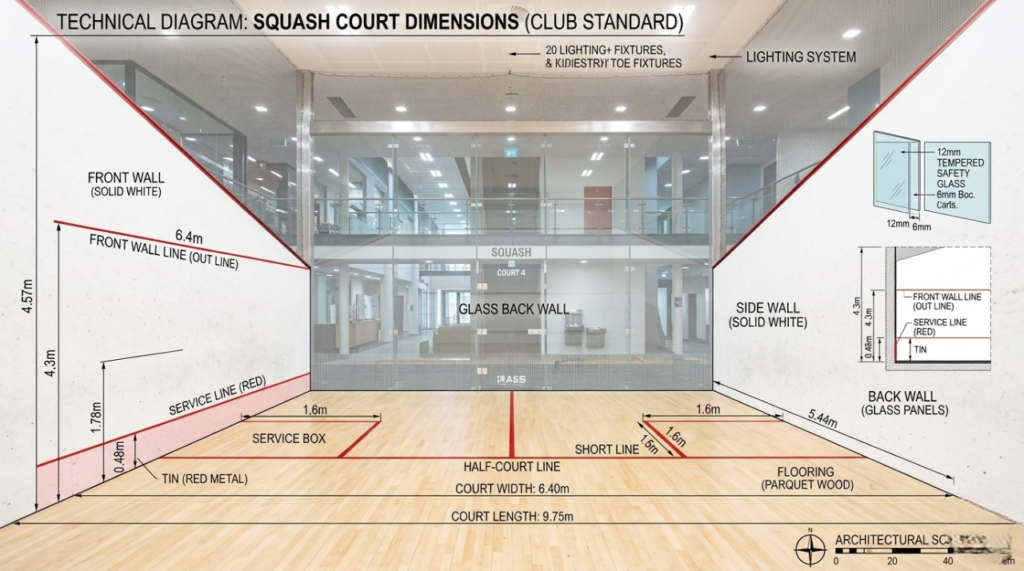
Before beginning construction, it is important to understand the standard dimensions required for a squash court.
| Component | Standard Dimension |
| Court Length | 9.75 meters |
| Court Width | 6.4 meters |
| Front wall Height | 4.57 meters |
| Back wall Height | 2.13 meters |
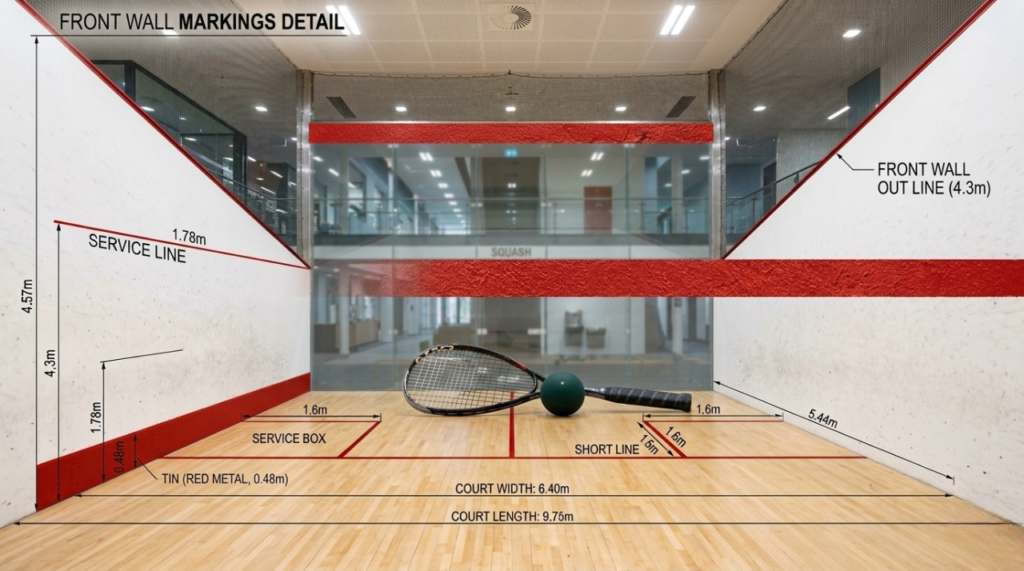
| Service Line Height | 1.78 meters |
| Tin Height | 48 cm |
| Floor to Ceiling Height | Minimum 5.64 meters |
These measurements are based on international squash standards, ensuring the court is suitable for both recreational and professional use.
Key Components of a Professional Squash Court🧩
A squash court is composed of several structural and functional elements. Each component must be carefully designed and installed.
1.Court Walls
Squash court walls must be strong, smooth, and perfectly vertical to ensure accurate ball rebound.
Common material include:
- High-density plaster systems
- Reinforced wall panels
- Impact-resistant squash wall boards
2. Squash Court Flooring
Flooring is one of the most critical elements in squash court construction. The most widely used material is maple hardwood flooring, which provides excellent shock absorption and durability.
| Flooring Type | Advantages | Limitations |
| Maple Hardwood | Professional performance, excellent grip | Higher cost |
| Engineered Wood | Stable structure, good durability | Slightly lower bounce |
| Synthetic Sports Flooring | Lower cost, easier maintenance | No ideal for professional play |
Maple hardwood is widely preferred because it provides consistent ball bounce, durability, and player comfort.
3. Glass Back Wall
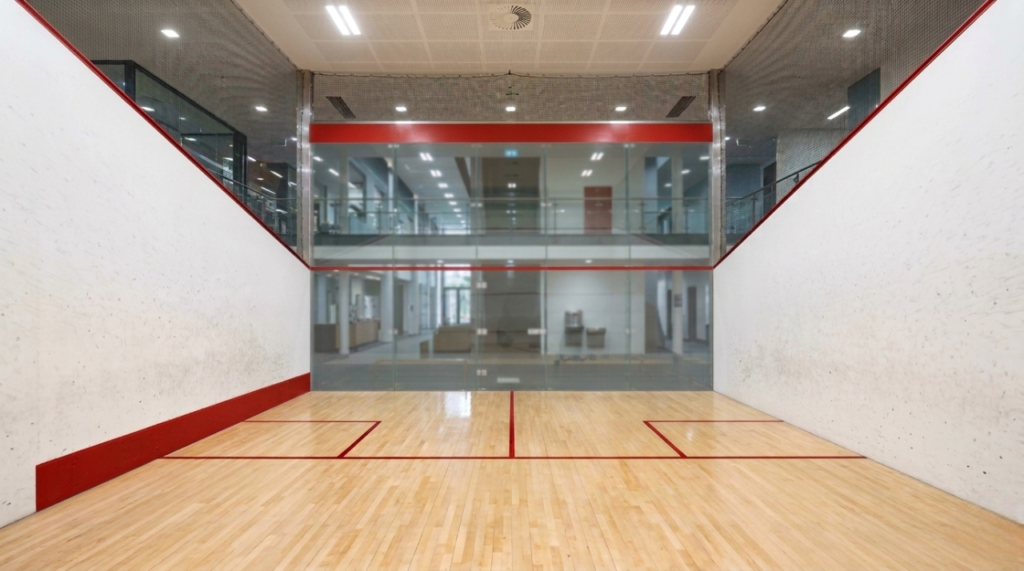
Modern squash courts often include a glass back wall to allow spectators to watch the game.
Benefits include:
- Enhanced spectator visibility
- Improved aesthetics
- Better viewing experience for tournaments
Glass walls are usually made from tempered safety glass panels designed to withstand heavy ball impact.
| Feature | Glass Wall | Solid Wall |
| Spectator visibility | Excellent | None |
| Modern design | High | Moderate |
| Cost | Higher | Lower |
| Tournament use | Preferred | Limited |
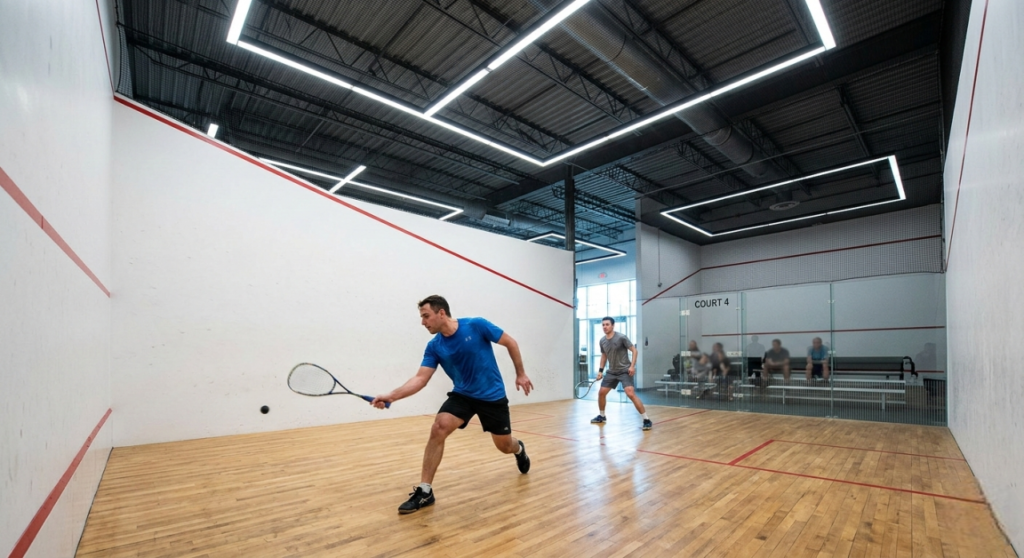
4. Lighting System 💡
Proper lighting is essential to maintain clear visibility of the ball during gameplay.
Recommended lighting specifications:
- LED sports lighting
- Uniform brightness across the court
- Glare-free illumination
- Minimum lighting level of 500 lux
Good lighting improves player performance and safety.
5. Ventilation and Climate Control🌬️
Indoor squash courts require proper ventilation to maintain comfortable playing courts.
Important features include:
- Air circulation systems
- Temperature control
- Humidity management
Poor ventilation can cause condensation and uncomfortable playing conditions, which may affect flooring and wall surfaces.
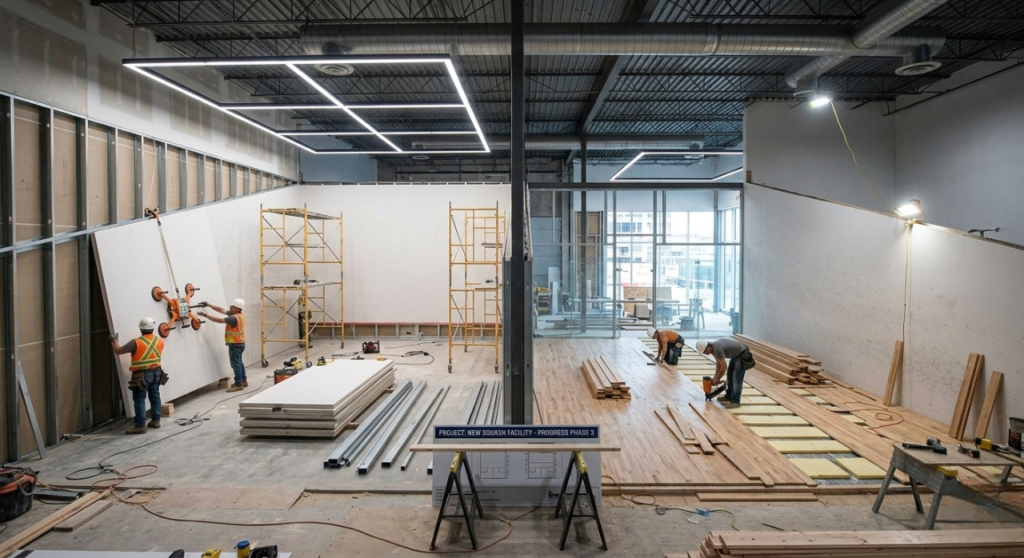
Step-by-Step Squash Court Construction Process🏗️
Building a squash court involves several stages:
Step 1- Planning and Design
Architectural planning includes:
- Court layout design
- Structural engineering
- Material selection
Step 2- Foundation and Structural Work
Construction begins with:
- Concrete base
- Structural walls
- Roof structure
Step 3 – Wall System Installation
Walls are installed using specialized squash wall systems designed to provide correct ball rebound.
Step 4- Flooring Installation
The maple wood flooring system is installed with proper subfloor support.
Step 5 – Glass Wall Installation
Tempered glass panels are installed for the back wall.
Step 6 – Lighting and Final Finishing
Final installations include:
- LED lighting
- Court line markings
- Protective coatings
Estimated Cost of Squash Court Construction in India 💰
The cost of building a squash court varies depending on materials, design, and location.
| Component | Estimated Cost Range |
| Structural Construction | ₹8 – ₹15 Lakh |
| Maple Wood Flooring | ₹6 – ₹12 Lakh |
| Glass Back Wall | ₹4 – ₹8 Lakh |
| Lighting System | ₹1 – ₹3 Lakh |
| Total Estimated Cost | ₹20 – ₹40 Lakh |
Costs may vary based on quality of materials, customization, and project scale.
Maintenance Tips for Squash Courts🧹
Regular maintenance ensures long-term durability and optimal performance.
Recommended practices include:
- Cleaning flooring regularly
- Checking glass wall integrity
- Maintaining proper lighting levels
- Inspecting wall surfaces for damage
Proper maintenance can extend the lifespan of a squash court by 10-15 years.
Advantages of Installing a Squash Court🏆
Sports facilities benefit significantly from installing squash courts.
Key advantages include:
- Promotes indoor sports culture
- Increases sports facility value
- Attracts professional players
- Provides year-round gameplay
For clubs and academies, squash courts can also generate revenue through memberships and tournaments.
Frequently Asked Questions (FAQs)
1.What is the standard size of a squash court?
The standard squash court size is 9.75 m long and 6.4 m wide.
2. What flooring is best for squash courts?
Maple hardwood flooring is considered the best due to its durability and performance.
3. How much does it cost to build a squash court in India?
The cost generally ranges between ₹20 lakh and ₹40 lakh depending on material and design.
4. Can squash courts be built outdoors?
No. Squash courts are designed primarily as indoor facilities.
5.How long does squash court construction take?
Typically 6 to 10 weeks, depending on project complexity.
6. Why is glass used in squash courts?
Glass walls improve spectator visibility and aesthetics.
7. What lighting is required for squash courts?
Professional courts use LED sports lighting with at least 500 lux illumination.
8. Is squash court construction suitable for schools?
Yes. Many schools and universities install squash courts to promote indoor sports.
9. How often should squash court flooring be maintained?
Regular cleaning should be done weekly and deep maintenance annually.
10. What materials are used for squash court walls?
Walls are typically made from reinforced plaster systems or specialized squash wall panels.
11. Can squash courts be part of a multi-sports complex?
Yes. They are commonly integrated into indoor sports complexes.
12. What is the lifespan of a squash court?
With proper maintenance, squash courts can last 15-20 years.
13. Is ventilation important in squash court?
Yes. Proper Ventilation ensures comfortable playing conditions and protects flooring.
14. Can spectator watch squash matches?
Yes. Courts with glass back walls allow spectators to watch matches easily.
15. Are squash courts profitable for sports clubs?
Yes. Clubs can generate revenue through memberships, training programs, and tournaments.
✅ Conclusion
Squash courts construction requires careful planning, adherence to standard dimensions, and the use of high-quality materials. Whether installed in sports academies, educational institutions, or fitness clubs, a professionally built squash court provides excellent playing conditions and long-term durability.
With the increasing demand for indoor sports infrastructure in India, investing in a squash court can significantly enhance the value appeal of any sports facility. 🏟️

Proudly powered by MSG Sports Infraket India LLP