

Indoor sports arenas are becoming an essential part of schools, universities, sports academies, clubs, and multi-purpose stadiums. Whether it is basketball, badminton, volleyball, futsal, or multi-sport training, the performance and safety of athletes heavily depend on one critical factor – the quality of the sports flooring.
A well-designed sports floor improves player performance, safety, durability, and overall experience. The right flooring also reduces the risk of injuries, enhances shock absorption, and ensures consistent ball bounce.
In this detailed guide, we will explore the top flooring options for indoor sports arenas, their advantages, comparison, and how to choose the best flooring solution for your sports facility.
🎯 Why Sports Flooring Matters in Indoor Arenas
Indoor sports flooring is much more than just a surface to play on. A professional sports floor offers several benefits:
✅Shock absorption that reduces stress on athletes’ joints
✅ Slip resistance for better grip and safety
✅ Consistent ball bounce for professional gameplay
✅ Durability to withstand heavy usage
✅ Low maintenance requirements
✅ Improved aesthetics and facility value
Sports organizations and facility planners carefully choose flooring systems that meet international sports standards and safety requirements.
🏀1. Wooden Sports Flooring (Hardwood Flooring)

Wooden flooring is considered the gold standard for indoor sports arenas, especially for its excellent shock absorption, durability, and classic appearance.
Key Features
🏀 Excellent ball bounce
🏀 Natural shock absorption
🏀 Long lifespan with proper maintenance
🏀Professional aesthetic appeal
Best Used For
- Basketball courts
- Volleyball courts
- Indoor training facilities
- Gymnasiums
Advantages
✔ Premium appearance
✔ Comfortable for athletes
✔Long lasting performance
Considerations
⚠ Requires regular maintenance and polishing
⚠ Higher installation cost
🏸 2. PVC Vinyl Sports Flooring
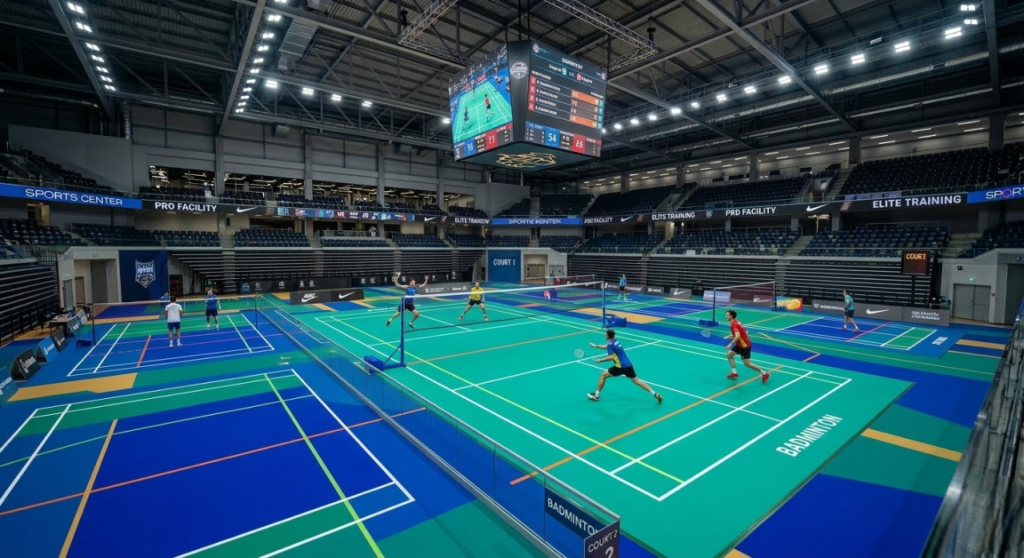
PVC vinyl sports flooring is widely used in multi-purpose indoor sports halls because of its versatility and affordability.
It provides a cushioned surface that helps reduce impact injuries and supports multiple sports activties.
Key Features
🏸Cushioned surface
🏸 Slip resistant texture
🏸 Easy installation
🏸 Cost effective
Best Used For
- Badminton courts
- Table tennis halls
- Multi-sport arenas
- School sports halls
Advantages
✔ Comfortable playing surface
✔ Affordable installation
✔ Low maintenance
Considerations
⚠ Slightly less durable compared to hardwood flooring
🏐 3. Polyurethane (PU) Sports Flooring
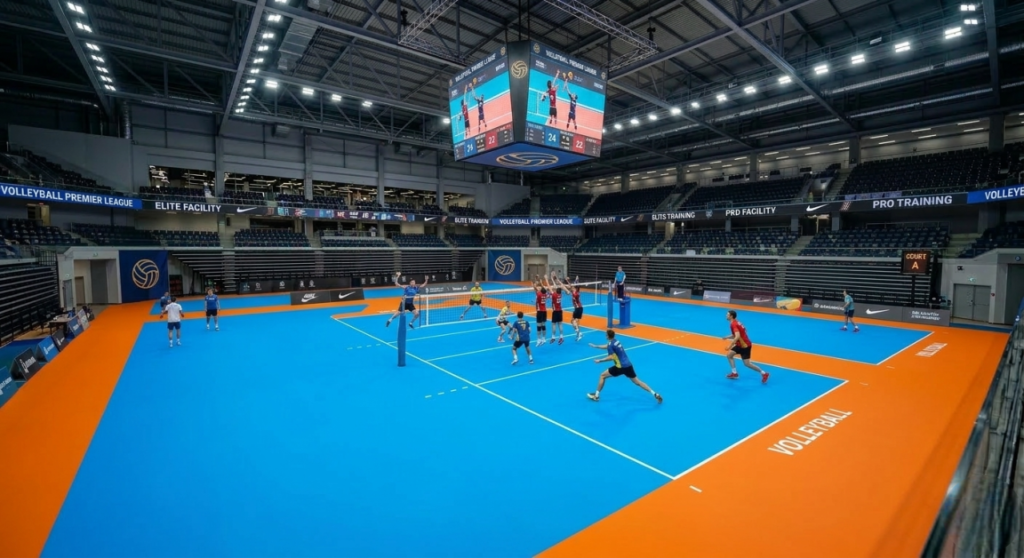
Polyurethane flooring is a seamless synthetic sports surface known for its durability and flexibility. It is commonly used in professional sports training facilities and indoor stadiums.
Key Features
🏐 Seamless surface
🏐 Excellent durability
🏐 High shock absorption
🏐 Easy cleaning
Best Used For
- Volleyball courts
- Indoor sports arenas
- Training centers
- Multi-sport facilities
Advantages
✔ Long lifespan
✔ Hygienic and easy to clean
✔ Smooth and comfortable surface
Considerations
⚠ Professional installation required
🧩 4. PP Interlocking Sports Tiles
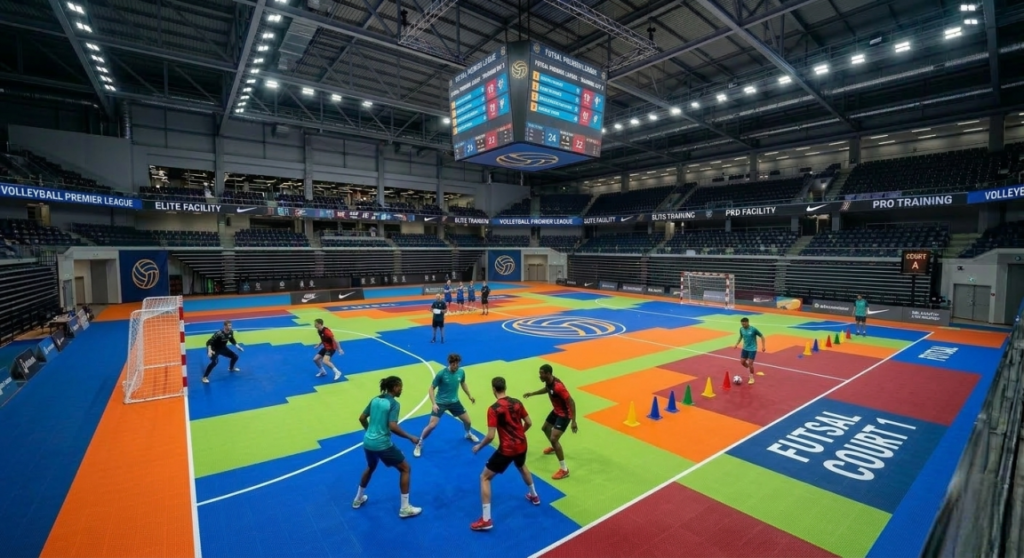
PP modular tiles are modern sports flooring solutions designed for easy installation and felxibility.
These tiles are widely used in schools, training centers, and recreational sports arenas.
Key Features
🧩Modular tile system
🧩 Quick installation
🧩 High durability
🧩 Weather and moisture resistant
Best Used For
- Indoor futsal courts
- School sports facilities
- Multi-sport training areas
- Recreational sports centers
Advantages
✔ Easy replacement of damaged tiles
✔ Affordable installation
✔ Versatile sports usage
Considerations
⚠ Slightly harder surface compared to cushioned floors
📊 Comparison Table: Indoor Sports Flooring Options
| Flooring Type | Durability | Shock Absorption | Maintenance | Best For |
| Wooden Flooring | ⭐⭐⭐⭐⭐ | ⭐⭐⭐⭐ | Medium | Basketball, Volleyball |
| PVC vinyl Flooring | ⭐⭐⭐⭐ | ⭐⭐⭐⭐ | Low | Badminton, Multi-sports |
| Polyurethane Flooring | ⭐⭐⭐⭐⭐ | ⭐⭐⭐⭐⭐ | Low | Professional arenas |
| PP Interlocking Tiles | ⭐⭐⭐⭐ | ⭐⭐⭐ | Very Low | Schools, Recreational courts |
🏗️ How to Choose the Best Flooring for an Indoor Sports Arena
When planning a sports arena, choosing the right flooring depends on several important factors.
1️⃣Type of Sports
Different sports required different flooring characteristics such as grip, bounce, and cushioning.
2️⃣ Budget
High-performance flooring systems vary in price, so it is important to balance cost with performance.
3️⃣ Maintenance Requirements
Some flooring options require more maintenance than others.
4️⃣ Player Safety
Shock absorption and slip resistance are critical for preventing sports injuries.
5️⃣ Durability
Sports facilities experience heavy foot traffic, so durability is essential.
🚀 Future Trends in Indoor Sports Flooring
The sports infrastructure industry is evolving with advanced materials and technologies.
Some modern innovations include:
✨ Eco-friendly sports flooring materials
✨ Smart flooring with performance tracking
✨ Advanced shock absorption systems
✨ Anti-microbial recycled sports flooring
These innovations help create safer, more durable, and environmentally friendly sports facilities.
❓Frequently Asked Questions (FAQs)
1.What is the best flooring for indoor sports arenas?
Wooden flooring and polyurethane flooring are considered the best for professional indoor sports arenas.
2.Which flooring is best for badminton courts?
PVC vinyl sports flooring is commonly used for badminton courts.
3.How long does sports flooring last?
Most high-quality sports flooring systems last 10-20 years depending on maintenance.
4. Is wooden flooring good for sports arenas?
Yes, hardwood sports flooring provides excellent bounce and shock absorption.
5. What is PU sports flooring?
Polyurethane flooring is a seamless synthetic sports surface used in professional arenas.
7. Is sports flooring safe for athletes?
Yes, modern sports flooring is deigned to reduce injuries and improve athlete safety.
8. Can indoor sports flooring support multiple sports?
Yes, multi-purpose sports flooring systems can supports several indoor sports.
9. What is the cost of indoor sports flooring?
The cost depends on material, installation area, and flooring type.
10. Why is shock absorption important in sports flooring?
Shock absorption helps reduce stress on athletes’ joints and prevents injuires.
11. Which flooring provides the best grip?
PU and PVC sports flooring provides excellent grip.
12. Can sports flooring be customized?
Yes, sports flooring can be customized with colors, logos, and court markings.
13. Is sports flooring eco-friendly?
Many modern flooring systems use sustainable and recyclable materials.
14. How often should sports flooring be maintained?
Routine cleaning and periodic inspections are recommended.
15. Can sports flooring be installed in schools?
Yes, sports flooring is widely used in school gyms and indoor sports halls.
16. Is modular flooring easy to install?
Yes, PP interlocking tiles are designed for quick and easy installation.
17. Which flooring is best for multi-sports arenas?
PVC vinyl and PU flooring are ideal for multi-sport arenas.
18. Does sports flooring improve performance?
Yes, quality flooring enhances comfort, grip, and performance.
🏆 Conclusion
Choosing the right flooring is one of the most important decisions when designing an indoor sports arena. The ideal flooring solution should provide safety, durability, comfort, and excellent playing performance.
Whether you select wooden sports flooring, PVC vinyl, polyurethane, or modular PP tiles, each option offers unique advantages depending on the type of sports, budget, and facility requirements.
By investing in high-quality sports flooring, sports facilities can create a professional playing environment that enhances athlete performance and ensures long-term durability.

Proudly powered by MSG Sports Infratek India LLP