
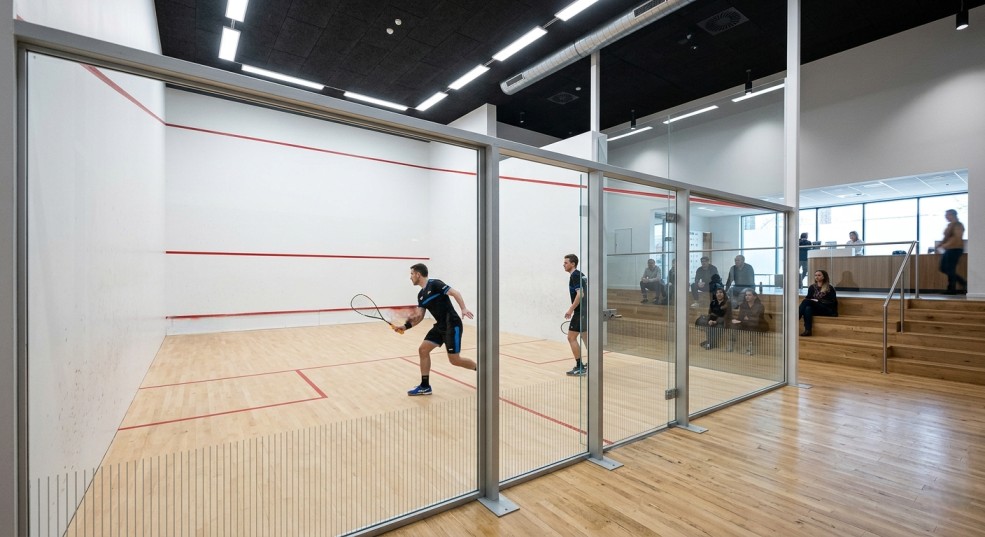
Squash is one of the fastest indoor sports in the world, and the flooring system plays a major role in player performance, comfort, and safety.
A professional squash court is not just about four walls and markings- the flooring underneath is carefully designed to provide:
- ✅ Proper ball bounce
- ✅ Shock absorption
- ✅ Player grip and movement
- ✅ Long-term durability
In this blog, we’ll explain the complete professional squash court flooring system, its layers, materials, installation process, maintenance, and why choosing the right flooring is essential for a high-performance court.
🏟️Why Squash Court Flooring is Important
Unlike many other sports, squash involves:
- Rapid direction changes
- High-speed movement
- Continuous jumping and lunging
That means the flooring must:
- Reduce impact stress on joints🦵
- Provide excellent grip 👟
- Maintain consistent performance🎯
Poor flooring can increase:
- Player injuries
- Surface damage
- Maintenance costs
🔍Components of a Professional Squash Court Flooring System
1. Subfloor Base
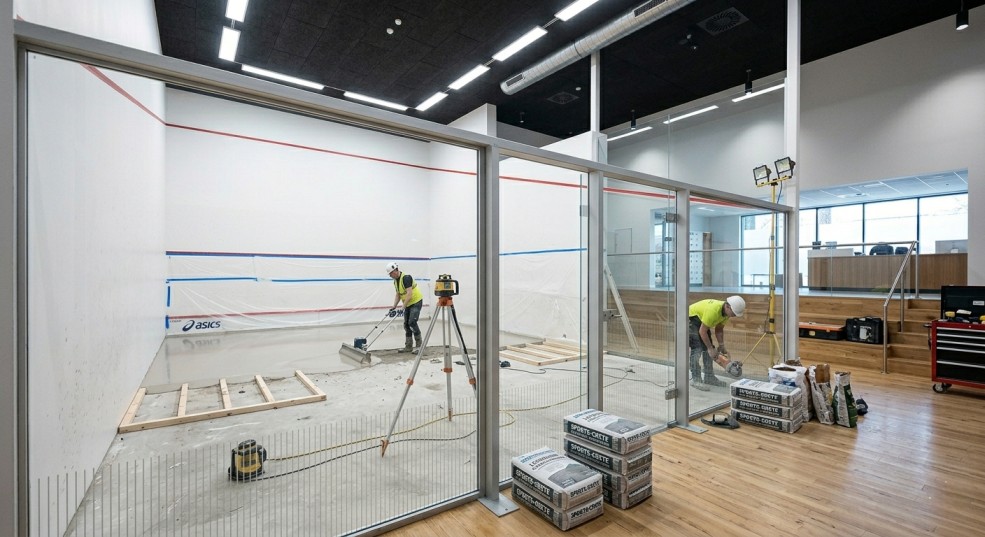
The foundation of a squash court starts with a strong and level concrete base.
Key Functions:
- Supports the flooring system
- Maintains structural stability
- Prevents uneven movement
Important Requirements:
- Smooth surface finish
- Moisture-controlled base
- Accurate leveling
⚠️Any unevenness in the base can affect flooring performance later.
2. Moisture Barrier Layer
A moisture barrier is installed between the concrete and wooden flooring system.
Purpose:
- Prevents moisture damage
- Reduces warping in wooden flooring
- Increases flooring lifespan
This layer is especially important in indoor environments where humidity changes can affect wood.
3. Wooden Batten System
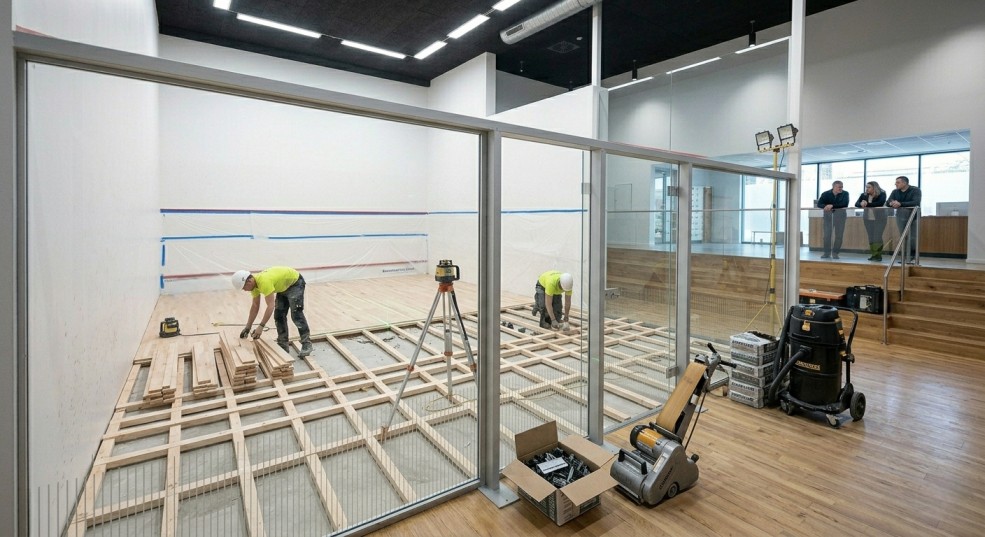
The batten system creates the support framework for the wooden sports flooring.
Common Materials:
- Hardwood battens
- Engineered wood supports
Benefits:
- Provides flexibility
- Helps shock absorption
- Create airflow below flooring
4. Shock Absorption Cushion Pads
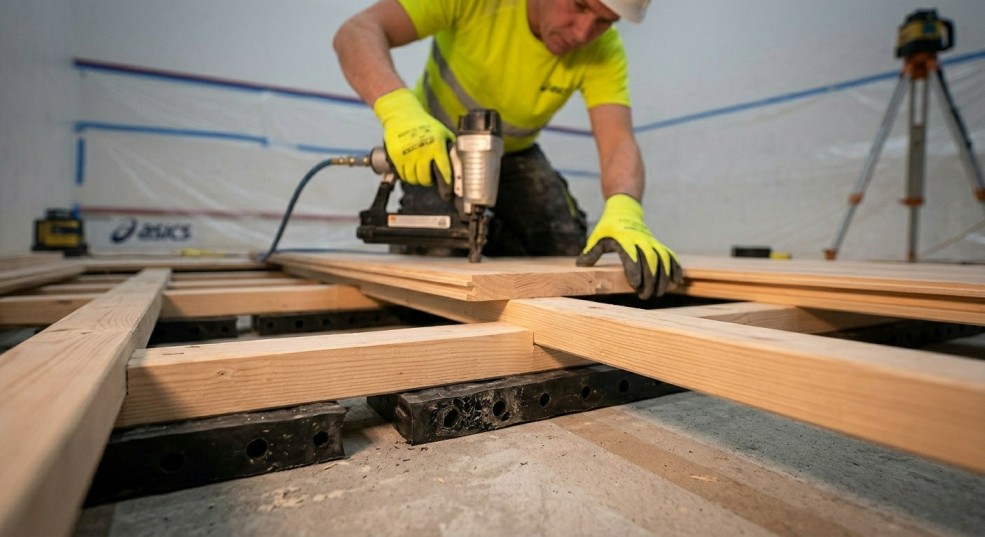
These pads are installed under the batten system.
Main Functions:
- Reduce stress on players’ knees and joints
- Improve comfort during movement
- Enhance professional playing experience
Professional squash courts require controlled shock absorption to meet international performance standards.
5. Hardwood Playing Surface
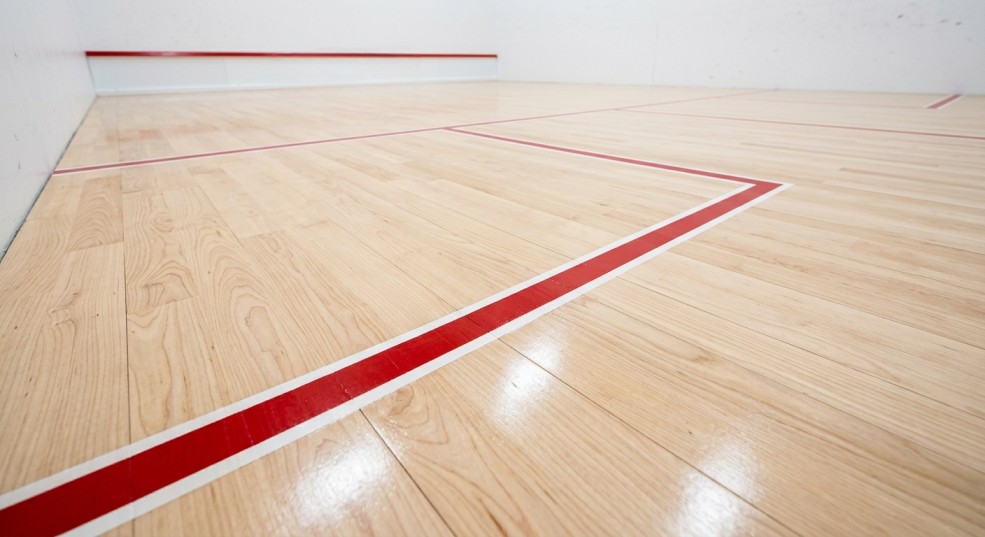
This is the visible top playing layer.
Common Wood Types:
- Maple wood
- Beech wood
- Engineered hardwood
Why hardwood is preferred:
- Excellent ball response 🎾
- Smooth player movement
- Professional appearance✨
6. Surface Coating & Finishing
The wooden surface is coated with protective finishes.
Features:
- Anti-slip texture
- Wear resistance
- Scratch protection
Professional coating also improves durability and court aesthetics.
7. Court Line Markings
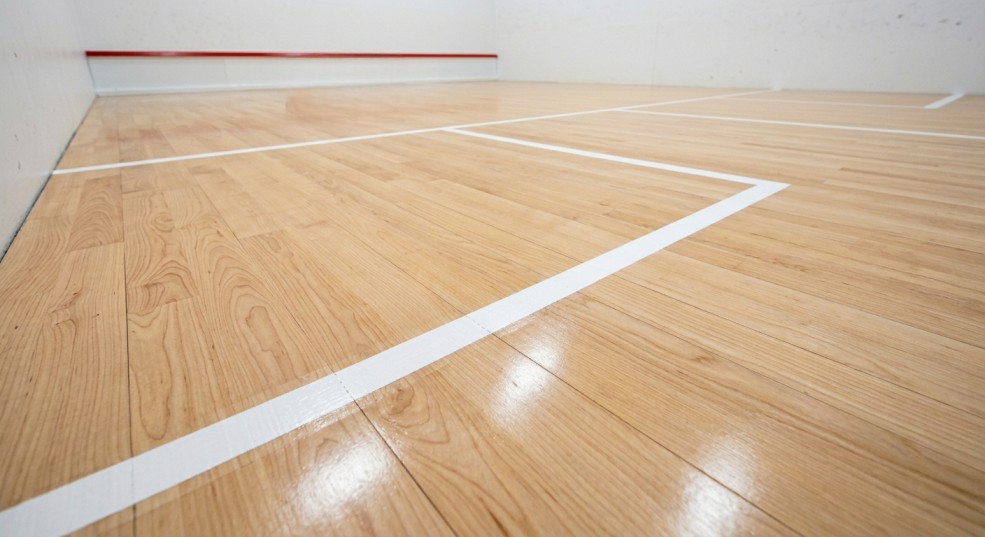
Final court marking are added according to squash court dimensions and standards.
Includes:
- Service boxes
- Half-court Line
- Short line
Accurate markings are essential for professional gameplay.
📊Squash Court Flooring System Layer Overview
| Layer | Purpose | Common Material |
| Concrete Base | Structural foundation | RCC Concrete |
| Moisture Barrier | Prevents moisture damage | Polyethylene sheet |
| Batten System | Supports flooring | Hardwood battens |
| Cushion Pads | Shock absorption | Rubber Pads |
| Hardwood Surface | Playing area | Maple/Beech wood |
| Protective Coating | Surface protection | PU coating |
| Court Markings | Gameplay lines | Sports-grade paint |
⚖️ Wooden vs Synthetic Squash Court Flooring
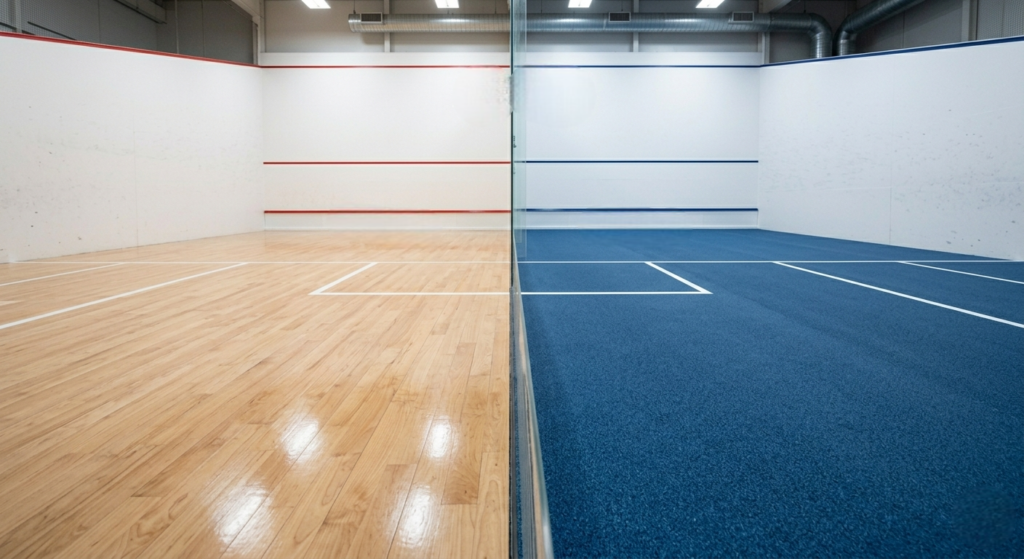
| Feature | Wooden Flooring | Synthetic Flooring |
| Professional Feel | Excellent | Good |
| Shock Absorption | Very High | Medium |
| Ball bounce | Natural | Controlled |
| Maintenance | Higher | Lower |
| Durability | High | High |
| Appearance | Premium | Modern |
| Common Usage | Professional courts | Training Facilities |
🏗️ Squash Court Flooring Installation Process
Step 1 – Site Inspection
The area is inspected for moisture, leveling, and dimensions,
Step 2 – Base Preparation
Concrete is cleaned and leveled properly.
Step 3 – Moisture Barrier Installation
Protective sheet is applied.
Step 4 – Batten Framework Setup
Wooden support structure is installed.
Step 5- Cushion Pad Placement
Shock absorption pads are fixed.
Step 6 – Hardwood Installation
Top wooden flooring panels are installed.
Step 7 – Coating & Marking
Surface finishing and court markings are completed.
🧠 Common Problems in Squash Court Flooring
🚫Uneven Flooring Surface
🚫Moisture Damage
🚫Slippery cracks
🚫Poor shock absorption
Most of these issues happen because of:
- Improper installation
- Low-quality materials
- Poor Maintenance
Maintenance Tips for Squash Court Flooring
✅Clean dust regularly
✅ Use non-abrasive cleaning products
✅ Avoid excessive moisture
✅ Inspect Surface coating periodically
✅ Repair scratches early
Proper maintenance increases the lifespan significantly.
❓FAQs
1. What flooring is used in professional squash courts?
👉Hardwood flooring systems are most commonly used.
2. Why is maple wood popular for squash courts?
👉It provides durability and excellent playing performance.
3. Is shock absorption important in squash flooring?
👉 Yes, it reduces player fatigue and injury risk.
4. Can synthetic flooring be used in squash courts?
👉 Yes, mainly in training or recreational facilities.
5. How long does squash court flooring last?
👉 Typically 10-20 years with proper maintenance.
6. Is wooden squash flooring slippery?
👉No, professional coatings provide controlled grip.
7. Does squash flooring requires maintenance?
👉 Yes, regular cleaning and coating maintenance are important.
8. What causes wooden flooring damage?
👉 Moisture and poor maintenance are major reasons.
9. Can squash flooring be repaired?
👉 Yes, damaged sections can often be restored.
10. Is concrete directly used as playing surface?
👉 No, wooden systems are installed above concrete.
11. Why are cushion pads used?
👉 To improve comfort and shock absorption.
12. How thick is squash court flooring?
👉 It varies depending on the flooring system design.
13. Are squash courts fully indoor?
👉Professional squash courts are usually indoor.
14. Can flooring affect player performance?
👉 Yes, significantly
15. Is waterproofing important?
👉 Yes, moisture protection is essential.
16. What coating is used on squash floors?
👉 PU protective coating are commonly used.
17. How often should squash flooring be refinished?
👉 Depends on usage intensity and wear.
18. What is the biggest flooring mistake?
👉Ignoring moisture control and leveling.
🏁 Conclusion
A professional squash court flooring system is much more than just a wooden surface.
From the concrete base to the final coating, every layer contributes to:
- 🏆Professional performance
- 🛡️Player safety
- ⏳Long-term durability
Choosing the right flooring system ensures a better playing experience and reduces long-term maintenance issues.

Proudly powered by MSG SPORTS INFRATEK INDIA LLP