
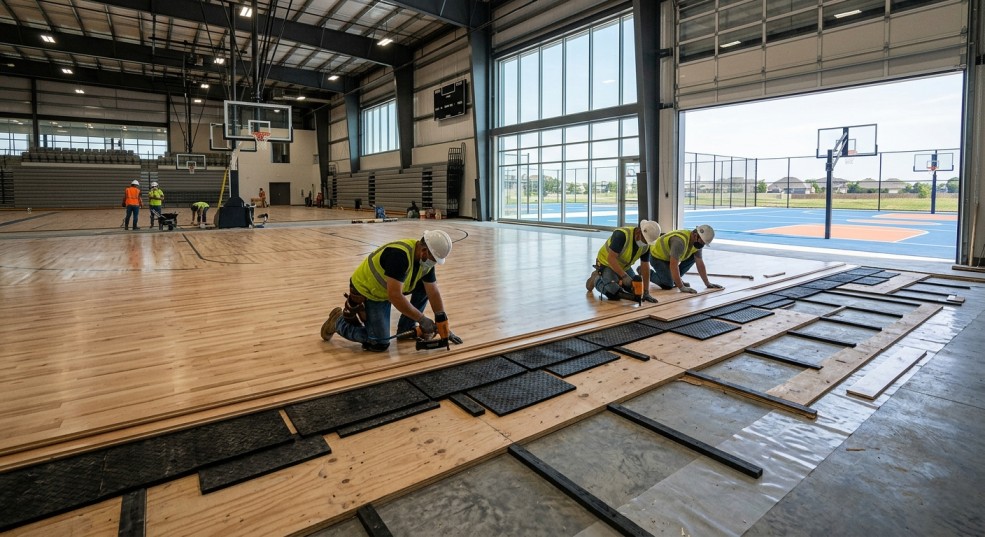
Building a basketball court is not just about laying a surface and painting lines. A high-quality court requires precision engineering, proper layering, and professional installation techniques.
👉 Whether it’s for a school, academy, or stadium, the flooring construction process directly affects:
- 🏆Player performance
- 🛡️Safety
- ⏳ Durability
🧱Step 1: Site Inspection & Planning 📐
Before construction begins, proper planning is essential.
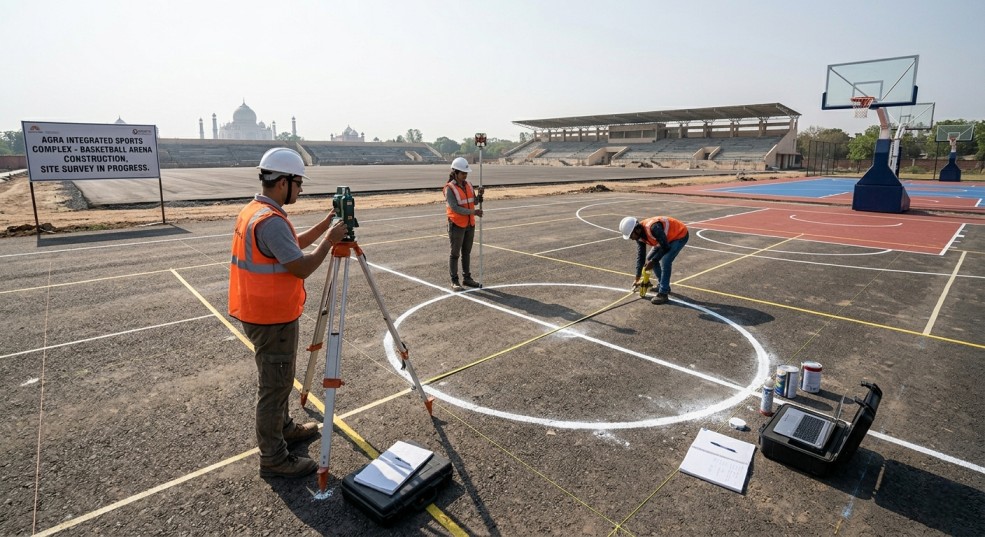
Key Activities:
- Site measurement
- Soil testing (for outdoor courts)
- Layout design (court dimensions)
- Drainage planning
👉 A standard basketball court size is approximately 28m x 15m (international).
🪨Step 2: Subgrade Preparation (Ground Level) 🏗️
This is the foundation of the entire court.
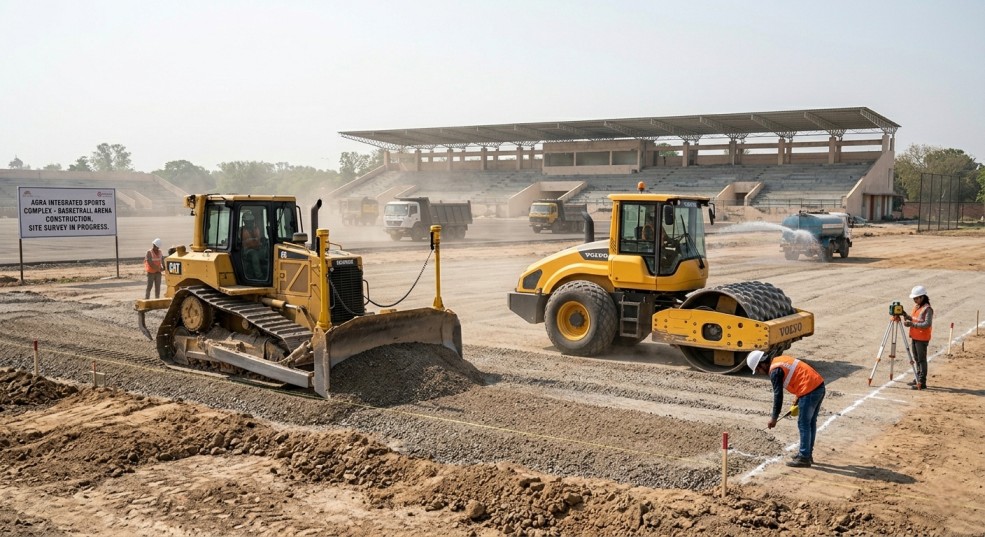
Process:
- Clearing vegetation
- Leveling the ground
- Soil compaction using rollers
Why It Matters:
- Prevents future cracks
- Ensures stability
🧱 Step 3: Sub-Base Installation🚧
A strong sub-base improves durability.
Materials Used:
- Crushed stone
- Gravel
Functions:
- Load distribution
- Drainage support
🏢Step 4: Concrete/Asphalt Base🧱
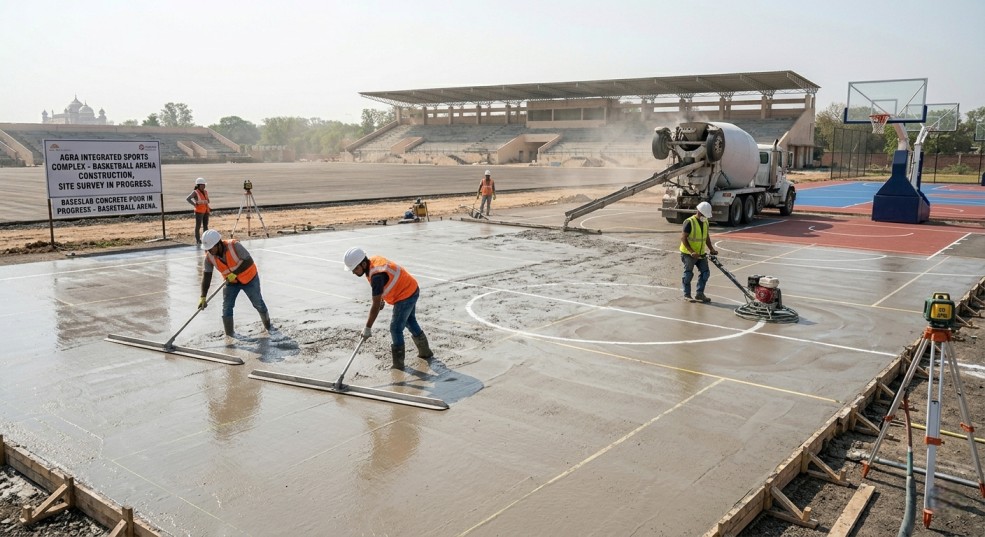
This is the main structural layer.
Options:
- PCC/RCC (Concrete)
- Asphalt (for outdoor courts)
Key Points:
- Must be perfectly level
- Requires curing (7-14 days)
Step 5: Surface Preparation & Primer 🔧
Before applying flooring, the surface must be prepared.
Includes:
- Cleaning dust and debris
- Crack filling
- Primer application
👉 Primer ensures strong bonding between layers.
Step 6: Cushion / Shock Absorption Layer 🛡️
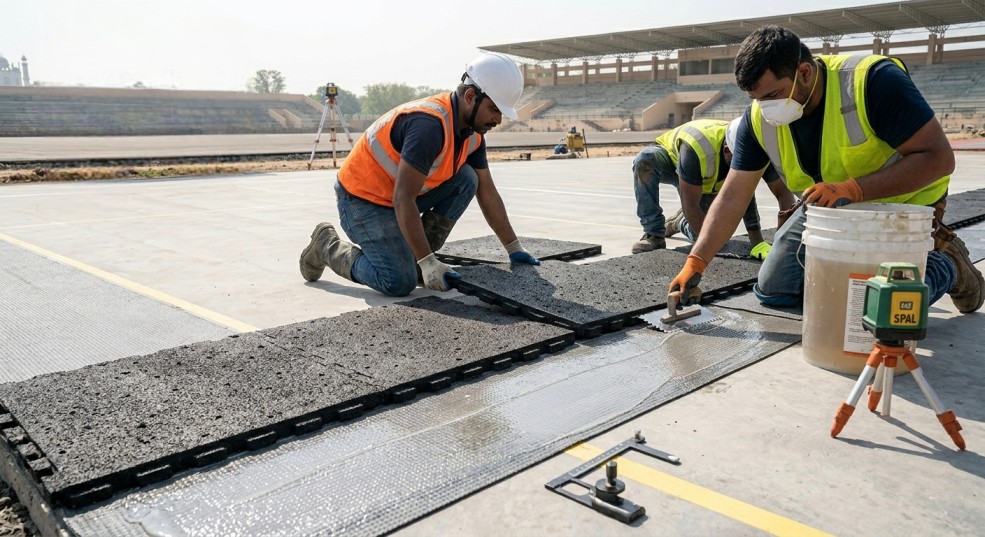
This layer enhances player safety and comfort.
Benefits:
- Reduce impact on joints
- Improves gameplay
- Prevent injuries
Step 7: Acrylic / PU Flooring Application🎯
This is the core playing surface layer.
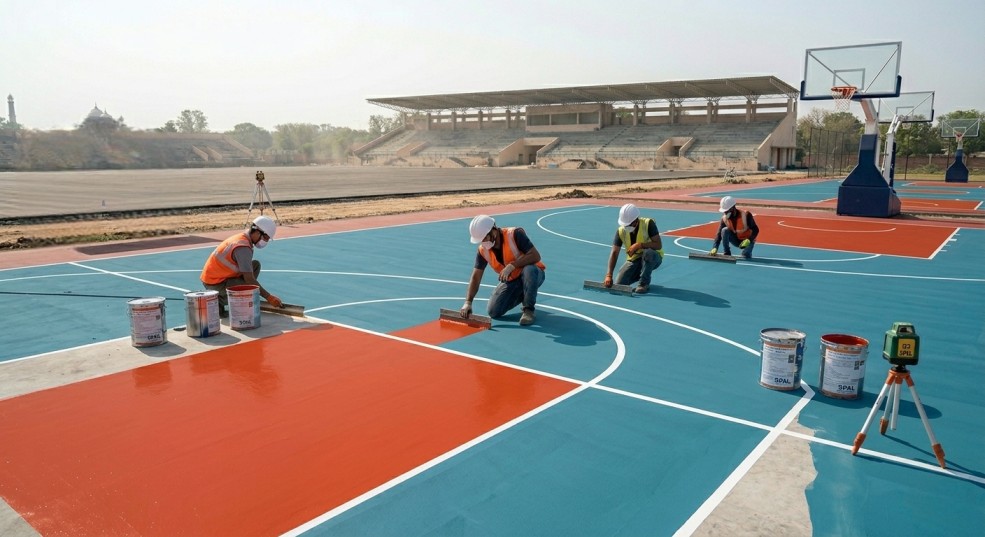
Types:
- Acrylic flooring (outdoor)
- PU flooring (indoor)
Features:
- Anti-slip
- Weather resistant
- Durable
🖌️Step 8: Line Marking & Finishing🏀
Final step to make the court game-ready.
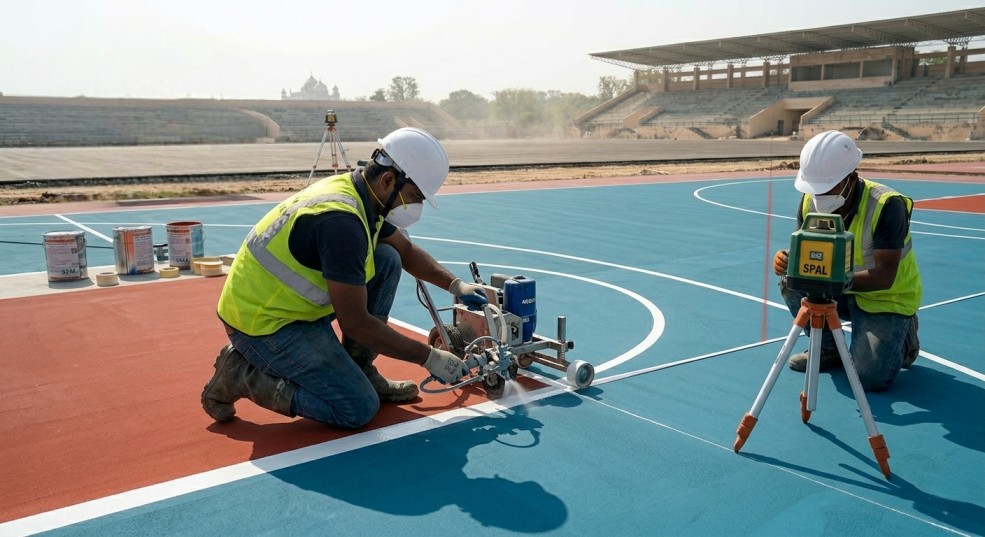
Includes:
- Court markings
- Color coating
- Anti-skid finish
📊 Comparison Table: Basketball Court Flooring Types
| Feature | Acrylic Flooring | PU Flooring | Wooden Flooring |
| Usage | Outdoor | Indoor | Indoor |
| Shock Absorption | Medium | High | Very High |
| Durability | High | Very High | Medium |
| Maintenance | Low | Medium | High |
| Cost | Economical | Premium | Expensive |
| Best For | Schools, parks | Stadiums | Professional courts |
⚠️ Common Mistakes to Avoid
🚫 Poor ground compaction
🚫 Uneven concrete surface
🚫 Skipping cushion layer
🚫 Low-quality materials
🚫 Improper drainage
👉 These can reduce court life drastically.
⏱️ Construction Timeline
| Stage | Time Required ⏳ |
| Site Preparation | 2-3 days |
| Sub-base + Concrete | 7-14 days |
| Flooring Application | 5-7 days |
| Finishing | 2-3 days |
👉 Total: 15-25 days (approx.)
❓FAQs
1. What is the standard basketball court size?
👉 28m x 15 m (international standard).
2. Which flooring is best for outdoor courts?
👉 Acrylic flooring.
3. Which flooring is best for indoor courts?
👉 PU or wooden flooring.
4. How long does construction take?
👉 Around 15-25 days.
5. Is drainage required?
👉 Yes, for outdoor courts.
6. What is the lifespan of a basketball court?
👉 5-15 years depending on material.
7. Can courts be built on existing surfaces?
👉 Yes, with proper preparation.
8. Is cushion layer necessary?
👉 Recommended for safety.
9. How often should maintenance be done?
👉 Regular cleaning + yearly inspection.
10. Does weather affect construction?
👉 Yes, especially rain delays.
11. What causes cracks?
👉 Poor base or soil movement.
12. Is acrylic flooring slippery?
👉 No, it has anti-slip properties.
13. Can multi-sport courts be made?
👉 Yes, with proper makings.
14. What is the thickness of flooring?
👉 Typically 3mm-15mm.
15. How to choose the right contractor?
👉 Check experience and past projects.
16. Is basketball flooring expensive?
👉 Depends on material choice.
17. Can indoor courts use acrylic?
👉 Not recommended (better PU).
18. Is resurfacing possible?
👉 Yes, after wear and tear.

Proudly powered by MSG SPORTS INFRATEK INDIA LLP