
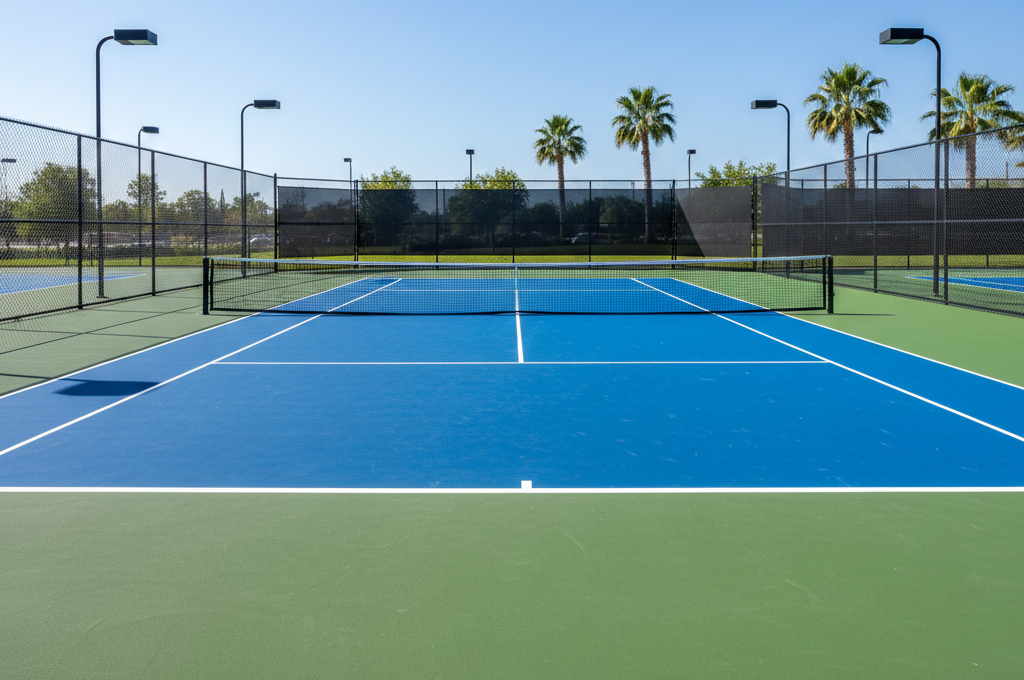
Tennis court performance depends heavily on surface quality. Ball bounce consistency, player traction, injury prevention, and long-term maintenance costs are all influenced by the flooring system you choose. In 2026, acrylic sports flooring continues to dominate the global tennis court market due to its balance of performance reliability, durability, affordability, and environmental safety.
From Schools and clubs to professional academies and government facilities, acrylic tennis courts deliver predictable play conditions with manageable ownership costs.
🧱 What Is Acrylic Sports Flooring for Tennis Courts?
Acrylic tennis flooring is a multi-layer synthetic coating system applied over a concrete or asphalt base. It creates a seamless, textured playing surface engineered to provide controlled traction, uniform ball bounce, and high weather resistance.
Modern acrylic systems are typically water-based, low-VOC, and environmentally compliant, making them suitable for public and institutional projects.
🧪 Typical Acrylic Court Layer System
1️⃣ Prepared Concrete/ Asphalt Base
Provides structural stability and slope for drainage.
2️⃣ Primer Coat
Enhances bonding and moisture resistance.
3️⃣ Resurface Layer
Fills minor pores and smooths the surface
4️⃣ Cushion Layers (Optional)
Rubber-modified acrylic layers improve comfort and shock absorption.
5️⃣ Color Coats
UV- stable acrylic coatings create texture and durability.
6️⃣ Line Markings
Accurate ITF-compliant court layout.
🎯 Performance Benefits for Tennis Players
🟢 Consistent Ball Bounce
Acrylic surface provide predictable bounce characteristics, essential for training and competitive matches.
🟢 Excellent Traction & Player Control
Textured coating maintain grip during fast lateral movements while preventing excessive friction that could strain joints.
🟢 Surface Speed Customization
By adjusting sand content and coating layers, acrylic courts can be tuned for slow, medium, or fast playing speeds.
🟢 Weather Stability
High-quality acrylic systems resist UV radiation, rain exposure, and temperature variation.
🟢 Low Surface Deformation
Unlike clay or grass, acrylic courts maintain consistent flatness and line visibility.
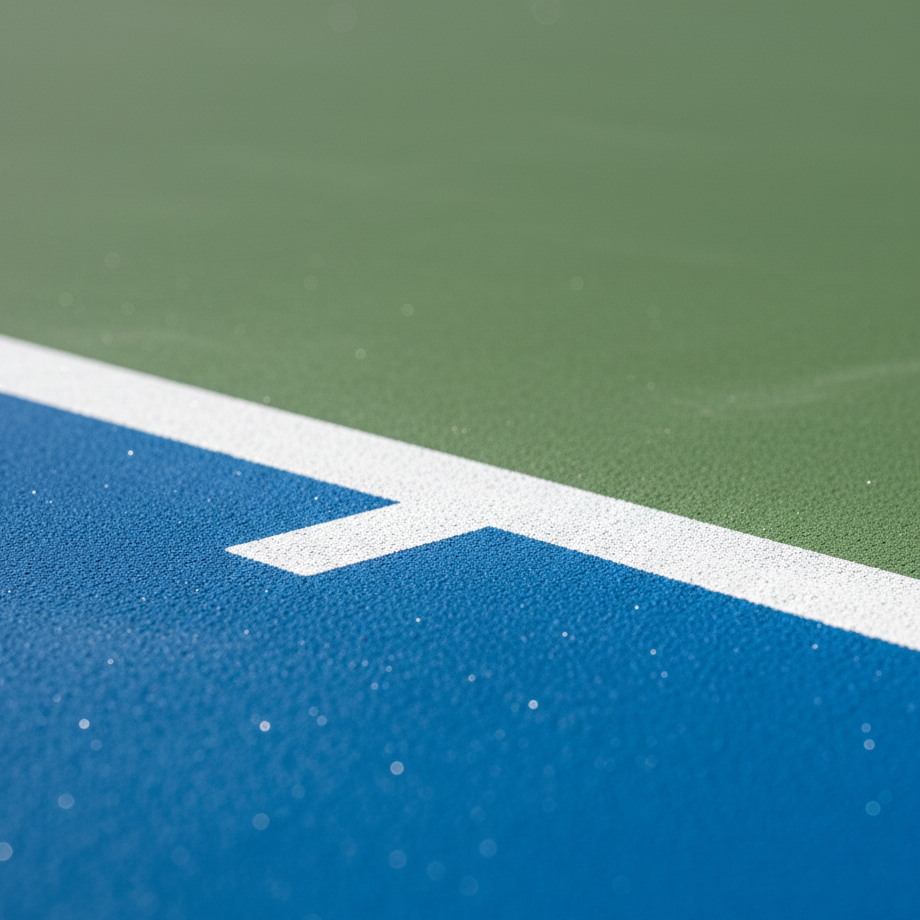
🏗️ Durability & Service Life Expectations
A professionally installed acrylic tennis court typically offers:
- ⏳ 6-10 years before major resurfacing
- 🎯 Minor re-coating every 4-6 years depending on usage
- 🧱 Strong resistance to abrasion, fading, and surface cracking (When base is properly prepared)
Durability depends heavily on:
✔ Base construction quality
✔ Drainage design
✔ Climate conditions
✔ Maintenance practices
✔ Player traffic volume
💰 Cost Factors & Long-Term Value
💵 Initial Installation Cost Influencers
- Base construction (new concrete vs existing slab)
- Cushioned vs non-cushioned system
- Number of coating layers
- Geographic labor rates
- Drainage and fencing integration
🔁 Lifecycle Cost Advantages
- Minimal daily maintenance
- No watering or rolling required
- Easy resurfacing without demolition
- Lower downtime for repairs
Acrylic courts typically deliver Excellent total cost of ownership compared to clay, grass, or hybrid surfaces.
📊 Comparison Table – Tennis Court Surface Options
| Feature | Acrylic Surface | Clay Court | Natural Grass | Artificial Turf |
| Ball Bounce Consistency | ⭐⭐⭐⭐⭐ | ⭐⭐⭐ | ⭐⭐ | ⭐⭐⭐ |
| Weather Resistance | ⭐⭐⭐⭐ | ⭐⭐ | ⭐ | ⭐⭐⭐ |
| Maintenance Cost | Low | High | Very High | Medium |
| Durability | ⭐⭐⭐⭐ | ⭐⭐⭐ | ⭐⭐ | ⭐⭐⭐ |
| Play Speed Control | Adjustable | Slow | Fast (Variable) | Medium |
| Water Usage | None | High | High | Low |
| Resurfacing Ease | Easy | Difficult | Complex | Moderate |
| Installation Cost | Medium | Medium | High | Medium |
(Indicative industry comparison.)
🛠️ Installation Best Practices
✔ Proper base slope (drainage compliance)
✔ Crack isolation systems
✔ Controlled curing conditions
✔ Manufacturer-approved layer thickness
✔ Precision line marking
✔ Certified installer supervision
Improper base preparation is the leading cause of premature surface failure.
🧹 Maintenance Guidelines
✔ Weekly sweeping and washing
✔ Remove organic debris
✔ Avoid sharp dragging equipment
✔ Annual surface inspection
✔ Algae treatment in shaded zones
✔Scheduled resurfacing cycles
🌱 Environmental & Safety Advantages
🌿 Water-based low-VOC coatings
🌿 Reduced dust and allergen generation
🌿 No chemical fertilizers or pesticides
🌿 Lower water consumption than clay or grass
🌿 Recoating minimizes material waste
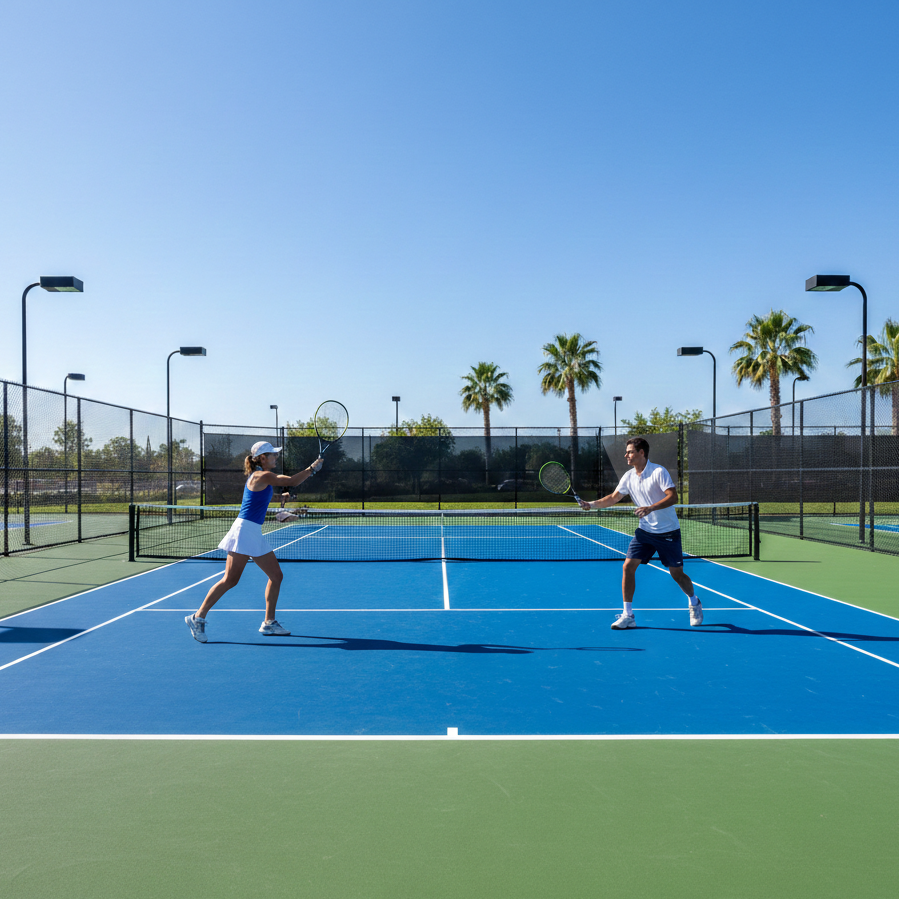
📜 Compliance & Standards Considerations
Acrylic tennis courts should align with:
✔ ITF court dimension guidelines
✔ Local construction codes
✔ Slip resistance standards
✔ Drainage and accessibility norms
✔ Environmental material safety regulations
Always use certified materials and trained installers.
❓ Frequently Asked Questions (FAQs)
1. What is acrylic tennis flooring made from?
Ans:- Water-based acrylic resins, mineral fillers, pigments, and textured aggregates.
2. Is acrylic suitable for professional tournaments?
Ans:- Yes, many international tournaments use acrylic hard courts.
3. How long does an acrylic tennis court last?
Ans:- Typically 6-10 years before major resurfacing
4. Can acrylic courts be cushioned?
Ans:- Yes, optional cushion layers improve shock absorption
5. Does acrylic flooring fade in sunlight?
Ans:- UV-stable pigments minimize fading.
6. Is acrylic flooring slippery when wet?
Ans:- Textured coatings maintain traction.
7. Can cracked concrete affect acrylic surface?
Ans:- Yes, proper crack treatment is essential.
8. How long does installation take?
Ans:- Usually 7-14 days depending on conditions.
9. Can existing courts be resurfaced with acrylic?
Ans:- Yes, after structural evaluation.
10. Is acrylic flooring eco-friendly?
Ans:- Most modern systems are low-VOC and water-based.
11. How often should resurfacing be done?
Ans:- Every 4-8 years depending on usage.
12. Is acrylic suitable for junior players?
Ans:- Yes, multiple color combinations are available.
13. Does acrylic require sealing?
Ans:- Color coats act as the protective layer.
14. Can acrylic courts be customized in color?
Ans:- Yes, multiple color combinations are available.
15. What cleaning chemicals are safe?
Ans:- Neutral pH cleaners only.
16. Can algae grow on acrylic courts?
Ans:- Only in shaded damp areas if not cleaned.
17. Is acrylic better than concrete paint?
Ans:- Yes, acrylic is engineered for sports performance.
18. What climate is acrylic best suited for?
Ans:- Performs well in most temperate and tropical climates.
🏁 Final Verdict
Acrylic sports flooring remains the industry benchmark for tennis courts in 2026, offering consistent play performance, reliable durability, manageable maintenance costs, and environmental compliance. For clubs, schools, and sports facilities seeking long-term value without sacrificing player experience, acrylic surfaces continue to deliver excellent return on investment.
Proudly powered by MSG Sports Infratek India LLP